Long-tailed Tuco-tuco (Ctenomys fulvus): An In-depth Exploration
Introduction
The Long-tailed Tuco-tuco, known scientifically as Ctenomys fulvus, is a captivating rodent species that resides primarily in the arid regions of South America. These small mammals are part of the family Ctenomyidae, often referred to as "subterranean rodents" due to their burrowing lifestyle. Named for their distinguishing long tails, Long-tailed Tuco-tucos play a vital role in the ecosystem, contributing to soil aeration and nutrient cycling. Despite their importance, these creatures often remain out of sight, hidden beneath the surface of their sandy habitats.
Physical Description
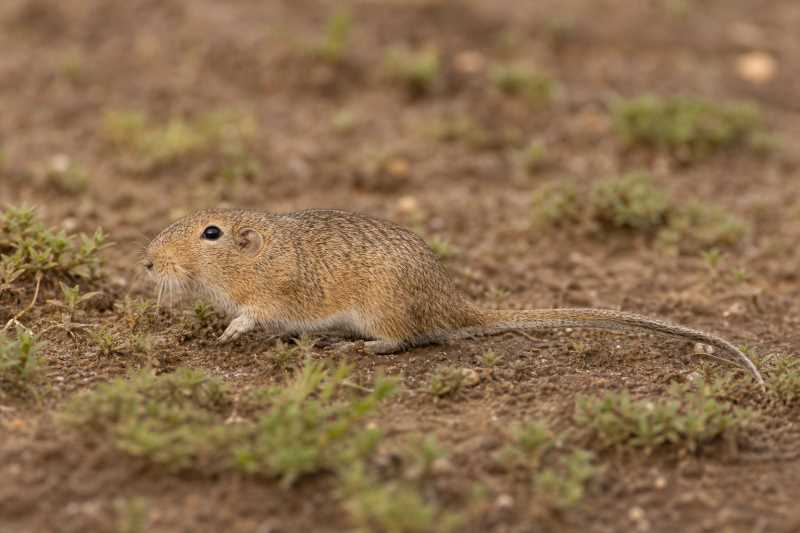
Long-tailed Tuco-tucos are characterized by their robust bodies and notably long tails, which distinguish them from other members of the genus Ctenomys. They typically measure between 15 to 25 centimeters in body length, with tails adding an additional 10 to 15 centimeters. Their dense fur is primarily fulvous, a tawny color that provides excellent camouflage in their sandy environments. This coloration varies slightly among individuals, offering shades from light yellowish-brown to darker brown hues.
These rodents possess strong forelimbs equipped with curved claws, adaptations that facilitate their burrowing lifestyle. Their eyes and ears are relatively small, an evolutionary trait developed to minimize the intrusion of dirt while tunneling. The Long-tailed Tuco-tuco’s incisors are prominent and continually growing, aiding in both digging and processing their diet of fibrous plant material.
Range and Habitat
Ctenomys fulvus is predominantly found across the arid and semi-arid regions of South America, particularly in countries like Argentina, Bolivia, and Chile. They thrive in sandy soils, often choosing habitats that offer loose earth for easier burrowing. These environments include sandy dunes, grasslands with sandy substrates, and occasionally agricultural fields where the soil conditions are favorable for burrowing.
The species’ geographic distribution is influenced by climate, soil type, and vegetation cover. They are largely absent from areas with heavy clay soils or dense forest cover, which are unsuitable for their burrowing lifestyle. Instead, they prefer open grasslands where the vegetation is sparse enough to allow sunlight to reach the ground, facilitating the growth of grasses and other plants that comprise their diet.
Behavior and Diet
Long-tailed Tuco-tucos are solitary animals, with each individual typically maintaining its own burrow system. These burrows can be extensive, with multiple entrances and a network of tunnels that provide protection from predators and harsh environmental conditions. The burrows also serve as storage for food and nesting sites.
Their diet primarily consists of underground plant parts such as roots and tubers, but they also consume above-ground vegetation when available. Their feeding activity plays an important role in the ecosystem by promoting plant diversity and soil health. Tuco-tucos are primarily nocturnal, emerging from their burrows during the night to forage for food, though they may occasionally be active during the day.
Identification Tips (Field Recognition Cues)
Identifying a Long-tailed Tuco-tuco in the field can be challenging due to their elusive nature. However, several cues can assist observers:
- Burrow Entrances: Look for circular holes about 5–10 cm in diameter, often surrounded by small mounds of excavated soil.
- Tail Length: If sighted, their long tails are a distinctive feature, often extending well beyond the body.
- Fur Coloration: Their fulvous coloration blends well with sandy environments but can be distinguished in contrast with greener vegetation.
- Vocalizations: Listen for their characteristic "tuco-tuco" sounds, which can be heard when the animals communicate from within their burrows.
Conservation Status (With Threats and Protections)
The conservation status of the Long-tailed Tuco-tuco is currently not well-documented, largely due to their elusive nature and the challenges associated with studying subterranean mammals. However, they are believed to be at risk from several anthropogenic threats:
- Habitat Destruction: Agricultural expansion and land development lead to habitat loss and fragmentation.
- Pesticide Use: Chemical usage in agriculture can degrade their natural habitat and contaminate food sources.
- Climate Change: Altered precipitation patterns and increased temperatures may impact their arid habitats.
Conservation efforts for this species are minimal, and it is crucial to conduct further research to better understand their population dynamics and ecological roles. Protection of their habitat through sustainable land practices and environmental awareness is vital for their survival.
Frequently Asked Questions
What is the primary diet of the Long-tailed Tuco-tuco?
The Long-tailed Tuco-tuco primarily feeds on underground plant parts such as roots and tubers, but they also consume above-ground vegetation when available.
How can I identify a Long-tailed Tuco-tuco in the wild?
Identifying a Long-tailed Tuco-tuco involves looking for their distinctive burrow entrances, listening for vocalizations, and observing their long tails and fulvous fur if sighted.
What are the main threats to the Long-tailed Tuco-tuco’s survival?
The main threats include habitat destruction due to agriculture, pesticide use, and climate change, which impact their natural habitat and food sources.
Related posts