Introduction
The Dryas Monkey, scientifically known as Chlorocebus dryas, is a captivating species of primate that inhabits the lush rainforests of Central Africa. Despite its striking appearance and intriguing behavior, the Dryas Monkey remains one of the least studied members of the Cercopithecidae family. This article delves into the various aspects of the Dryas Monkey, from its physical description to its conservation status, providing a comprehensive overview of this elusive primate.
Physical Description
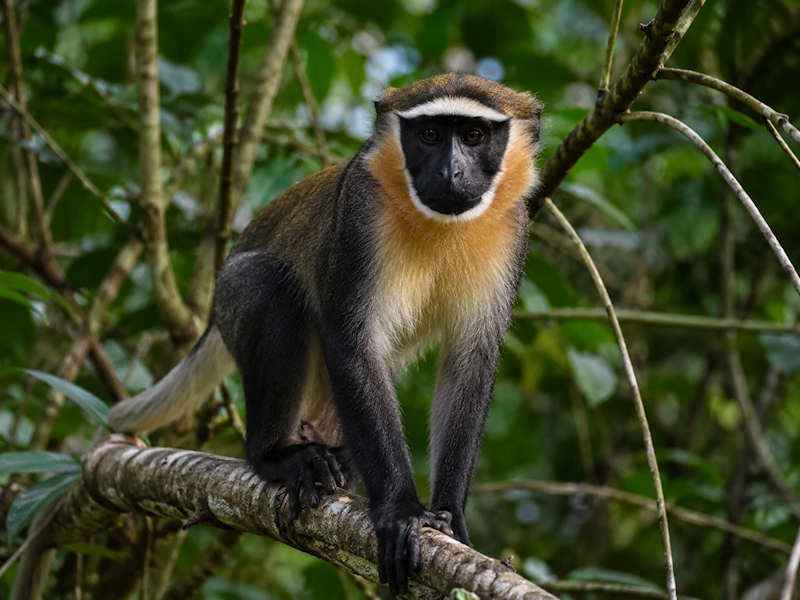
The Dryas Monkey is a small to medium-sized primate, with adult males typically larger than females. They possess a distinctive coat, predominantly olive-green with a silvery sheen, which provides excellent camouflage in their forested environment. The face of the Dryas Monkey is black with a white nose spot, creating a stark contrast that enhances their expressive features. Their eyes are large and intelligent, reflecting their keen awareness of their surroundings.
Males of the species are generally larger, weighing between 4 to 7 kilograms, while females weigh slightly less, ranging from 3 to 5 kilograms. The body length of a Dryas Monkey, excluding the tail, is approximately 40 to 55 centimeters. The tail is often longer than the body, measuring up to 70 centimeters, and is used for balance as the monkey navigates the tree canopy.
Range and Habitat
The Dryas Monkey is endemic to the Democratic Republic of Congo (DRC), with its range primarily concentrated in the central basin of this vast African nation. These monkeys inhabit the dense, tropical rainforests that characterize the region. They prefer primary and secondary forests, thriving in areas where the canopy is intact and provides ample food resources and protection from predators.
Their habitat is marked by high biodiversity and a complex structure that includes understory, mid-story, and canopy levels. The presence of rivers and streams is also crucial, as these serve as water sources and influence the distribution of fruiting trees, which are critical to the Dryas Monkey’s diet.
Behavior and Diet
Dryas Monkeys are diurnal and arboreal, spending most of their lives in the trees. They are known for their agility, moving gracefully through the canopy in search of food. Their social structure is typically composed of small groups, often consisting of a dominant male, several females, and their offspring.
The diet of the Dryas Monkey is primarily frugivorous, relying heavily on fruits. However, they are also known to consume leaves, flowers, and insects, particularly when fruits are scarce. The seasonal availability of food influences their foraging patterns and group dynamics.
Communication among Dryas Monkeys is sophisticated, involving a combination of vocalizations, facial expressions, and body postures. These primates use these signals to convey information about food sources, potential threats, and social interactions within the group.
Identification Tips (Field Recognition Cues)
Identifying the Dryas Monkey in the wild requires keen observation and an understanding of their unique characteristics. Here are some tips for recognizing this species:
- Coloration: Look for the distinctive olive-green coat with a silvery sheen and the contrasting black face with a white nose spot.
- Size and Shape: Note the small to medium size, with a relatively long tail used for balance.
- Habitat Preference: Search for them in the mid to upper canopy of dense rainforests, often in proximity to water sources.
- Behavior: Observe their agile movements and social interactions within small groups.
- Vocalizations: Listen for their range of calls, which vary from alarm calls to social chatter.
Conservation Status (with Threats and Protections)
The Dryas Monkey is classified as Endangered on the IUCN Red List of Threatened Species. This status is primarily due to habitat loss and fragmentation, driven by logging, agriculture, and human settlement expansion. Additionally, hunting for bushmeat poses a significant threat to their populations.
Conservation efforts for the Dryas Monkey include habitat protection and restoration, as well as initiatives to curb hunting practices. Protected areas within the DRC, such as national parks and wildlife reserves, play a crucial role in safeguarding their habitats. Furthermore, international organizations and local NGOs are working to raise awareness and promote community-based conservation strategies.
Frequently Asked Questions
1. What do Dryas Monkeys eat in the wild?
Dryas Monkeys primarily consume fruits, which make up the majority of their diet. They also eat leaves, flowers, and insects, especially when fruit is not available. Their frugivorous diet plays a significant role in seed dispersal, contributing to forest regeneration.
2. How do Dryas Monkeys communicate?
Dryas Monkeys communicate using a variety of vocalizations, facial expressions, and body postures. Vocal calls can indicate alarm, signal social interactions, or coordinate movement within the group. Facial expressions and physical gestures further enhance their ability to convey messages.
3. Where can Dryas Monkeys be found?
Dryas Monkeys are found exclusively in the Democratic Republic of Congo, primarily in the central basin. They inhabit dense tropical rainforests, thriving in areas with intact canopy and abundant food resources.
4. What are the main threats to Dryas Monkeys?
The main threats to Dryas Monkeys include habitat loss due to deforestation, agricultural expansion, and human settlement. Additionally, hunting for bushmeat poses a significant threat to their populations. Conservation efforts focus on protecting their habitats and mitigating hunting practices.
5. How can we help conserve Dryas Monkeys?
Conservation of Dryas Monkeys can be supported through initiatives that protect their natural habitats, such as establishing and maintaining protected areas. Supporting local and international conservation organizations, promoting sustainable land use practices, and raising awareness about the species are also vital steps in ensuring their survival.
Related posts