Introduction
The Yellow-faced Horseshoe Bat, scientifically known as Rhinolophus virgo, is an intriguing member of the Rhinolophidae family. Known for its distinctive facial features, this bat species plays a vital role in its ecosystem, primarily through its role as a pollinator and insect controller. Found in specific regions of Asia, the Yellow-faced Horseshoe Bat is a subject of interest not only to researchers but also to conservationists who are keen to ensure its survival amidst various environmental challenges.
The importance of understanding and protecting this species cannot be overstated. As an integral part of the ecosystem, these bats contribute to the ecological balance by controlling insect populations and aiding in plant pollination. This article delves into the various aspects of the Yellow-faced Horseshoe Bat, from its physical characteristics to its behavior and conservation status.
Physical Description
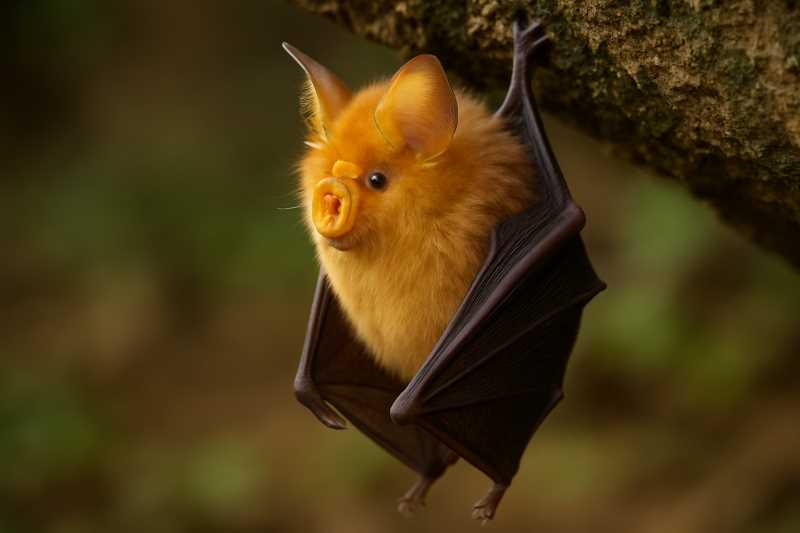
The Yellow-faced Horseshoe Bat is easily recognizable due to its unique facial structure, which is characteristic of the Rhinolophus genus. This bat has a horseshoe-shaped noseleaf, which is an adaptation that aids in echolocation—a critical skill for navigating and hunting in the dark.
Distinctive Features
- Size and Weight: The Yellow-faced Horseshoe Bat is a medium-sized bat, with a wingspan ranging from 30 to 34 centimeters and a body length of approximately 5 to 7 centimeters. The weight of an adult bat typically varies between 18 and 22 grams.
- Coloration: As its name suggests, this species has a yellowish tinge on its facial fur, which contrasts with its otherwise brown to gray body fur. This coloration helps in camouflaging within its natural habitat.
- Noseleaf Structure: The noseleaf is not just for show; it functions as a sophisticated sonar system that allows the bat to produce and receive ultrasonic calls for navigation and prey detection.
- Wing Shape and Function: The wings of the Yellow-faced Horseshoe Bat are long and narrow, designed for agile and swift flight. This adaptation is crucial for maneuvering through dense forest canopies and catching prey.
Range and Habitat
The Yellow-faced Horseshoe Bat is predominantly found in parts of Southeast Asia, including regions of Thailand, Vietnam, and Laos. Its habitat preference includes tropical and subtropical forests, where it roosts in caves, hollow trees, and sometimes man-made structures.
Distribution
The distribution of the Yellow-faced Horseshoe Bat is influenced by the availability of suitable roosting sites and food sources. While they are not abundant, these bats are relatively widespread within their range.
Habitat Preferences
- Forested Areas: Preferring dense forests, these bats roost in areas that provide ample cover from predators and harsh weather conditions.
- Cave Roosting: Caves offer a stable environment with consistent temperatures and humidity levels, making them ideal roosting sites.
- Proximity to Water: They often inhabit areas near water bodies, which are rich in insect life, thus providing a reliable food source.
Behavior and Diet
The behavior of the Yellow-faced Horseshoe Bat is largely nocturnal, with most of its activities centered around night-time foraging.
Feeding Habits
- Diet Composition: Their diet primarily consists of insects, including moths, beetles, and flies. They are proficient hunters, using echolocation to track down and capture their prey mid-flight.
- Foraging Techniques: These bats employ a method known as "gleaning," where they snatch insects off surfaces as well as capturing flying insects. Their flight is adapted for quick turns and agile maneuvers, essential for successful hunting.
Social Behavior
- Roosting: Yellow-faced Horseshoe Bats are social animals that often roost in colonies. This social structure provides benefits such as increased protection from predators and shared warmth.
- Communication: They communicate through a series of high-frequency calls, which are also used in echolocation. These calls help maintain group coordination during flight and foraging.
Identification Tips (Field Recognition Cues)
Identifying the Yellow-faced Horseshoe Bat in the field can be challenging due to its nocturnal nature. However, several cues can aid in recognition:
- Noseleaf Shape: Look for the distinctive horseshoe-shaped noseleaf, which is a key feature of this species.
- Facial Coloration: The yellowish hue on the face is a primary identifying characteristic.
- Flight Pattern: Observe the bat’s flight pattern; this species exhibits rapid, agile maneuvers typical of insectivorous bats.
- Vocalizations: If equipped with a bat detector, listen for their high-frequency echolocation calls, which are unique to the species.
Conservation Status (with Threats and Protections)
The Yellow-faced Horseshoe Bat is currently classified as "Near Threatened" according to the IUCN Red List. While not immediately at risk of extinction, several factors threaten its survival.
Threats
- Habitat Loss: Deforestation and land conversion for agriculture and urban development are primary threats, leading to the loss of roosting and foraging habitats.
- Human Disturbance: Increased human activity in cave habitats can lead to disturbance and displacement of bat colonies.
- Climate Change: Changes in climate patterns can affect insect populations, thereby impacting the food availability for these bats.
Protections
- Protected Areas: Establishing and maintaining protected areas that encompass important bat habitats is crucial for their survival.
- Conservation Programs: Initiatives focused on habitat restoration and public awareness campaigns are vital components of conservation efforts.
- Research and Monitoring: Continued research to monitor population trends and habitat conditions helps inform effective conservation strategies.
Frequently Asked Questions
What is the primary diet of the Yellow-faced Horseshoe Bat?
The Yellow-faced Horseshoe Bat primarily feeds on insects, including moths, beetles, and flies, which it hunts using echolocation.
Where can the Yellow-faced Horseshoe Bat be found?
This bat species is found in parts of Southeast Asia, particularly in tropical and subtropical forests of Thailand, Vietnam, and Laos.
How does the Yellow-faced Horseshoe Bat use echolocation?
The bat uses its sophisticated noseleaf structure to emit ultrasonic calls that bounce off objects, helping it navigate and locate prey in the dark.
Why is the Yellow-faced Horseshoe Bat considered near threatened?
The species faces threats from habitat loss due to deforestation, human disturbance in roosting sites, and the effects of climate change.
How can one identify a Yellow-faced Horseshoe Bat in the wild?
Look for its horseshoe-shaped noseleaf, yellowish facial coloration, and listen for its unique echolocation calls with a bat detector.
Related posts