Introduction
The Savanna Path White-toothed Shrew, scientifically known as Crocidura viaria, is a fascinating small mammal belonging to the family Soricidae. This particular species has garnered significant interest due to its unique adaptations to the savanna ecosystem. Known for their critical role in controlling insect populations, these shrews are an integral part of the ecological balance in their native habitats.
Shrews, as a group, may not be as widely recognized as other mammals, but they are incredibly diverse, with over 385 species globally. The Savanna Path White-toothed Shrew stands out due to its adaptability to various environmental conditions, making it a subject of interest for ecologists and conservationists alike.
Physical Description
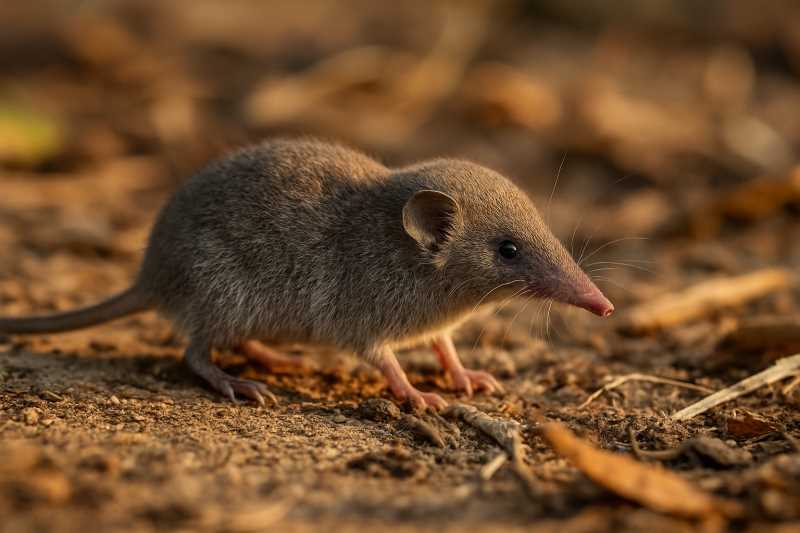
The Savanna Path White-toothed Shrew is characterized by its small size, typically measuring between 60 to 90 millimeters in body length, with a tail measuring an additional 30 to 60 millimeters. These shrews usually weigh between 5 to 15 grams. The species exhibits a soft, dense fur that is predominantly grayish-brown on the dorsal side and a lighter shade, often white or pale gray, on the ventral side.
The name "white-toothed" is derived from the lack of iron deposits in their teeth, which are typically white, unlike the red or orange-tipped teeth seen in many other shrew species. This feature is a significant identification marker and helps differentiate them from other sympatric shrew species.
Range and Habitat
Crocidura viaria is predominantly found across the savanna regions of sub-Saharan Africa. Their range extends from the western parts of Africa, including countries like Senegal and Guinea, moving eastward to countries such as Uganda and Kenya.
These shrews inhabit a variety of environments within the savanna biome, including grasslands, shrublands, and open woodlands. They are highly adaptable and can also be found in agricultural areas and near human settlements, where they find ample food resources. Their ability to thrive in different environments makes them a resilient species capable of enduring various ecological challenges.
Behavior and Diet
The Savanna Path White-toothed Shrew is primarily nocturnal, spending its days in burrows or hidden among dense vegetation to avoid predators. They are solitary creatures, with each individual maintaining a territory that they defend aggressively against intruders.
Their diet mainly consists of insects and other invertebrates, making them important biological control agents. They feed on a variety of prey, including beetles, worms, and spiders. Their high metabolic rate necessitates frequent feeding, and they are known to consume up to twice their body weight in food daily.
Identification Tips (Field Recognition Cues)
Identifying the Savanna Path White-toothed Shrew in the field requires attention to several key characteristics:
- Size and Shape: Small body size with a proportionally longer tail.
- Fur Coloration: Grayish-brown dorsal fur with a lighter ventral side.
- Teeth: Distinct white teeth, lacking iron pigmentation.
- Behavior: Nocturnal activity patterns and solitary nature.
- Sound: Emit high-pitched squeaks, especially when threatened.
Conservation Status (With Threats and Protections)
The International Union for Conservation of Nature (IUCN) currently classifies the Savanna Path White-toothed Shrew as a species of Least Concern. This classification reflects their wide distribution and presumed large population.
However, like many species, they face threats from habitat destruction due to agricultural expansion, deforestation, and urban development. Additionally, the use of pesticides in agricultural areas can impact their food sources, indirectly affecting their populations.
Conservation efforts aimed at preserving savanna habitats benefit the Savanna Path White-toothed Shrew. Protected areas and national parks play a crucial role in maintaining their habitats. Environmental education and sustainable agricultural practices can also mitigate some of the pressures faced by this species.
Frequently Asked Questions
1. What does the Savanna Path White-toothed Shrew eat?
The Savanna Path White-toothed Shrew primarily feeds on insects and other small invertebrates. Their diet includes beetles, worms, and spiders, which they hunt actively during the night.
2. Where can I find the Savanna Path White-toothed Shrew?
This species is native to sub-Saharan Africa, inhabiting savanna regions across countries such as Senegal, Guinea, Uganda, and Kenya. They thrive in grasslands, shrublands, and open woodlands.
3. How can I identify a Savanna Path White-toothed Shrew?
Look for a small mammal with grayish-brown fur on its back and lighter underparts. They have distinct white teeth and a longer tail compared to their body size. Their nocturnal behavior and high-pitched squeaks are also identification cues.
4. Are Savanna Path White-toothed Shrews endangered?
Currently, the Savanna Path White-toothed Shrew is classified as Least Concern by the IUCN. Despite facing habitat destruction, their wide distribution and adaptability help maintain stable populations.
5. Why are these shrews important to the ecosystem?
Savanna Path White-toothed Shrews play a critical role in ecosystems by controlling insect populations. Their feeding habits help maintain ecological balance and reduce the spread of agricultural pests.
Related posts