Introduction
The Black-tailed Jackrabbit, scientifically known as Lepus californicus, is a fascinating species of hare native to North America. Despite being commonly referred to as a jackrabbit, this creature is indeed a hare, notable for its remarkable speed and agility. Black-tailed Jackrabbits are a prominent feature of the ecosystems they inhabit, playing a critical role in food webs and serving as prey for various predators. This article explores the various aspects of the Black-tailed Jackrabbit, from its physical characteristics to its behavior, habitat, and conservation status.
Physical Description
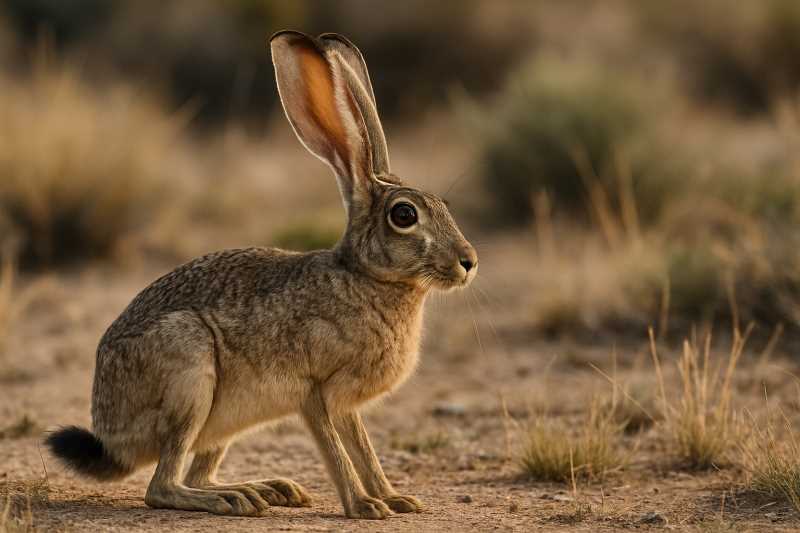
The Black-tailed Jackrabbit is a large hare distinguished by its long ears and powerful hind legs, which are adapted for swift running. Adult jackrabbits typically weigh between 3 to 6 pounds and measure approximately 18 to 25 inches in length, excluding the tail. Their fur is a blend of gray and brown, providing excellent camouflage in their native habitats. The underside is lighter, often a creamy white, while the tail is distinctively black on top, which gives the species its common name.
Their long ears, which can measure up to 7 inches, are an evolutionary adaptation for thermoregulation, allowing the animals to dissipate heat in their often hot, arid environments. The black-tipped ears also aid in distinguishing them from other hare species.
Range and Habitat
The Black-tailed Jackrabbit is primarily found in the western United States, extending into Mexico and parts of Canada. Their range covers a diverse array of habitats, including deserts, prairies, and open fields. They are particularly well-adapted to arid environments, thriving in areas with sparse vegetation where they can use their speed to evade predators.
Within these habitats, Black-tailed Jackrabbits are often found in areas with a mix of open spaces for running and cover for protection. They are adept at living in both natural and modified landscapes, including agricultural areas where they can sometimes become a pest.
Behavior and Diet
Black-tailed Jackrabbits are primarily nocturnal, although they may be active during twilight hours. Their activity patterns are largely influenced by environmental conditions, such as temperature and predator presence. They are solitary creatures, coming together only during the breeding season.
Their diet consists mainly of a variety of plant materials, including grasses, herbs, and small shrubs. They are known for their ability to consume tough, fibrous vegetation, which is aided by their specialized digestive system. During times of scarcity, they can survive on minimal water, deriving most of their moisture from the plants they eat.
Identification Tips (field recognition cues)
Identifying a Black-tailed Jackrabbit in the field can be straightforward if you know what features to look for:
- Ears: Look for the long, black-tipped ears that are a distinctive feature of this species.
- Tail: The black upper side of the tail is a key identifying mark.
- Size and Build: Their large size and powerful hind legs are characteristic of hares, not rabbits.
- Coloration: A mix of gray and brown fur with a lighter underside helps them blend into their environment.
- Behavior: Observing their rapid, zigzag running pattern can also aid in identification.
Conservation Status (with threats and protections)
The Black-tailed Jackrabbit is currently listed as a species of "Least Concern" by the International Union for Conservation of Nature (IUCN). However, this does not mean they are free from threats. Habitat loss due to urbanization and agricultural expansion poses significant challenges. Additionally, they face threats from hunting, disease, and vehicle collisions.
Conservation efforts focus on habitat preservation and management. In some regions, hunting regulations help maintain sustainable populations, while wildlife corridors are being developed to mitigate the impact of roads.
Frequently Asked Questions
1. What is the difference between a jackrabbit and a regular rabbit?
Jackrabbits, including the Black-tailed Jackrabbit, are actually hares, not rabbits. They are generally larger, with longer ears and legs, and are adapted for running at high speeds. Unlike rabbits, hares do not dig burrows; instead, they create shallow depressions in the ground.
2. Are Black-tailed Jackrabbits dangerous to humans?
Black-tailed Jackrabbits are not dangerous to humans. They are shy creatures that prefer to flee rather than confront threats. While they can be an agricultural nuisance, they do not pose any direct danger to people.
3. How fast can a Black-tailed Jackrabbit run?
Black-tailed Jackrabbits are incredibly fast runners, capable of reaching speeds up to 40 miles per hour. Their powerful hind legs allow them to make quick, zigzagging movements to evade predators.
4. What predators do Black-tailed Jackrabbits face?
Predators of Black-tailed Jackrabbits include coyotes, hawks, eagles, bobcats, and foxes. Their speed and agility are their primary defenses against these threats.
5. How do Black-tailed Jackrabbits adapt to desert environments?
They have several adaptations for desert life, including long ears for heat dissipation, a diet that allows them to extract moisture from food, and a nocturnal lifestyle to avoid daytime heat.
Related posts