The Lesser Black-backed Gull: An Insight into the Life and Habits of Larus fuscus
The Lesser Black-backed Gull, scientifically known as Larus fuscus, is a fascinating species of seabird that captivates bird watchers and ornithologists alike. Known for its distinctive plumage and widespread distribution, this gull offers a unique case study in adaptation and survival. In this article, we delve into the physical characteristics, habitat, behavior, and conservation status of the Lesser Black-backed Gull, providing a comprehensive overview of this remarkable bird.
Physical Characteristics
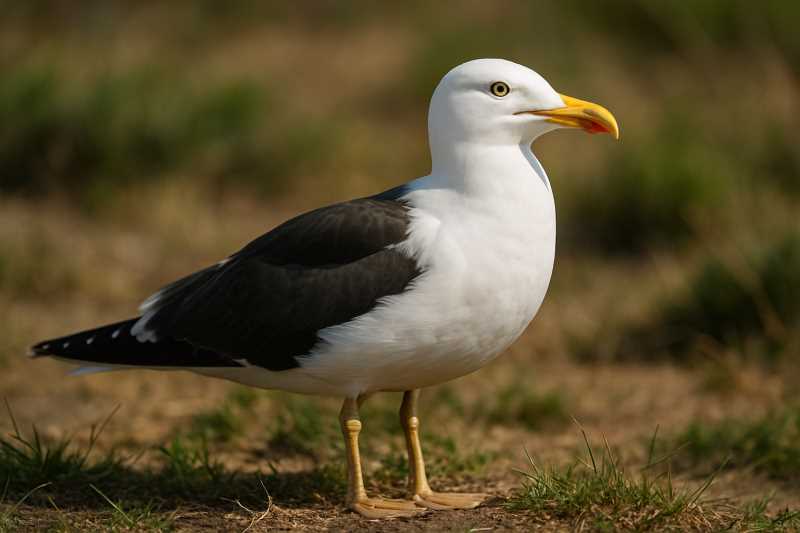
The Lesser Black-backed Gull is a medium-sized gull, measuring between 51 to 64 centimeters in length, with a wingspan ranging from 124 to 150 centimeters. It is characterized by its slate-gray to black back and wings, which sharply contrast with its white head, neck, and underparts. During the breeding season, the bird’s bill is a vibrant yellow with a red spot near the tip, and its eyes are yellow with a red orbital ring. Juvenile gulls, however, have mottled brown plumage and take about four years to acquire adult plumage.
Habitat and Distribution
Larus fuscus is widely distributed across Europe, particularly in coastal regions. It breeds in northern Europe, from Iceland and Norway in the west to the Baltic States in the east. During the winter months, it migrates south to warmer climates, including the Mediterranean, West Africa, and occasionally the eastern seaboard of North America. The species favors a variety of habitats, including coastal cliffs, islands, and estuaries, but it has also adapted well to urban environments, often seen scavenging in cities and towns.
Behavior and Diet
The Lesser Black-backed Gull is highly opportunistic, exhibiting remarkable adaptability in its feeding habits. It primarily feeds on fish, marine invertebrates, and carrion but is also known to consume insects, small mammals, and even berries. Its foraging behavior is diverse, ranging from surface dipping and plunge-diving to scavenging and kleptoparasitism, where it steals food from other birds.
Socially, these gulls are colonial nesters, often forming large, noisy colonies on islands and coastal cliffs. The breeding season typically begins in late April, with pairs performing elaborate courtship displays. Nests are constructed on the ground, consisting of grass, seaweed, and feathers. Both parents share in the incubation of the two to four eggs, which hatch after about 25 days. The chicks are precocial, leaving the nest within a few days to form crèches with other young, although they remain dependent on their parents for food.
Migration Patterns
The Lesser Black-backed Gull is a migratory species, with distinct migration patterns depending on the population’s geographical location. Northern populations are fully migratory, moving to southern Europe and Africa during winter, while some populations in western Europe are partially migratory or even resident. The species is known for its long-distance migrations, with some individuals travelling over 3,000 kilometers between breeding and wintering grounds.
Conservation Status
Currently, the Lesser Black-backed Gull is listed as Least Concern by the International Union for Conservation of Nature (IUCN). However, certain populations have been experiencing declines due to various factors, including habitat loss, pollution, and changes in food availability. Conservation efforts focus on protecting breeding habitats, monitoring populations, and mitigating human-induced threats. In some regions, the species benefits from legal protection and conservation programs aimed at preserving coastal ecosystems.
Human Interaction and Urban Adaptation
The adaptability of the Lesser Black-backed Gull to urban environments is noteworthy. As traditional food sources have become less reliable due to overfishing and environmental changes, these gulls have increasingly turned to cities and towns. Here, they exploit human refuse and food waste, often leading to conflicts with humans. While some see them as nuisances, their presence in urban landscapes highlights the need for better waste management and urban planning to accommodate wildlife.
Conclusion
The Lesser Black-backed Gull, Larus fuscus, is a testament to the resilience and adaptability of avian species in a rapidly changing world. Its widespread distribution, diverse diet, and ability to thrive in both natural and urban environments make it a subject of interest for both scientists and bird enthusiasts. Continued research and conservation efforts are crucial to ensuring that future generations can enjoy this remarkable bird in its natural habitat.
By understanding the Lesser Black-backed Gull’s life and habits, we gain insight into the broader ecological dynamics of coastal and urban ecosystems. As we face global environmental challenges, the story of the Lesser Black-backed Gull serves as a reminder of the intricate connections between wildlife and human communities.
In summary, Larus fuscus not only enriches our natural landscapes but also challenges us to consider the impact of our actions on the natural world. Through collaborative conservation and sustainable practices, we can help secure a future for this and many other species that share our planet.
Related posts