Introduction
Scott’s Myotis (Myotis scotti) is a fascinating bat species belonging to the family Vespertilionidae, also known as the evening bats. These mammals are an integral part of the ecosystem, contributing to insect population control and pollination, while also serving as prey for various predators. Despite their ecological importance, Scott’s Myotis remains relatively understudied, making it a subject of interest for conservationists and researchers alike. Understanding the biology, ecology, and threats faced by this species is crucial for developing effective conservation strategies.
Physical Description
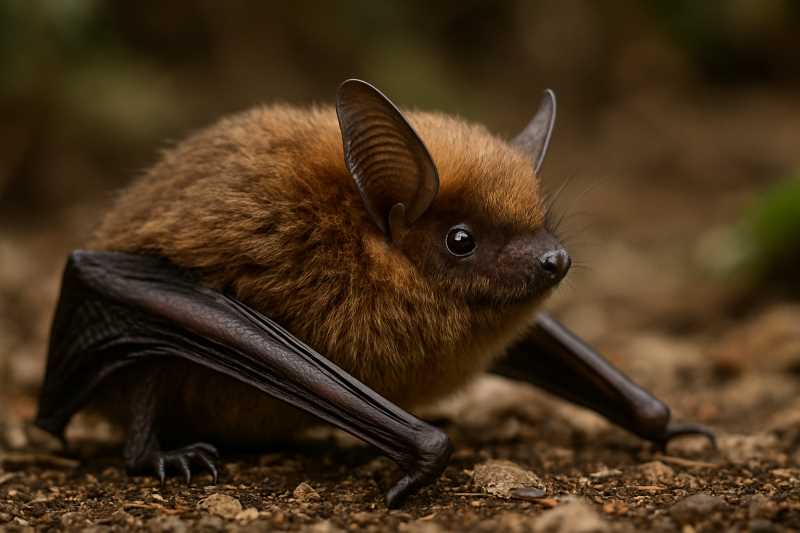
Scott’s Myotis is a small to medium-sized bat characterized by its distinct physical features. It typically exhibits a wingspan ranging from 25 to 30 centimeters, with a body length of about 4 to 6 centimeters. The weight of these bats generally falls between 5 to 10 grams. They possess a sleek, furry coat that can vary in color from dark brown to light gray, depending on the region and specific environmental conditions.
The ears of Scott’s Myotis are moderately long and rounded, aiding in their exceptional echolocation abilities. Their face is adorned with a slight muzzle and small eyes, which are adapted for nocturnal activity. The wings are long and narrow, facilitating agile flight patterns that are crucial for hunting and avoiding predators.
Range and Habitat
Scott’s Myotis is primarily found in specific regions of Africa, with its range extending to parts of Ethiopia, Kenya, and Somalia. These bats prefer habitats that offer a mixture of open spaces for foraging and sheltered areas for roosting. They are commonly associated with savannas, woodlands, and sometimes agricultural landscapes where they can find ample insect prey.
Roosting sites are often located in caves, crevices, and hollow trees, where they can remain protected during the day. The selection of roosting sites is critical, as it provides security from predators and environmental stresses. In areas with significant human activity, these bats have been known to adapt to man-made structures, such as old buildings and bridges.
Behavior and Diet
Scott’s Myotis is primarily nocturnal, emerging at dusk to begin its nightly activities. Their behavior is heavily influenced by their need to forage for food and avoid predators. These bats exhibit social behavior, often roosting in small colonies that can range from a few individuals to several dozen.
The diet of Scott’s Myotis consists mainly of insects, making them insectivorous. They are adept hunters, utilizing echolocation to detect and capture prey mid-flight. The diet is diverse, including moths, beetles, flies, and other small flying insects. This dietary preference plays a significant role in controlling insect populations, thereby contributing to the ecological balance.
Identification Tips (field recognition cues)
Identifying Scott’s Myotis in the field can be challenging due to their nocturnal nature and the presence of similar species. However, several cues can aid in their identification:
- Size and Shape: Look for a small to medium-sized bat with a slender body and long, narrow wings.
- Coloration: Note the fur color, which typically ranges from dark brown to light gray.
- Echolocation Calls: Use a bat detector to listen for their specific echolocation frequencies, which are generally within the range of 40 to 60 kHz.
- Roosting Sites: Check likely roosting locations such as caves, hollow trees, and even old buildings.
Conservation Status (with threats and protections)
As of the latest assessments, Scott’s Myotis is classified as Vulnerable on the IUCN Red List. This status is primarily due to habitat loss, human disturbance, and environmental changes. Deforestation, agricultural expansion, and urban development are significant threats that have led to a reduction in suitable habitats for these bats.
In response to these threats, several conservation measures have been proposed and implemented. Protected areas have been established in parts of their range, and efforts are underway to promote sustainable land use practices. Public awareness campaigns are also crucial in reducing human disturbance and promoting the conservation of bat habitats.
Frequently Asked Questions
1. What is the primary diet of Scott’s Myotis? Scott’s Myotis primarily feeds on insects, including moths, beetles, and flies, making them an integral part of the ecosystem for controlling insect populations.
2. Where can Scott’s Myotis be found? Scott’s Myotis is found in parts of Africa, particularly in Ethiopia, Kenya, and Somalia, where they inhabit savannas, woodlands, and sometimes agricultural areas.
3. Why is Scott’s Myotis considered vulnerable? The species is classified as Vulnerable due to habitat loss from deforestation, agricultural expansion, and urbanization, which reduce their roosting and foraging areas.
4. How can Scott’s Myotis be identified in the field? Field identification can be aided by noting their size, coloration, echolocation calls, and typical roosting sites such as caves and hollow trees.
5. What conservation efforts are in place for Scott’s Myotis? Conservation efforts include establishing protected areas, promoting sustainable land use, and raising public awareness to reduce human disturbance and habitat destruction.
Related posts