Introduction
The Taiwanese Mole Shrew, scientifically known as Anourosorex yamashinai, is a fascinating mammal species endemic to Taiwan. This elusive creature is part of the Soricidae family and is commonly referred to as the Yushan Mole Shrew due to its association with Taiwan’s highest peak, Yushan Mountain. With its specialized adaptations and unique ecological role, this species is a subject of interest for researchers and conservationists alike.
Physical Description
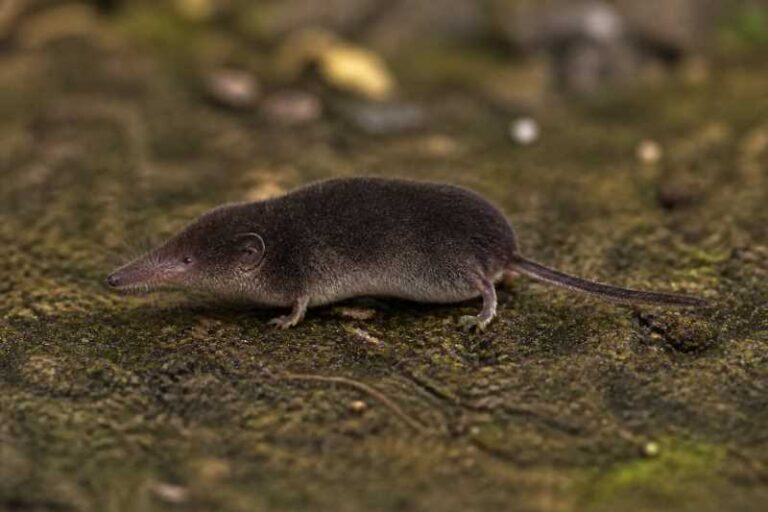
The Taiwanese Mole Shrew is a small, burrowing mammal with a body length ranging from 8 to 10 centimeters, excluding its short tail, which measures about 1 to 2 centimeters. This species possesses a dense, velvety fur that is typically dark gray or brown, providing excellent camouflage in its natural habitat. Its body is cylindrical, streamlined for efficient tunneling through soil. The eyes are small and underdeveloped, reflecting its subterranean lifestyle, and its ears are nearly invisible, buried beneath the fur.
One of the most distinctive features of the Taiwanese Mole Shrew is its powerful forelimbs, equipped with strong claws adapted for digging. The snout is elongated and flexible, aiding in the detection of prey underground. Despite its small size, this mole shrew is a formidable predator in its ecosystem.
Range and Habitat
The Taiwanese Mole Shrew is endemic to Taiwan, where it inhabits a range of elevations from lowland forests to mountainous regions. It is primarily found in moist, subtropical, and temperate forests with ample leaf litter and soft soil that facilitate its burrowing activities. These habitats provide the necessary cover and food resources for survival.
The species is often associated with areas that have rich undergrowth and abundant invertebrate populations, offering a steady food supply. While it is adaptable in its habitat preferences, the Taiwanese Mole Shrew is sensitive to habitat disturbances, making conservation of its natural environment crucial.
Behavior and Diet
The Taiwanese Mole Shrew is a solitary and nocturnal animal, spending most of its life underground in intricate tunnel systems that it digs using its powerful forelimbs. These tunnels not only serve as pathways for foraging but also as protection from predators.
Its diet primarily consists of invertebrates, including earthworms, insects, and larvae. The shrew uses its acute sense of smell and tactile snout to locate prey in the dark, moist environments of its tunnels. The high metabolic rate of the Taiwanese Mole Shrew necessitates frequent feeding, and it is known to be an opportunistic feeder, consuming a variety of available prey.
Identification Tips (Field Recognition Cues)
Identifying the Taiwanese Mole Shrew in the wild can be challenging due to its elusive nature and subterranean lifestyle. However, there are several cues that can aid in its identification:
- Size and Shape: Look for a small, cylindrical body measuring about 8 to 10 centimeters in length, with a very short tail.
- Fur and Coloration: The dense, dark gray or brown fur is a key characteristic, providing camouflage in its forest habitat.
- Behavior: Observe for signs of burrowing activity, such as disturbed soil or small tunnels in moist, forested areas.
- Forelimbs and Snout: Note the strong forelimbs and elongated snout, which are adapted for digging and sensing prey.
Conservation Status (with Threats and Protections)
The conservation status of the Taiwanese Mole Shrew is currently listed as Least Concern by the International Union for Conservation of Nature (IUCN). However, this does not imply that the species is free from threats. Habitat loss due to deforestation, agricultural expansion, and urban development poses significant challenges to its survival.
Conservation efforts in Taiwan focus on habitat protection and restoration. Protected areas and national parks play a vital role in preserving the natural habitats of the Taiwanese Mole Shrew. Additionally, research and monitoring programs are crucial for understanding population trends and devising effective conservation strategies.
Frequently Asked Questions
1. What is the habitat range of the Taiwanese Mole Shrew?
The Taiwanese Mole Shrew is found in various forested habitats across Taiwan, from lowland tropical forests to mountainous regions. It prefers areas with soft soil and ample leaf litter.
2. How does the Taiwanese Mole Shrew find its food?
The shrew uses its highly developed sense of smell and elongated, sensitive snout to locate invertebrate prey in the dark, subterranean environment of its tunnels.
3. What are the main threats to the Taiwanese Mole Shrew?
The primary threats include habitat destruction due to deforestation, urbanization, and agricultural activities. Conservation efforts focus on habitat preservation and protection.
4. Is the Taiwanese Mole Shrew endangered?
Currently, the Taiwanese Mole Shrew is not considered endangered. It is classified as Least Concern; however, ongoing habitat loss remains a significant concern for its future.
5. How can one identify a Taiwanese Mole Shrew in the wild?
Identifying this species involves looking for its small, cylindrical body, dark fur, signs of burrowing activity, and the presence of strong forelimbs and a long snout adapted for digging.
Related posts