Introduction
The Betsileo Sportive Lemur (Lepilemur betsileo) is an intriguing primate species native to the island of Madagascar. A member of the sportive lemur family, this nocturnal creature is a testament to the island’s extraordinary biodiversity. Known for its unique adaptations and behaviors, the Betsileo Sportive Lemur is a subject of great interest to primatologists and conservationists alike. This article delves into various aspects of this species, from its physical characteristics to its conservation status, providing a comprehensive overview for those interested in this fascinating lemur.
Physical Description
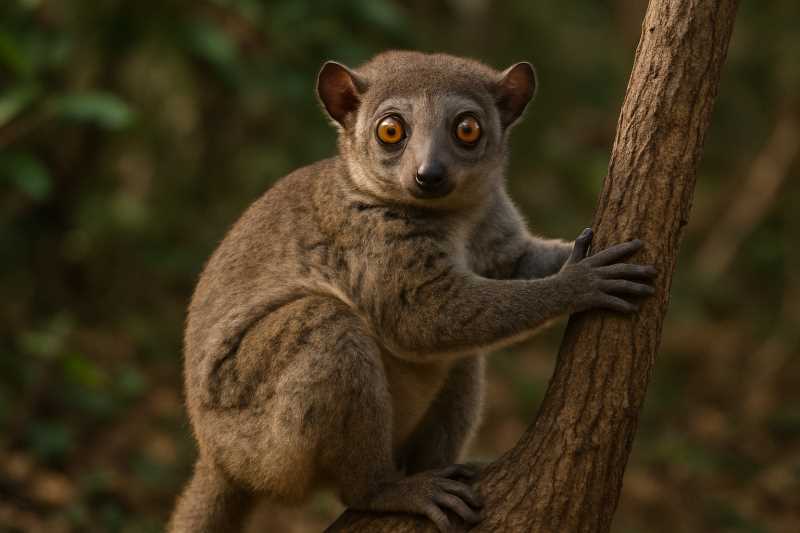
Lepilemur betsileo is a medium-sized lemur characterized by its distinctive physical features. It possesses a soft, dense coat that varies in coloration from grayish-brown to reddish-brown, providing effective camouflage in its arboreal habitat. The underparts of the Betsileo Sportive Lemur are typically lighter, often displaying a creamy or whitish hue.
One of the most notable features of this lemur is its large, round eyes, adapted for nocturnal vision. These eyes are complemented by a short, broad muzzle and rounded ears, which are less prominent than those of other lemur species. The Betsileo Sportive Lemur’s strong hind limbs are well-adapted for leaping, allowing it to navigate the forest canopy with agility and precision.
Adult Betsileo Sportive Lemurs typically weigh between 0.8 to 1.2 kilograms and measure about 22 to 30 centimeters in body length, with an additional tail length of approximately 24 to 28 centimeters. The tail is not only used for balance but also serves as a communication tool among lemurs.
Range and Habitat
The Betsileo Sportive Lemur is endemic to the central highlands of Madagascar, predominantly found in the Betsileo region, from which it derives its name. This lemur inhabits deciduous and evergreen forests, thriving in areas with dense canopy cover that offers ample food resources and protection from predators.
Preferred habitats include both primary forests and secondary growth areas, where the Betsileo Sportive Lemur can find a variety of food sources and suitable nesting sites. The species’ ability to adapt to different forest types is crucial for its survival, given the ongoing deforestation and habitat fragmentation in Madagascar.
Behavior and Diet
As a nocturnal and arboreal species, the Betsileo Sportive Lemur is most active during the night. It spends the daylight hours resting in tree holes or dense foliage, emerging after sunset to forage and socialize.
The diet of the Betsileo Sportive Lemur primarily consists of leaves, flowers, and fruits. This folivorous diet is supported by their specialized digestive system, which includes a large cecum for fermenting tough plant materials. Occasionally, they may also consume bark, shoots, and insect larvae.
Socially, Betsileo Sportive Lemurs are relatively solitary compared to other lemur species. They maintain small home ranges but may engage in vocal communication with neighboring lemurs. These vocalizations, along with scent marking, play a crucial role in territory establishment and mate attraction.
Identification Tips (Field Recognition Cues)
Identifying the Betsileo Sportive Lemur in the field can be challenging due to its elusive nature and nocturnal habits. However, certain cues can aid in its identification:
- Eye Shine: At night, the large eyes of the Betsileo Sportive Lemur reflect light, creating a distinct eye shine that can be spotted with a flashlight.
- Vocalizations: Listen for their low, guttural calls, which are often exchanged between individuals during night-time activities.
- Tail Movement: Observe their bushy tails, which are often used for balance and communication within the forest canopy.
- Behavior: Look for their characteristic leaping movements between trees, which can help distinguish them from other lemur species.
Conservation Status (With Threats and Protections)
The conservation status of the Betsileo Sportive Lemur is currently classified as "Vulnerable" by the International Union for Conservation of Nature (IUCN). This classification is primarily due to habitat loss, driven by deforestation, agricultural expansion, and illegal logging.
Conservation efforts for the Betsileo Sportive Lemur include habitat protection and restoration initiatives, as well as community-based conservation programs aimed at promoting sustainable land-use practices. Additionally, several protected areas in Madagascar, such as national parks and reserves, serve as critical refuges for this species.
Frequently Asked Questions
What adaptations help the Betsileo Sportive Lemur survive in its habitat?
The Betsileo Sportive Lemur has several adaptations, including nocturnal vision for nighttime activity, strong hind limbs for leaping, and a specialized digestive system for processing a folivorous diet.
How does the Betsileo Sportive Lemur communicate?
Communication in the Betsileo Sportive Lemur involves vocalizations, particularly low-pitched calls, as well as scent marking to establish territory and attract mates.
Why is the Betsileo Sportive Lemur considered vulnerable?
The species is classified as vulnerable primarily due to habitat loss from deforestation, agricultural expansion, and illegal logging, which threaten its natural habitat.
Where can I see the Betsileo Sportive Lemur in the wild?
The Betsileo Sportive Lemur can be observed in the central highlands of Madagascar, particularly in protected areas such as national parks and reserves.
What do Betsileo Sportive Lemurs eat?
Their diet mainly consists of leaves, flowers, and fruits, along with occasional bark, shoots, and insect larvae to supplement their nutritional intake.
Related posts