Mexican Big-eyed Bat (Chiroderma scopaeum)
Introduction
The Mexican Big-eyed Bat, scientifically known as Chiroderma scopaeum, is a fascinating member of the family Phyllostomidae, often referred to as New World leaf-nosed bats. This species is notable for its distinctive large eyes, which are adapted for low-light environments, allowing it to thrive in its natural habitat. Found primarily in Mexico, this bat plays a crucial role in its ecosystem as both a pollinator and a seed disperser. Understanding more about the Mexican Big-eyed Bat can provide deeper insights into the ecological dynamics of the regions it inhabits and highlight the importance of conservation efforts.
Physical Description
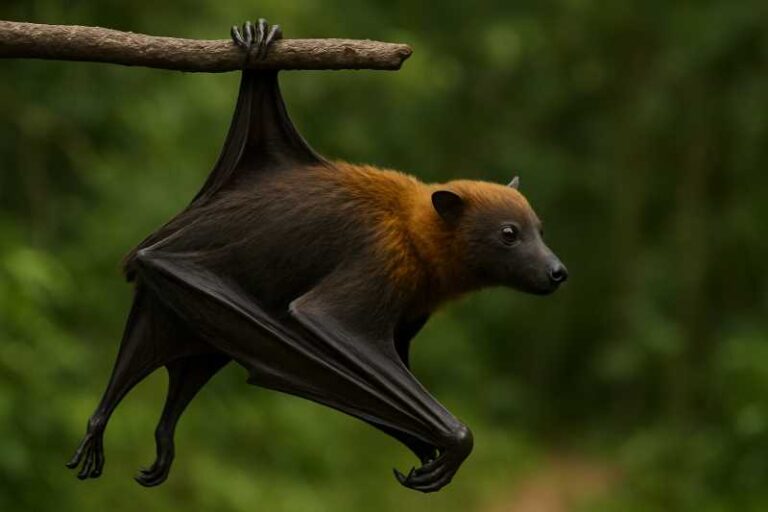
The Mexican Big-eyed Bat is relatively small, with a body length ranging from 5 to 7 centimeters and a wingspan of approximately 25 to 30 centimeters. As its name suggests, one of the most striking features of this bat is its disproportionately large eyes, which are well-suited for nocturnal vision. The fur is generally a grayish-brown color, with a lighter underside that blends seamlessly into the dappled light of its forest environment.
This species possesses a distinctive nose-leaf structure, characteristic of the Phyllostomidae family, which aids in echolocation. The ears are small and rounded, enhancing their auditory capabilities. Their wings are long and narrow, designed for agile and maneuverable flight, essential for navigating through dense forest canopies.
Range and Habitat
The Mexican Big-eyed Bat is endemic to Mexico, with its range primarily confined to the southern regions, including parts of the Sierra Madre del Sur and the Yucatán Peninsula. This bat prefers subtropical and tropical dry forests, as well as moist lowland forests, where it can find abundant food sources and suitable roosting sites.
These bats typically roost in hollow trees, caves, and sometimes in man-made structures that mimic their natural habitats, such as abandoned buildings or mines. The choice of roosting sites is crucial for their survival, as it offers protection from predators and harsh weather conditions.
Behavior and Diet
Primarily nocturnal, the Mexican Big-eyed Bat emerges at dusk to begin its nightly activities. This species exhibits a frugivorous diet, feeding mainly on fruits, although it is also known to consume nectar and pollen. The bats play a significant role in the pollination of various plant species and the dispersal of seeds, which helps maintain the ecological balance within their habitats.
Socially, these bats are known to form small colonies, which may consist of a few individuals or larger groups, depending on the availability of food and roosting sites. Communication within these colonies is facilitated through vocalizations and possibly through the use of their elaborate nose-leaf structures for echolocation.
Identification Tips (Field Recognition Cues)
When attempting to identify the Mexican Big-eyed Bat in the field, observers should look for the following characteristics:
- Large Eyes: One of the most noticeable features, aiding in low-light vision.
- Nose-Leaf Structure: A prominent feature used for echolocation.
- Fur Coloration: Generally grayish-brown with a lighter underside.
- Flight Pattern: Agile and maneuverable, often seen darting through forest canopies.
- Size: Small body size with a wingspan of 25 to 30 centimeters.
Conservation Status (with Threats and Protections)
The Mexican Big-eyed Bat is currently classified as Near Threatened on the IUCN Red List. This status is a result of habitat destruction due to deforestation, agricultural expansion, and urban development. The loss of roosting sites poses a significant threat to the survival of this species.
Conservation efforts are focused on habitat preservation and restoration, as well as the establishment of protected areas within its range. Public awareness campaigns and research initiatives are also essential components of the conservation strategy, aimed at highlighting the ecological importance of this species and promoting coexistence with human activities.
Frequently Asked Questions
1. What does the Mexican Big-eyed Bat eat?
The Mexican Big-eyed Bat primarily feeds on fruits, making it an important frugivore in its ecosystem. It also consumes nectar and pollen, contributing to the pollination of various plant species.
2. Where can you find the Mexican Big-eyed Bat?
This species is endemic to Mexico, mainly found in the southern regions, including the Sierra Madre del Sur and the Yucatán Peninsula. It prefers subtropical and tropical forests.
3. How does the Mexican Big-eyed Bat contribute to its ecosystem?
As a frugivore, the Mexican Big-eyed Bat plays a crucial role in seed dispersal and plant pollination, which helps maintain the ecological balance in its habitat.
4. What are the main threats to the Mexican Big-eyed Bat?
The primary threats include habitat destruction due to deforestation, agricultural expansion, and urbanization, which lead to the loss of roosting sites and food sources.
5. How can we help protect the Mexican Big-eyed Bat?
Conservation efforts such as habitat preservation, public awareness campaigns, and the establishment of protected areas are vital for safeguarding the future of this species.
Related posts