Greater Forest Shrew (Sylvisorex ollula): A Comprehensive Guide
Introduction
The Greater Forest Shrew, scientifically known as Sylvisorex ollula, is a small mammal that plays a significant role in forest ecosystems. Despite its small size, this shrew species is an important insectivore, contributing to the control of insect populations. This article delves into the various aspects of the Greater Forest Shrew, including its physical description, range, habitat, behavior, diet, identification tips, and conservation status. Whether you’re a wildlife enthusiast, a researcher, or a conservationist, this comprehensive guide aims to provide you with valuable insights into this fascinating mammal.
Physical Description
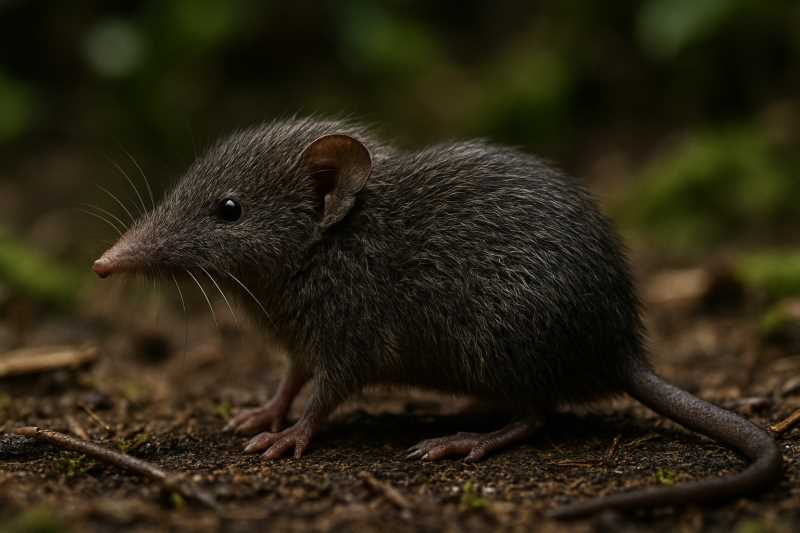
The Greater Forest Shrew is a diminutive creature, typically measuring between 6 to 8 centimeters in body length, with a tail length of approximately 4 to 5 centimeters. The shrew is characterized by its dense and soft fur, which is predominantly dark brown or grayish in color, providing camouflage within its forest habitat. Its pointed snout is well-adapted for foraging in the leaf litter, and its small, beady eyes suggest a reliance on its acute sense of smell rather than vision. The shrew’s feet are equipped with sharp claws, aiding in digging and climbing through the underbrush.
The dental structure of the Greater Forest Shrew is specialized for its insectivorous diet, featuring sharp, pointed teeth ideal for piercing and consuming insects. Overall, the Greater Forest Shrew’s physical adaptations make it perfectly suited for its life in dense, humid forest environments.
Range and Habitat
The Greater Forest Shrew is primarily found in the tropical and subtropical forests of Central and West Africa. Its range extends across countries such as Cameroon, the Democratic Republic of the Congo, Gabon, and Equatorial Guinea. The species thrives in regions with dense, moist vegetation, often inhabiting the forest floor where leaf litter and underbrush provide both food resources and protection from predators.
These shrews are typically found in primary and secondary forests, indicating their adaptability to various forest conditions. However, they are less commonly found in disturbed habitats, as they rely heavily on the ecological stability provided by undisturbed forest ecosystems.
Behavior and Diet
Greater Forest Shrews are primarily nocturnal, engaging in most of their activities under the cover of darkness. Their behaviors are largely influenced by their need to locate and consume food. As insectivores, their diet mainly consists of insects, spiders, and other small invertebrates. They use their keen sense of smell to locate prey within the leaf litter, often rooting through the soil and debris to uncover hidden insects.
These shrews are solitary creatures, with each individual maintaining its own territory. They communicate with each other through high-pitched squeaks and scent markings, which help establish territorial boundaries and convey reproductive readiness. During the breeding season, male shrews may become more active and travel greater distances in search of mates.
Identification Tips (Field Recognition Cues)
Identifying the Greater Forest Shrew in the wild requires attention to several key characteristics:
- Size and Shape: Look for a small mammal with a body length of 6 to 8 centimeters and a tail that is slightly shorter than its body.
- Fur Texture and Color: Observe the dense, soft fur that is dark brown or grayish, blending well with the forest floor.
- Behavior: Note their nocturnal activity. If you’re exploring a forest at night, listen for high-pitched squeaks and rustling in the leaf litter.
- Habitat: Focus on primary and secondary forests with rich leaf litter and underbrush, as these are preferred habitats.
- Snout and Claws: Look for the characteristic pointed snout and small, sharp claws used for foraging and climbing.
Conservation Status (with Threats and Protections)
The Greater Forest Shrew is currently listed as Least Concern by the International Union for Conservation of Nature (IUCN). However, like many forest-dependent species, it faces threats from habitat loss and degradation. Deforestation for agriculture, logging, and infrastructure development poses significant risks to their natural habitat.
Conservation efforts for the Greater Forest Shrew include the establishment of protected areas and national parks within its range. These sanctuaries provide vital refuges where the species can thrive away from human disturbances. Additionally, ongoing research and monitoring are essential to understanding population trends and the impacts of environmental changes.
Efforts to raise awareness about the importance of conserving tropical forests are crucial. Such initiatives can help protect not only the Greater Forest Shrew but also the myriad of other species that rely on these ecosystems.
Frequently Asked Questions
What is the primary diet of the Greater Forest Shrew?
The Greater Forest Shrew primarily feeds on insects, spiders, and other small invertebrates. Its diet is integral to controlling insect populations within forest ecosystems.
Where can the Greater Forest Shrew be found?
This shrew species is found in the tropical and subtropical forests of Central and West Africa, including countries like Cameroon, the Democratic Republic of the Congo, Gabon, and Equatorial Guinea.
How can I identify a Greater Forest Shrew in the wild?
Look for a small mammal with dark brown or grayish fur, a pointed snout, and sharp claws. They are typically active at night and inhabit dense forest areas with substantial leaf litter.
What are the conservation threats to the Greater Forest Shrew?
The main threats include habitat loss and degradation due to deforestation for agriculture, logging, and infrastructure development.
How does the Greater Forest Shrew communicate?
Greater Forest Shrews communicate using high-pitched squeaks and scent markings, which are used to establish territory and signal reproductive readiness.
Related posts