Introduction
The Tanzanian Masked Weaver (Ploceus reichardi) is a fascinating avian species belonging to the Ploceidae family, known for its vibrant plumage, intricate nest-building skills, and social behavior. Endemic to Tanzania’s lush landscapes, this bird plays a vital role in the ecological balance of its habitat. This article delves into the unique characteristics, habitat, behavior, and conservation status of the Tanzanian Masked Weaver, providing an in-depth look at this captivating bird.
Physical Characteristics
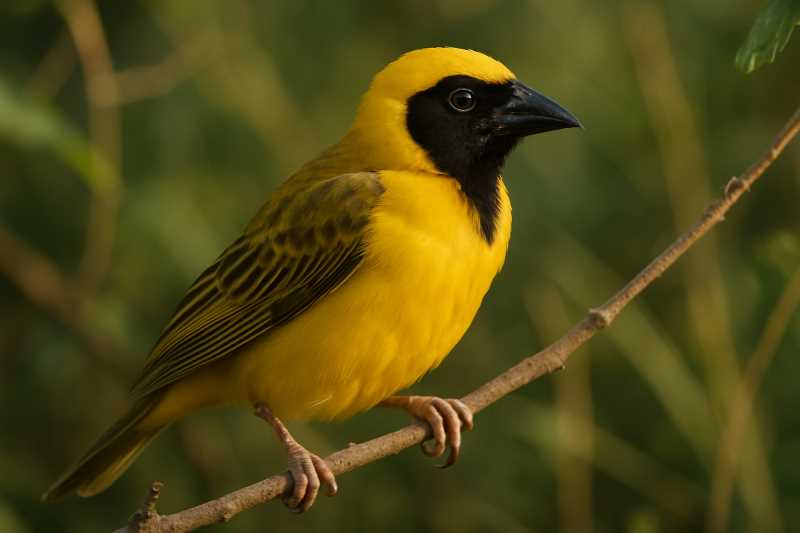
The Tanzanian Masked Weaver is a medium-sized bird, typically measuring between 15 to 17 centimeters in length. It is renowned for its striking appearance, characterized by a bright yellow body contrasted with a black mask that extends from the beak across the eyes, lending the bird its name. The males are particularly colorful during the breeding season, flaunting a brilliant yellow underbelly and rump, while the upper parts are olive green. Females and non-breeding males, on the other hand, exhibit a more subdued coloration, primarily olive-brown, which provides excellent camouflage in their natural habitat.
Distribution and Habitat
As its name suggests, the Tanzanian Masked Weaver is predominantly found in Tanzania. Its range extends across varied habitats, including savannas, woodlands, and agricultural lands. These birds are highly adaptable, often seen in both lowland and montane regions, wherever trees or shrubs are present for nesting. The species thrives in environments where water sources are readily available, which support the growth of the vegetation they rely on for food and nesting materials.
Behavior and Diet
The Tanzanian Masked Weaver is a social bird, often seen in flocks outside the breeding season. Their diet primarily consists of seeds, grains, and insects, which they forage from the ground or among foliage. These weavers have been observed to adapt their feeding habits based on seasonal availability, showcasing their resilience and adaptability.
One of the most remarkable aspects of the Tanzanian Masked Weaver is its intricate nest-building behavior. Males are responsible for constructing the nests, which are woven from strips of grass and other plant fibers. The nest is typically spherical with a side entrance and is suspended from thin branches, which helps protect it from predators. This architectural feat is not only a testament to the bird’s skill but also plays a crucial role in attracting mates. Males often build multiple nests to impress females, who inspect the structures before selecting a partner.
Reproduction and Lifespan
Breeding for the Tanzanian Masked Weaver usually occurs during the rainy season when food is abundant. After a female selects a nest, she lines it with soft materials to accommodate her eggs. The clutch typically consists of two to four eggs, which the female incubates for about two weeks. Both parents are involved in feeding and caring for the chicks until they fledge, which occurs approximately three weeks after hatching.
In the wild, the lifespan of a Tanzanian Masked Weaver can vary, with many surviving up to five years if they can avoid predators and diseases. Captive individuals, however, may live longer due to the absence of such threats and consistent food supply.
Conservation Status
Currently, the Tanzanian Masked Weaver is classified as a species of Least Concern by the International Union for Conservation of Nature (IUCN). Despite this status, the bird faces threats from habitat loss due to agricultural expansion, deforestation, and climate change. Conservation efforts are essential to ensure that the populations remain stable and that these birds continue to thrive in their natural habitats.
Several initiatives are in place to protect the Tanzanian Masked Weaver and its habitat. Conservation organizations are working on habitat restoration projects, promoting sustainable agricultural practices, and raising awareness about the importance of biodiversity in Tanzania.
Conclusion
The Tanzanian Masked Weaver is a remarkable example of nature’s artistry, from its vibrant plumage to its complex nest-building skills. This bird not only contributes to the biodiversity of Tanzania but also serves as an indicator of the health of its ecosystem. Understanding and protecting the Tanzanian Masked Weaver is crucial for maintaining ecological balance and ensuring that future generations can continue to witness the beauty and complexity of this unique species.
By supporting conservation efforts and promoting awareness, we can help safeguard the future of the Tanzanian Masked Weaver and countless other species that share its habitat. As stewards of the planet, it is our responsibility to ensure that the wonders of nature, such as this colorful weaver, remain a vibrant part of our world.
Related posts