The Undulated Antpitta: A Hidden Gem of the Andean Forests
The Undulated Antpitta (Grallaria squamigera) is a bird species that remains shrouded in mystery, largely due to its elusive nature and the dense Andean forests it inhabits. This article aims to shed light on this remarkable bird, exploring its habitat, behavior, conservation status, and the challenges it faces in the wild.
Habitat and Distribution
The Undulated Antpitta is predominantly found in the humid montane forests of the Andes, ranging from Venezuela through Colombia, Ecuador, Peru, to Bolivia. These birds prefer altitudes between 1,800 and 3,500 meters, thriving in the understory of cloud forests where dense foliage and abundant leaf litter provide both cover and foraging grounds.
Their distribution reflects a strong preference for areas that offer a high degree of seclusion and minimal human disturbance. This preference makes the Undulated Antpitta an excellent indicator species for the health of montane forest ecosystems.
Physical Characteristics
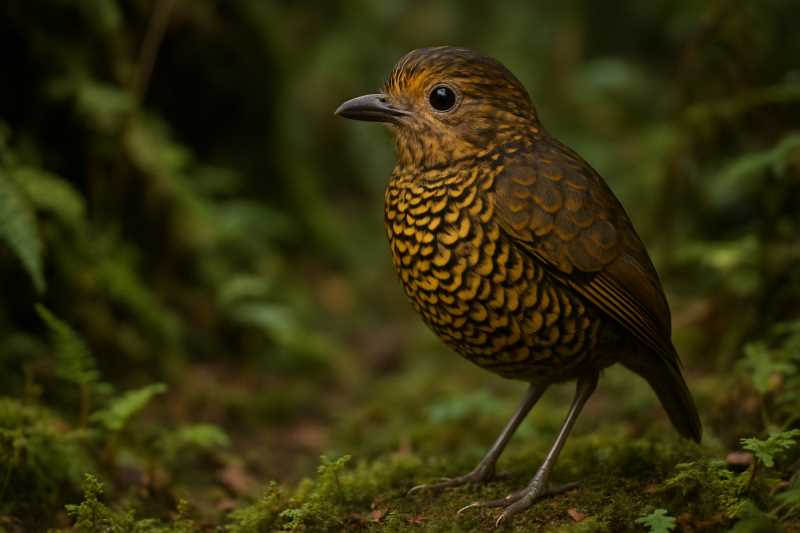
Measuring about 20-23 cm in length, the Undulated Antpitta is a medium-sized bird with a robust build. Its plumage is predominantly brown, featuring a distinctive scaly pattern on the breast and belly, which gives the bird its ‘undulated’ name. This cryptic coloration aids in camouflage, allowing the bird to remain undetected on the forest floor.
The bird’s strong legs and short tail are adaptations for its terrestrial lifestyle, as it spends much of its time hopping rather than flying. Its melodious whistle, often heard but rarely seen, is a common sound in the Andean forests.
Behavior and Diet
As a ground-dwelling bird, the Undulated Antpitta’s diet consists mainly of insects, worms, and other invertebrates. It forages by flipping over leaf litter and probing the soil with its bill to uncover hidden prey. Occasionally, the diet is supplemented by small vertebrates and seeds.
The bird is known for its secretive behavior, rarely venturing into open areas and instead preferring the dense cover of the forest understory. This elusive nature, combined with the bird’s preference for remote habitats, makes it a challenging subject for ornithologists and birdwatchers alike.
Reproduction and Lifespan
Little is known about the breeding habits of the Undulated Antpitta due to its elusive nature. However, it is believed that like other antpittas, they nest on or near the ground, constructing their nests from twigs, leaves, and other forest debris.
Clutch size is typically small, often consisting of just one or two eggs. The bird’s reproductive success is closely tied to the availability of intact forest habitat, as human encroachment and habitat destruction pose significant threats to nesting sites.
Conservation Status
Currently, the Undulated Antpitta is classified as Least Concern by the IUCN Red List, thanks to its relatively wide distribution. However, habitat loss due to deforestation and agricultural expansion remains a significant threat.
Conservation efforts are focused on preserving the cloud forests and montane habitats that are crucial to the survival of this and many other species. Protected areas and national parks across the Andes play a vital role in safeguarding these environments.
Challenges and Conservation Efforts
The primary challenge facing the Undulated Antpitta is habitat destruction. As the Andean forests continue to be logged and converted to agricultural land, the bird’s habitat shrinks, leading to population declines.
Conservationists are working to mitigate these threats through a combination of habitat protection, restoration projects, and community engagement. Educating local communities about the ecological importance of preserving these habitats is crucial for long-term conservation success.
Conclusion
The Undulated Antpitta is a remarkable species that embodies the mystery and beauty of the Andean forests. Its elusive nature challenges even the most dedicated bird enthusiasts, while its presence serves as a reminder of the intricate web of life that exists in these biodiverse ecosystems.
Preserving the habitats of the Undulated Antpitta is not only vital for the species itself but also for the myriad of other plants and animals that share these forests. Through concerted conservation efforts, there is hope that this enigmatic bird will continue to thrive in the misty cloud forests of the Andes for generations to come.
Related posts