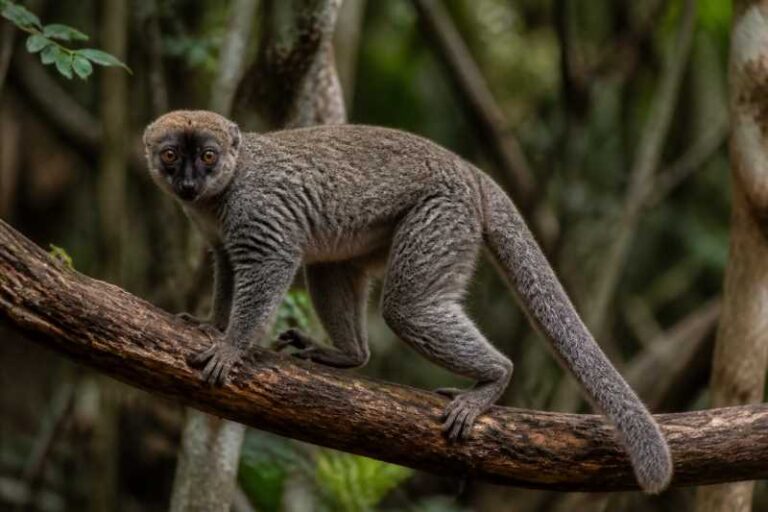
Introduction
The cacomistle, scientifically known as Bassariscus sumichrasti, is a captivating mammal belonging to the Procyonidae family. Often overshadowed by its more famous cousin, the raccoon, the cacomistle is an intriguing creature deserving of its own spotlight in the mammalian world. Native to Central America, this nocturnal animal boasts a unique blend of features that make it a subject of interest for biologists and wildlife enthusiasts alike. This article delves into the fascinating world of the cacomistle, exploring its physical characteristics, habitat, behavior, and the challenges it faces in the wild.
Physical Description
The cacomistle is a small to medium-sized mammal, with a body length ranging from 38 to 47 cm (15 to 19 inches) and a tail that adds an additional 39 to 53 cm (15 to 21 inches) to its overall length. Weighing between 1.2 to 1.5 kg (2.6 to 3.3 lbs), the cacomistle sports a slender, agile frame that aids in its arboreal lifestyle.
Its most distinctive feature is its long, bushy tail, which is adorned with alternating bands of black and white rings, much like a raccoon’s. This tail not only provides balance when navigating through the treetops but also serves as an effective tool for communication and display.
The cacomistle’s fur is typically a combination of gray and brown hues, providing excellent camouflage within its forested habitat. Its face is marked by a characteristic white mask with dark eye rings, giving it an alert and intelligent expression. The large, rounded ears are particularly sensitive to sounds, enhancing its ability to detect prey and avoid predators.
Range and Habitat
The cacomistle is primarily found in the tropical and subtropical regions of Central America. Its range extends from southern Mexico through Guatemala, Belize, Honduras, El Salvador, Nicaragua, Costa Rica, and into Panama. The species thrives in a variety of forested environments, including tropical rainforests, cloud forests, and deciduous forests.
Within these habitats, the cacomistle exhibits a preference for areas with dense vegetation and abundant tree cover, which offer ample opportunities for foraging and shelter. It is highly adaptable and can also be found in secondary forests and plantation areas, provided there is sufficient canopy cover.
Behavior and Diet
As a nocturnal animal, the cacomistle is most active during the night, when it embarks on foraging expeditions. Its diet is omnivorous, comprising a diverse array of foods that reflect the availability within its habitat. Fruits, berries, and nuts form the bulk of its diet, supplemented by small mammals, birds, insects, and eggs.
The cacomistle is an adept climber, using its sharp claws and strong limbs to navigate the forest canopy with ease. It is known for its solitary nature, although it may be seen in pairs or small family groups during the breeding season.
Communication among cacomistles is facilitated through a combination of vocalizations, scent marking, and body language. They are known to produce a range of sounds, including chirps, whistles, and growls, to express different emotions or signal distress.
Identification Tips (Field Recognition Cues)
Identifying a cacomistle in the wild requires keen observation and familiarity with its distinctive features. Here are some tips to help in recognizing this elusive mammal:
- Tail Patterns: Look for the characteristic ringed tail, which is a key identifier. The tail is long and bushy, with clear black and white bands.
- Facial Markings: Note the white facial mask with dark eye rings, which stand out against its grayish-brown fur.
- Size and Build: The cacomistle’s slender body and long tail are adapted for an arboreal lifestyle, differentiating it from ground-dwelling mammals.
- Behavior: Observe its nocturnal activity patterns and arboreal habits. It is often seen climbing trees or moving along branches with agility.
Conservation Status (with Threats and Protections)
The cacomistle is currently classified as "Least Concern" by the International Union for Conservation of Nature (IUCN). However, like many forest-dependent species, it faces threats from habitat loss, primarily due to deforestation and human encroachment for agriculture and urban development.
Fragmentation of its habitat poses significant challenges, as it reduces the available territory for foraging and breeding. Additionally, the cacomistle is sometimes hunted for its fur and as a pet, although this is not a widespread practice.
Conservation efforts are focused on preserving and restoring forest habitats, implementing sustainable land-use practices, and raising awareness about the ecological role of the cacomistle. Protected areas and wildlife corridors are essential for maintaining viable populations and ensuring genetic diversity.
Frequently Asked Questions
What is the cacomistle’s role in the ecosystem?
The cacomistle plays a crucial role as both a predator and seed disperser. By consuming a variety of fruits and prey, it helps control insect populations and contributes to the propagation of plant species through seed dispersal.
How do cacomistles communicate?
Cacomistles communicate using vocalizations, scent markings, and body language. They produce sounds like chirps and growls to express emotions and mark territories with scent glands.
Is the cacomistle endangered?
Currently, the cacomistle is not considered endangered, being classified as "Least Concern." However, habitat loss and fragmentation pose ongoing threats that could impact its future status.
Can cacomistles be kept as pets?
While cacomistles are sometimes kept as exotic pets, it is not recommended due to their specific dietary and habitat needs, which are difficult to replicate in captivity.
Where can I see a cacomistle in the wild?
To observe cacomistles in their natural habitat, visit forests in Central America, particularly in protected areas where they are more likely to thrive without human disturbance.
Related posts