The Russet-naped Wood Rail: A Tropical Avian Marvel
The Russet-naped Wood Rail, scientifically known as *Aramides albiventris*, is a striking bird that commands attention with its colorful plumage and distinctive calls. This bird, native to the tropical and subtropical regions of Central America, is an intriguing subject for ornithologists and bird enthusiasts alike. In this article, we will explore its habitat, physical characteristics, behavior, and the conservation efforts in place to protect this avian species.
Habitat and Distribution
The Russet-naped Wood Rail inhabits a range that stretches from southern Mexico through Central America, including countries like Belize, Guatemala, Honduras, Nicaragua, Costa Rica, and Panama. It thrives in environments such as freshwater marshes, mangroves, riversides, and occasionally in wet pastures and agricultural fields. The bird’s preference for dense, wet habitats provides both abundant food sources and protection from predators.
These rails are typically found at low elevations, but they can sometimes be spotted up to 1,200 meters above sea level. Their adaptability to various wetland environments has helped them maintain stable populations across much of their range, although habitat destruction remains a notable threat.
Physical Characteristics
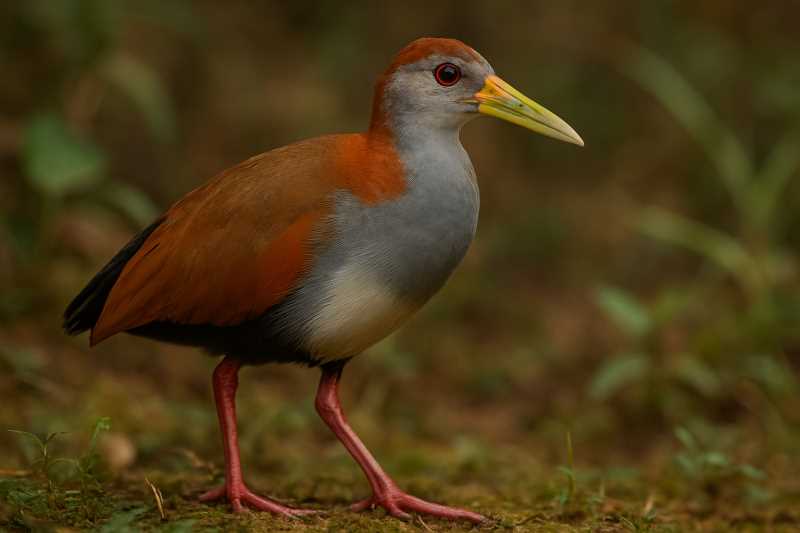
The Russet-naped Wood Rail is a medium-sized bird, measuring about 30 to 38 centimeters in length and weighing between 300 to 500 grams. Its most distinctive feature is its vibrant plumage. The bird’s head and neck are a soft gray, transitioning into a rich russet color on the nape, which gives the bird its common name. The back and wings are olive-green, while the underparts are a contrasting white. The eyes are a bright red, providing a striking contrast against the surrounding plumage.
The bill is short and robust, colored a vivid yellow, which complements the bird’s overall colorful appearance. The legs and feet are also noteworthy, often sporting a pinkish hue that adds to the bird’s distinctive look. These physical features not only make the Russet-naped Wood Rail a visually appealing bird but also play a role in its survival, aiding in foraging and movement through dense vegetation.
Behavior and Diet
Russet-naped Wood Rails are known for their secretive and elusive nature. They are more often heard than seen, with vocalizations that include a variety of clucks, cackles, and whistles. These calls are most frequently heard during the early morning or late afternoon, often used to communicate with other rails or to establish territory.
Their diet is omnivorous, consisting of a variety of invertebrates such as insects, snails, and crustaceans, as well as plant material including seeds and fruits. Foraging is typically done on the ground, where they use their strong bills to probe the soil and leaf litter for food. Their foraging behavior is often solitary or in pairs, and they are known to be highly territorial.
Breeding and Nesting
The breeding season for the Russet-naped Wood Rail generally occurs during the wet season, when food is abundant. Nests are constructed on the ground or in low vegetation, often close to water sources. The nests are made from twigs, leaves, and other plant material, forming a well-concealed structure to protect the eggs and young from predators.
Clutch sizes typically range from 2 to 7 eggs, which are incubated by both parents. The incubation period lasts around 20 to 30 days, and once hatched, the chicks are precocial, leaving the nest shortly after being born. Both parents are involved in rearing the young, providing food and protection until they are capable of fending for themselves.
Conservation Status
The International Union for Conservation of Nature (IUCN) currently lists the Russet-naped Wood Rail as a species of Least Concern. However, the bird’s habitat is under pressure from human activities such as agriculture, urban development, and wetland drainage. These activities pose significant threats to their natural habitats, potentially leading to population declines if left unchecked.
Conservation efforts are focused on habitat protection and management, as well as raising awareness about the ecological importance of wetlands. Protected areas and national parks play a crucial role in preserving the natural environments where these birds thrive. Continued research and monitoring are essential to ensure that the Russet-naped Wood Rail, along with many other wetland species, remains a vibrant part of the Central American avifauna.
Conclusion
The Russet-naped Wood Rail is a fascinating bird that embodies the rich biodiversity of Central America’s wetlands. Its colorful appearance, unique behaviors, and adaptability to diverse habitats make it a subject of great interest for birdwatchers and researchers. As human activities continue to impact natural habitats, it is increasingly important to support conservation initiatives that protect the habitats and ecosystems necessary for the survival of this and other wetland species. By fostering a deeper understanding and appreciation of the Russet-naped Wood Rail, we can contribute to the preservation of the natural world and its many wonders.
Related posts