Introduction
The Tailless Tenrec (Tenrec ecaudatus), also known as the Common Tenrec, is a fascinating mammal native to Madagascar. These unique creatures are members of the family Tenrecidae, which includes several species that display a remarkable range of morphological diversity. Despite their sometimes hedgehog-like appearance, tenrecs are not closely related to hedgehogs or any other insectivores. The Tailless Tenrec is notable for its adaptability and resilience, thriving in a variety of environments. This article delves into the various aspects of this intriguing species, from their physical characteristics to their conservation status.
Physical Description
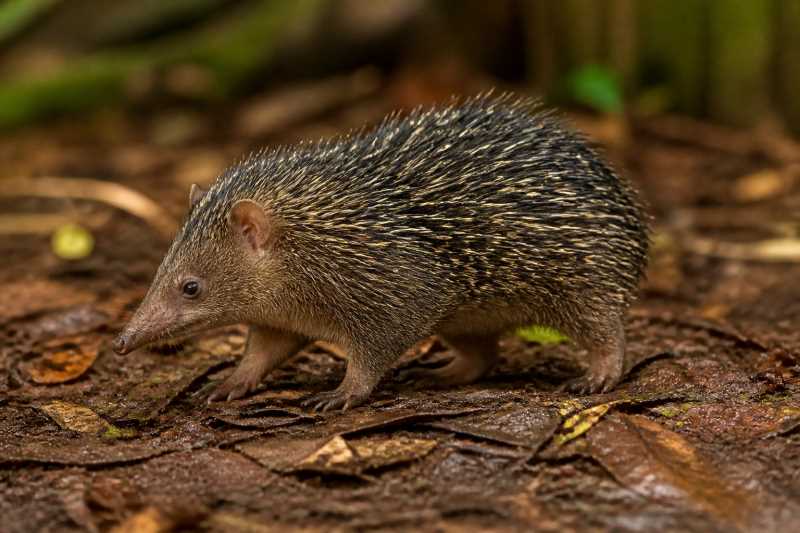
The Tailless Tenrec is a medium-sized mammal, with adults typically weighing between 1.5 to 2.5 kilograms (3.3 to 5.5 pounds) and measuring up to 39 centimeters (15 inches) in length. As their name suggests, these tenrecs lack a visible tail, which distinguishes them from some other members of the Tenrecidae family.
The body of the Tailless Tenrec is covered in coarse fur, which ranges in color from dark brown to black, often with lighter underparts. Their fur is interspersed with spines, particularly along the back, which can be used for defense against predators. These spines are not as pronounced as those of a hedgehog, but they provide some level of protection.
Their head is small with a pointed snout, which aids in foraging for food. They have small eyes and ears, which are not very prominent, giving them a somewhat streamlined appearance. Despite their small size, their limbs are strong and well-developed, allowing them to dig and forage efficiently.
Range and Habitat
The Tailless Tenrec is endemic to Madagascar, an island nation off the southeastern coast of Africa. Within Madagascar, they inhabit a wide range of environments, from lowland rainforests to dry deciduous forests and scrublands. They are highly adaptable and can be found in both primary and secondary forests, as well as in agricultural areas and near human settlements.
Their adaptability to different habitats is one of the reasons for their widespread distribution across the island. However, they are most commonly found in areas with dense vegetation that provides cover from predators and access to their varied diet.
Behavior and Diet
The Tailless Tenrec is a nocturnal and solitary animal, spending much of the day hidden in burrows or dense underbrush. They emerge at night to forage for food, using their keen sense of smell to locate prey and other food sources.
Their diet is omnivorous and highly varied, consisting of insects, small vertebrates, fruits, and other plant material. They are known to consume earthworms, snails, and even small reptiles, making them opportunistic feeders. This varied diet allows them to thrive in different environments and adapt to seasonal changes in food availability.
Reproduction in Tailless Tenrecs occurs during the wet season, with females giving birth to large litters of up to 32 young after a gestation period of around 50 to 60 days. This high reproductive rate helps sustain their populations, even in the face of environmental pressures.
Identification Tips (field recognition cues)
Identifying a Tailless Tenrec in the wild can be challenging due to their nocturnal habits and elusive nature. However, there are several key characteristics that can aid in their identification:
- Size and Shape: Medium-sized with a distinctly tailless, elongated body.
- Fur and Spines: Coarse, dark fur interspersed with short spines along the back.
- Head: Small, pointed snout with small eyes and ears.
- Behavior: Nocturnal and solitary, often seen at night foraging on the ground.
Look for these features in areas with dense vegetation during nighttime excursions, especially in regions where they are known to inhabit.
Conservation Status (with threats and protections)
The Tailless Tenrec is currently listed as a species of Least Concern by the International Union for Conservation of Nature (IUCN). Their wide distribution and adaptability to different habitats have thus far protected them from the threats that many other species face. However, they are not entirely free from challenges.
Threats:
- Habitat Loss: Deforestation and land conversion for agriculture are significant threats, reducing their natural habitats.
- Hunting: In some areas, they are hunted for food, although this is not a widespread practice.
- Predation: Introduced predators such as dogs and cats pose a risk to their populations.
Protections:
- Protected Areas: Some of their habitats fall within Madagascar’s network of national parks and reserves, which offer some degree of protection.
- Conservation Efforts: Ongoing conservation efforts in Madagascar aim to preserve biodiversity and protect endemic species like the Tailless Tenrec.
Frequently Asked Questions
What do Tailless Tenrecs eat?
Tailless Tenrecs have an omnivorous diet that includes insects, small vertebrates, fruits, and plant material. They are opportunistic feeders, adapting their diet to available resources.
How can I identify a Tailless Tenrec?
Look for a medium-sized mammal with a tailless, elongated body, coarse dark fur with spines on the back, and a pointed snout. They are nocturnal and solitary, usually seen foraging at night.
Where do Tailless Tenrecs live?
They are native to Madagascar and can be found in a variety of habitats, including rainforests, dry forests, scrublands, and even near human settlements.
Are Tailless Tenrecs endangered?
No, Tailless Tenrecs are listed as Least Concern by the IUCN due to their wide distribution and adaptability. However, they face threats from habitat loss and introduced predators.
How do Tailless Tenrecs reproduce?
They reproduce during the wet season, with females giving birth to large litters of up to 32 young after a gestation period of 50 to 60 days.
Related posts