Introduction
Spix’s Mustached Tamarin (Saguinus mystax) is a captivating primate species that inhabits the lush rainforests of South America. Known for their distinctive facial hair resembling a mustache, these tamarins are a subject of fascination for researchers and wildlife enthusiasts alike. This article delves into the various aspects of Spix’s Mustached Tamarin, including their physical characteristics, habitat, behavior, and conservation status.
Physical Description
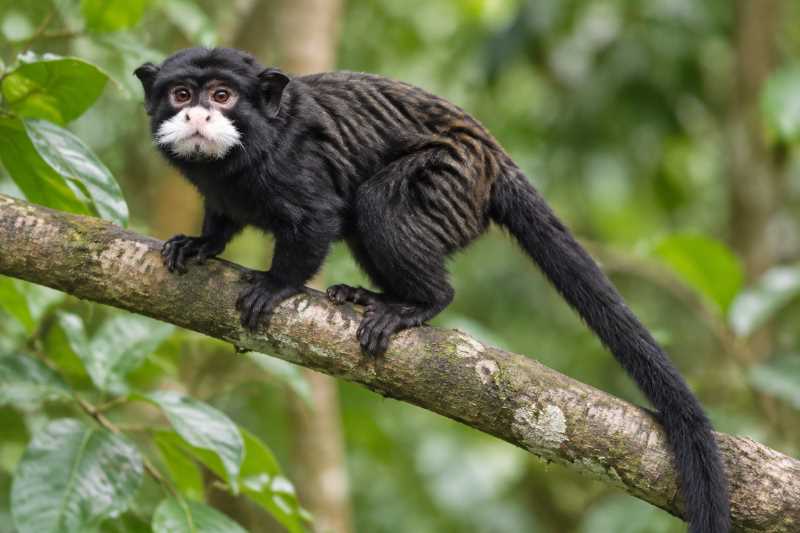
Spix’s Mustached Tamarin is a small primate, measuring approximately 23 to 30 centimeters (9 to 12 inches) in body length, with a tail that extends an additional 35 to 42 centimeters (14 to 16.5 inches). They typically weigh between 400 to 550 grams (14 to 19 ounces). A standout feature of this tamarin is its striking facial hair, which resembles a mustache and gives the species its name. This distinctive white or greyish mustache contrasts sharply with their predominantly black or dark brown fur.
The tamarin’s fur is dense and silky, with variations in color across individual populations. Their limbs are slender, aiding in their agility as they navigate the forest canopy. They possess claw-like nails, unlike most other primates with flat nails, which help them cling to tree trunks and branches.
Range and Habitat
Spix’s Mustached Tamarin is indigenous to the Amazon Basin, primarily found in the countries of Brazil and Peru. Their range extends across the northwestern region of the Amazon Rainforest, where they inhabit both primary and secondary forests. These tamarins are arboreal, spending most of their lives in the trees, where they find safety and food resources.
They favor dense, humid forests with a complex stratification of vegetation, which provides ample opportunities for foraging and nesting. Their preferred habitats include terra firme forests, which are non-flooded regions, and occasionally seasonally flooded varzea forests. These environments offer a rich diversity of plant and animal life, supporting the tamarins’ varied diet.
Behavior and Diet
Spix’s Mustached Tamarin is a highly social animal, living in groups that typically consist of 4 to 15 individuals. These groups are often family units composed of a dominant breeding pair and their offspring. Group dynamics are characterized by cooperative behaviors, such as shared foraging and grooming, which strengthen social bonds.
These tamarins are diurnal, being most active during the day. They communicate through a range of vocalizations, body postures, and facial expressions. Vocal calls serve various functions, including alerting group members to danger, establishing territory, and maintaining group cohesion.
Their diet is omnivorous, consisting of fruits, flowers, nectar, insects, and small vertebrates. They play a vital ecological role as seed dispersers, aiding in forest regeneration. The availability of food influences their movement patterns, often leading them to travel considerable distances in search of sustenance.
Identification Tips
Identifying Spix’s Mustached Tamarin in the wild requires attention to several key features:
- Facial Hair: Look for the distinctive white or greyish mustache that stands out against their dark fur.
- Size and Build: Note their small size and lightweight, agile build, which is typical of tamarins.
- Vocalizations: Listen for high-pitched calls, which are characteristic of tamarins and can help pinpoint their location in dense foliage.
- Movement: Observe the way they move through the trees, with rapid, nimble leaps from branch to branch.
Conservation Status
Spix’s Mustached Tamarin is currently listed as Least Concern by the International Union for Conservation of Nature (IUCN). However, like many species in the Amazon, they face several threats that could impact their populations in the future.
Threats
- Habitat Destruction: Deforestation for agriculture, logging, and infrastructure development poses a significant threat to their habitat.
- Climate Change: Alterations in weather patterns and forest composition could affect their food sources and habitat suitability.
- Illegal Pet Trade: Although less common, capture for the pet trade can impact local populations.
Protections
Several conservation measures are in place to protect Spix’s Mustached Tamarin:
- Protected Areas: Many populations reside within national parks and reserves, which offer some degree of protection from habitat destruction.
- Conservation Programs: Initiatives aimed at sustainable land use and forest management help preserve their natural habitat.
- Research and Monitoring: Ongoing studies provide valuable data on population trends and ecological needs, informing conservation strategies.
Frequently Asked Questions
What is the lifespan of Spix’s Mustached Tamarin?
Spix’s Mustached Tamarin typically lives for 10 to 15 years in the wild. In captivity, with ideal care and conditions, they may live slightly longer.
How do Spix’s Mustached Tamarins communicate?
These tamarins use a variety of vocalizations, body language, and facial expressions to communicate. Their calls help maintain group cohesion and alert others to potential threats.
Are Spix’s Mustached Tamarins endangered?
Currently, Spix’s Mustached Tamarin is not considered endangered and is classified as Least Concern by the IUCN. However, habitat destruction and other threats could impact their status in the future.
What do Spix’s Mustached Tamarins eat?
Their diet is diverse, including fruits, flowers, nectar, insects, and small vertebrates. They are important seed dispersers in their ecosystem.
Where can I see Spix’s Mustached Tamarins in the wild?
These tamarins are found in the Amazon Rainforest of Brazil and Peru, typically in protected areas like national parks and reserves.
Related posts