Merriam’s Ground Squirrel (Urocitellus canus): A Comprehensive Guide
Introduction
Merriam’s Ground Squirrel, scientifically known as Urocitellus canus, is a fascinating member of the Sciuridae family. These small mammals are native to North America and are known for their burrowing habits and social behaviors. Their presence plays a vital role in the ecosystem, contributing to soil aeration and serving as prey for various predators.
This article delves into the intricate details of Merriam’s Ground Squirrel, covering aspects such as their physical characteristics, natural habitat, behavior, and conservation status. Additionally, we provide field identification tips and answer frequently asked questions, making it easier for wildlife enthusiasts and researchers to understand and appreciate this unique species.
Physical Description
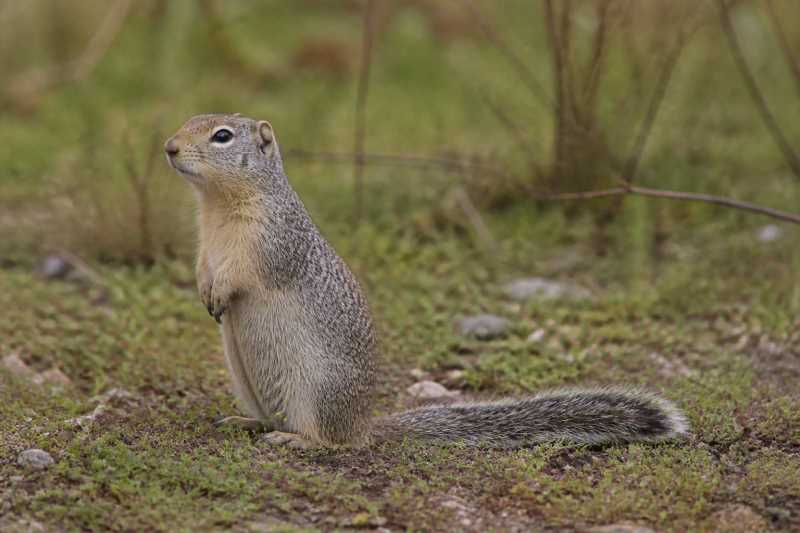
Merriam’s Ground Squirrel exhibits several distinctive physical traits that aid in its identification. These rodents typically measure between 23 to 30 cm (9 to 12 inches) in length, including a tail that accounts for about one-third of their total length. They weigh approximately 200 to 300 grams (7 to 10 ounces), with males generally being slightly larger than females.
Their fur is predominantly grayish-brown, providing effective camouflage against the arid landscapes they inhabit. The underside is lighter, often a shade of buff or white. One of the most notable features of Urocitellus canus is their large, expressive eyes, which are well-adapted for spotting predators. Their ears are small and rounded, aiding in minimizing heat loss in their often harsh environments.
Range and Habitat
Merriam’s Ground Squirrel is predominantly found in the western United States, particularly in the Great Basin region, encompassing parts of Oregon, Idaho, Nevada, and Utah. Their preferred habitats are characterized by arid and semi-arid environments, including sagebrush steppes, grasslands, and areas with sparse vegetation.
These squirrels are well-adapted to environments with extreme temperature fluctuations. They construct elaborate burrow systems that provide shelter from predators and harsh weather conditions. The burrows also serve as a refuge during the hottest parts of the day and during hibernation periods.
Behavior and Diet
Merriam’s Ground Squirrel is diurnal, meaning they are most active during the day. Their activity peaks in the early morning and late afternoon, coinciding with cooler temperatures. They are known for their social nature, often seen in groups where they engage in playful interactions and cooperative behaviors.
The diet of Urocitellus canus consists mainly of plant material, including seeds, leaves, and flowers. They are opportunistic feeders and will consume insects and small invertebrates when available. This varied diet allows them to thrive in diverse environments and contributes to their ability to weather seasonal changes in food availability.
Identification Tips
Field identification of Merriam’s Ground Squirrel can be facilitated by observing several key characteristics:
- Coloration: Look for the grayish-brown fur and lighter underbelly.
- Size: Note their moderate size, with a body length around 23 to 30 cm.
- Behavior: Observe their diurnal activity and social interactions.
- Habitat: Check for presence in sagebrush and arid regions.
- Vocalizations: Listen for their distinctive chirps and whistles used for communication and alerting others to dangers.
Conservation Status
As of the latest assessments, Merriam’s Ground Squirrel is not considered endangered. However, they face several threats that could impact their populations in the future. Habitat loss due to agricultural expansion, urbanization, and climate change poses significant risks.
Conservation efforts focus on preserving their natural habitats and mitigating the effects of human encroachment. Public awareness and research are crucial components in ensuring the long-term survival of this species. Protective measures, such as the establishment of wildlife corridors and habitat restoration projects, are essential to safeguard their populations.
Frequently Asked Questions
What are the primary threats to Merriam’s Ground Squirrel?
The primary threats include habitat loss due to agricultural and urban development, climate change, and predation by domestic animals.
How can I identify Merriam’s Ground Squirrel in the wild?
Look for their grayish-brown fur, moderate size, diurnal activity, and distinctive vocalizations. They are commonly found in arid regions with sparse vegetation.
What role do Merriam’s Ground Squirrels play in the ecosystem?
They contribute to soil aeration through their burrowing activities and serve as prey for various predators, thus maintaining the ecological balance.
Are Merriam’s Ground Squirrels solitary or social?
They are social animals, often seen in groups where they engage in cooperative and playful behaviors.
How do Merriam’s Ground Squirrels adapt to their environment?
They construct burrows to escape extreme temperatures, have a varied diet to cope with food availability, and exhibit social behaviors for increased survival.
Related posts