Livingstone’s Yellow Bat: A Comprehensive Overview
Introduction
Livingstone’s Yellow Bat, scientifically known as Scotophilus livingstonii, is a fascinating yet elusive species within the mammalian order of Chiroptera. Commonly referred to by its vibrant moniker, this bat is part of the Vespertilionidae family, which is composed of a diverse group of bats that are primarily insectivorous. These creatures are an essential component of their ecosystems, providing critical services such as pest control while also serving as indicators of environmental health. Despite their ecological importance, relatively little is known about Livingstone’s Yellow Bat due to its secretive nature and specialized habitat requirements.
Physical Description
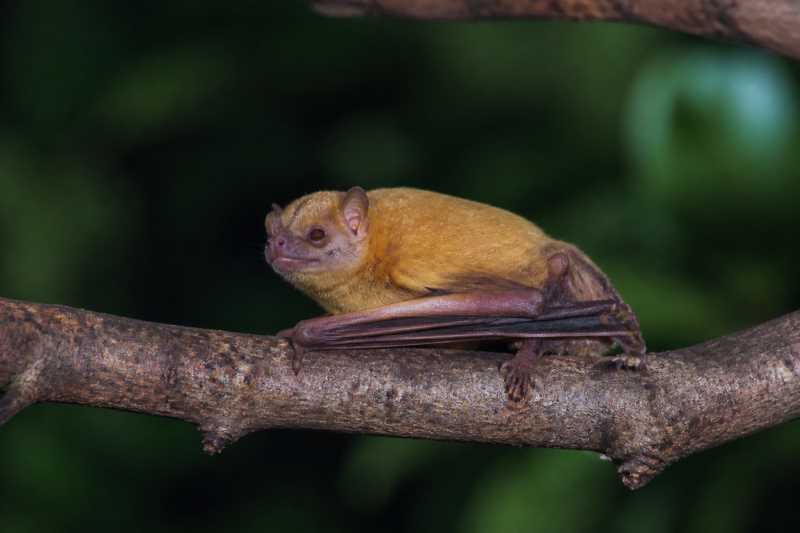
Livingstone’s Yellow Bat is distinguished by its striking coloration and physique. As its name implies, the species is characterized by its yellowish fur, which can range from a pale, almost lemon hue to a deeper, more golden color. This coloration provides excellent camouflage against the foliage and bark of its natural habitat. The bat’s fur is dense and soft, offering insulation against varying temperatures.
In terms of size, Livingstone’s Yellow Bat is medium-sized for a vesper bat, with a body length ranging from 10 to 14 centimeters and a wingspan of approximately 30 to 35 centimeters. Its wings are broad and rounded, which aids in maneuverability within the dense vegetation of its habitat. The bat’s ears are relatively small and rounded, featuring a tragus, a small pointed structure that aids in echolocation. The face of the bat is less distinctive, with a short muzzle and small, beady eyes adapted for low-light environments.
Range and Habitat
Livingstone’s Yellow Bat is predominantly found in sub-Saharan Africa, with its range extending across several countries including Zimbabwe, Mozambique, and parts of South Africa. The bat inhabits a variety of ecosystems, ranging from coastal forests and savannas to riverine woodlands and even urban areas where suitable roosting sites such as sheds and attics are available.
This species is typically associated with regions that provide abundant water sources, as these areas tend to support a higher density of insects, which constitute the bat’s primary food source. The availability of roosting sites is another critical factor influencing the distribution of Livingstone’s Yellow Bat. They often roost in tree hollows, under loose bark, or in man-made structures, which provide shelter and protection from predators.
Behavior and Diet
Livingstone’s Yellow Bat is primarily nocturnal, emerging at dusk to commence foraging activities. Echolocation plays a vital role in its hunting strategy, allowing it to detect and capture prey in complete darkness. The bat emits high-frequency calls that bounce off objects in its environment, providing spatial information that is crucial for navigation and prey detection.
The diet of Livingstone’s Yellow Bat is predominantly composed of insects, including moths, beetles, and flies. Its foraging behavior is highly adaptable, with the bat capable of exploiting various microhabitats within its range. In urban areas, it is not uncommon for these bats to be observed hunting near artificial light sources, which attract a plethora of insect prey.
Socially, Livingstone’s Yellow Bat is somewhat solitary, although small groups may roost together, particularly during the breeding season. Mating typically occurs in the warmer months, with females giving birth to one or two offspring after a gestation period of approximately three months. The young are altricial at birth, requiring extensive maternal care before they are capable of independent flight and foraging.
Identification Tips (Field Recognition Cues)
Identifying Livingstone’s Yellow Bat in the field can be challenging due to its nocturnal habits and the overlap of its range with other similar species. However, there are several key characteristics that can aid in identification:
- Coloration: The most distinctive feature is its yellowish fur, which is relatively unique among bats in its range.
- Size and Shape: Medium-sized with a wingspan of 30-35 cm, featuring broad, rounded wings.
- Echolocation Calls: Using a bat detector, the echolocation calls of Livingstone’s Yellow Bat can be distinguished by their frequency and pattern, which are adapted for navigating cluttered environments.
- Roosting Habits: Often found in tree hollows or under loose bark, particularly in areas near water sources.
Conservation Status (With Threats and Protections)
As of the latest assessments, Livingstone’s Yellow Bat is listed as Least Concern by the International Union for Conservation of Nature (IUCN) due to its relatively wide distribution and presumed large population. However, the species faces several threats that could impact its long-term survival.
Threats
- Habitat Loss: Deforestation and land conversion for agriculture and urban development are significant threats, reducing the availability of suitable roosting and foraging habitats.
- Pesticide Use: The widespread use of pesticides in agriculture can reduce insect populations, impacting the bat’s food supply, and potentially leading to bioaccumulation of toxins.
- Climate Change: Alterations in temperature and precipitation patterns can affect the availability of prey and suitable roosting sites.
Protections
Efforts to conserve Livingstone’s Yellow Bat include habitat protection through the establishment of reserves and protected areas. Additionally, public awareness campaigns aimed at reducing pesticide use and promoting bat-friendly practices can contribute to the species’ conservation.
Frequently Asked Questions
What do Livingstone’s Yellow Bats eat?
Livingstone’s Yellow Bats primarily feed on insects, including moths, beetles, and flies. They are adept hunters, using echolocation to capture prey in the dark.
Where can Livingstone’s Yellow Bats be found?
These bats are found in sub-Saharan Africa, inhabiting environments such as coastal forests, savannas, and urban areas with sufficient roosting sites and food sources.
How do Livingstone’s Yellow Bats contribute to the ecosystem?
Livingstone’s Yellow Bats play a crucial role in pest control by consuming large quantities of insects. They also serve as indicators of environmental health and biodiversity.
Are Livingstone’s Yellow Bats endangered?
Currently, Livingstone’s Yellow Bats are listed as Least Concern, but they face threats from habitat loss, pesticide use, and climate change, which could impact their populations.
How can I help protect Livingstone’s Yellow Bats?
Supporting conservation efforts, reducing pesticide use, and creating bat-friendly environments in gardens and communities can help protect these vital creatures.
Related posts