Introduction
The Javan Ghost White-toothed Shrew (Crocidura umbra) is a lesser-known but fascinating member of the mammalian family Soricidae. Known for its elusive nature and limited geographical range, this small insectivore plays a crucial role in its ecosystem. As a species endemic to the island of Java, Indonesia, it remains a subject of interest for biologists and conservationists alike. Despite its small size, the Javan Ghost White-toothed Shrew is an integral part of the biodiversity found in this region, contributing to natural pest control and serving as prey for larger predators.
Physical Description
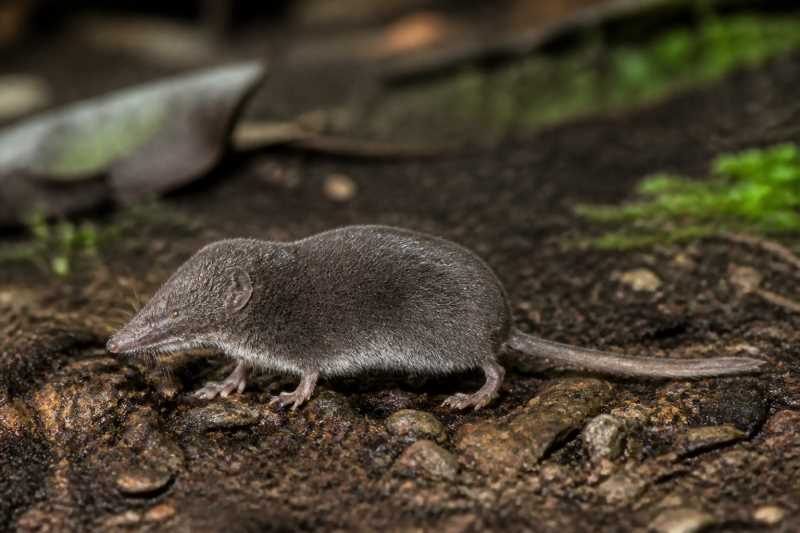
The Javan Ghost White-toothed Shrew is a small mammal characterized by its slender body, which measures approximately 5 to 7 centimeters in length, excluding the tail. The tail itself adds another 4 to 6 centimeters. Its fur is a muted gray-brown on the dorsal side, blending into a lighter, almost white hue on its underbelly. This coloration provides effective camouflage against the forest floor, helping it avoid predators.
The shrew’s most distinctive feature is its teeth, which lack the pigmentation seen in other shrews, giving them a white appearance. This is a characteristic trait of the ‘white-toothed’ shrews, differentiating them from the ‘red-toothed’ varieties. Additionally, the shrew has small, beady eyes and a pointed snout, traits that aid in its sensory perception, particularly in the dark environments it often inhabits.
Range and Habitat
Crocidura umbra is endemic to Java, Indonesia, with its range restricted to the island’s tropical and subtropical forests. These shrews thrive in dense foliage, where leaf litter and undergrowth provide ample cover and hunting grounds. They are typically found at varying altitudes, from lowland forests to montane regions, reflecting their adaptability to different environmental conditions.
The shrew’s habitat is characterized by high humidity and a rich diversity of plant and animal life. These conditions offer an abundance of insects and other invertebrates, which are essential to the shrew’s diet. Unfortunately, habitat loss due to deforestation and land conversion for agriculture poses significant threats to their environment.
Behavior and Diet
The Javan Ghost White-toothed Shrew is primarily nocturnal, exhibiting heightened activity during the night. This nocturnal habit reduces competition with diurnal species and helps avoid predators. These shrews are solitary creatures, with individuals maintaining and defending their own territories.
Their diet predominantly consists of insects, spiders, and other small invertebrates. The shrew uses its keen sense of smell and hearing to hunt, often foraging through leaf litter and soil to uncover hidden prey. Occasionally, they may consume plant matter, although this is not a primary food source.
Identification Tips (Field Recognition Cues)
Identifying the Javan Ghost White-toothed Shrew in the field can be challenging due to its secretive nature and the dense habitats it occupies. However, there are several cues that can aid in its identification:
- Size and Shape: Look for a small mammal with a slender body and relatively long tail.
- Fur Coloration: Note the gray-brown dorsal fur contrasted with a lighter underside.
- Tooth Color: The white teeth are a distinguishing feature, although challenging to observe without close examination.
- Behavior: Spotting one at night is more likely, as they are nocturnal.
- Habitat: Search in areas rich with leaf litter and dense undergrowth within tropical and subtropical forests.
Conservation Status (With Threats and Protections)
The conservation status of Crocidura umbra has not been extensively studied, but it is believed to face several threats primarily due to human activity. The most significant threat is habitat destruction caused by deforestation and agricultural expansion. As these activities continue, the shrew’s natural habitat is fragmented and diminished, reducing its available living space and food sources.
Efforts to protect this species should focus on habitat preservation and restoration. Establishing protected areas within its range and promoting sustainable land-use practices are crucial steps. Additionally, further research is needed to better understand the shrew’s distribution, population size, and ecology to inform conservation strategies effectively.
Frequently Asked Questions
What is the Javan Ghost White-toothed Shrew’s primary diet?
The primary diet of the Javan Ghost White-toothed Shrew consists of insects and other small invertebrates. They use their keen senses to hunt for prey primarily at night.
How can you identify a Javan Ghost White-toothed Shrew?
Identification can be challenging, but key features include its small size, gray-brown fur with a lighter underside, and distinctive white teeth. Observing them at night in dense forest habitats is more likely.
What threats does the Javan Ghost White-toothed Shrew face?
The main threats include habitat destruction due to deforestation and agricultural expansion. Conservation efforts should focus on habitat protection and sustainable land-use practices.
Are Javan Ghost White-toothed Shrews endangered?
While specific studies on their conservation status are limited, they are potentially at risk due to habitat loss. More research is needed to determine their exact population status.
Where can the Javan Ghost White-toothed Shrew be found?
They are endemic to Java, Indonesia, primarily inhabiting tropical and subtropical forests with dense undergrowth and high humidity.
Related posts