Introduction
The Indochinese Gray Langur, scientifically known as Trachypithecus crepusculus, is a fascinating primate species native to Southeast Asia. This elusive langur is recognized for its distinctive gray coloration and is part of the Colobinae subfamily, which includes other leaf-eating monkeys. Understanding this species is crucial as it plays a significant role in its ecosystem, contributing to seed dispersal and maintaining the health of tropical forests.
Physical Description
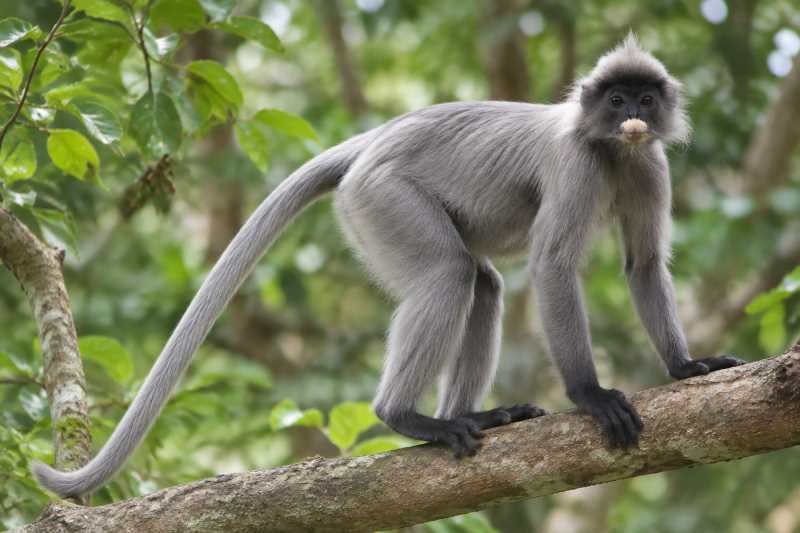
The Indochinese Gray Langur is medium-sized, with a body length ranging from 50 to 70 centimeters, excluding its long, agile tail that measures approximately 70 to 100 centimeters. It typically weighs between 6 to 10 kilograms, with males generally larger than females. Its fur is primarily gray, with varying shades across individuals, and it has a paler underside. The face of the langur is black and hairless, surrounded by a prominent white or light gray fringe, giving it a distinct and expressive appearance.
The species exhibits sexual dimorphism, where males are larger and more robust compared to females. Their limbs are slender yet strong, adapted for a life of leaping and climbing through the forest canopy. The hands and feet are equipped with long fingers and toes, aiding in grasping branches.
Range and Habitat
The Indochinese Gray Langur is predominantly found in the forests of Southeast Asia, specifically in regions of Vietnam, Laos, and Cambodia. These langurs inhabit a variety of forest types, including evergreen, semi-evergreen, and deciduous forests, from lowland areas to montane regions up to 2,000 meters in elevation.
Their habitat preference is closely linked to the availability of appropriate food resources and the presence of tall trees that provide both shelter and opportunities for locomotion. Deforestation and habitat fragmentation pose significant challenges to their survival, as these activities reduce the availability of suitable habitats.
Behavior and Diet
The Indochinese Gray Langur is predominantly arboreal and diurnal, spending most of its time in the trees. It is a social animal, living in groups that typically consist of one dominant male, several females, and their offspring. Group sizes can vary from 5 to 20 individuals, depending on the availability of resources and habitat conditions.
Langurs communicate through a series of vocalizations, facial expressions, and body postures to maintain group cohesion and warn of potential threats. Their diet primarily consists of leaves, fruits, flowers, and seeds. As folivores, they have a specialized stomach with a complex arrangement of chambers that aid in the fermentation and digestion of cellulose-rich foliage.
Identification Tips (Field Recognition Cues)
Identifying the Indochinese Gray Langur in the wild requires attention to several key features:
- Coloration: Look for their distinctive gray fur and black, hairless face with a white or light gray fringe.
- Size and Shape: Note the medium size and long tail, which helps in balancing and moving through trees.
- Behavior: Observe their social groupings and arboreal lifestyle, often seen leaping between branches.
- Vocalizations: Listen for their calls, which include a variety of sounds used for communication within the group.
Conservation Status (With Threats and Protections)
The Indochinese Gray Langur is currently listed as Near Threatened on the IUCN Red List. The primary threats to their survival include habitat destruction due to logging, agricultural expansion, and infrastructure development. Additionally, they face pressures from illegal hunting for bushmeat and traditional medicine.
Conservation efforts are in place to protect this species, including the establishment of protected areas and national parks in countries like Vietnam and Cambodia. Environmental organizations work alongside local communities to promote sustainable land-use practices and educate about the importance of biodiversity conservation.
Frequently Asked Questions
1. What is the primary diet of the Indochinese Gray Langur?
The Indochinese Gray Langur primarily consumes leaves, fruits, flowers, and seeds. Their folivorous diet is supported by a specialized stomach that helps digest cellulose-rich foliage.
2. Where can I find the Indochinese Gray Langur in the wild?
This langur is native to Southeast Asia, specifically in the forests of Vietnam, Laos, and Cambodia. They prefer a variety of forest types, from lowland to montane regions.
3. What are the main threats to the Indochinese Gray Langur?
The main threats include habitat destruction due to logging and agricultural expansion, as well as illegal hunting for bushmeat and traditional medicine.
4. How can I identify the Indochinese Gray Langur?
Look for their gray fur, black face with a white fringe, medium size, and long tail. They are social, arboreal animals often seen in groups.
5. What conservation measures are in place for the Indochinese Gray Langur?
Conservation measures include the establishment of protected areas and national parks, sustainable land-use practices, and educational programs to raise awareness about their importance.
Related posts