Introduction
The Golden Jackal, scientifically known as Canis aureus, is a fascinating member of the Canidae family. With a widespread presence across Europe, Asia, and parts of Africa, this adaptable species plays a vital role in various ecosystems. Often misunderstood due to its resemblance to other canids like wolves and domestic dogs, the Golden Jackal is a unique species with intriguing behaviors and adaptations that have allowed it to thrive in diverse environments. This article delves into the physical characteristics, habitat, behavior, and conservation status of the Golden Jackal, providing a comprehensive overview for wildlife enthusiasts and researchers alike.
Physical Description
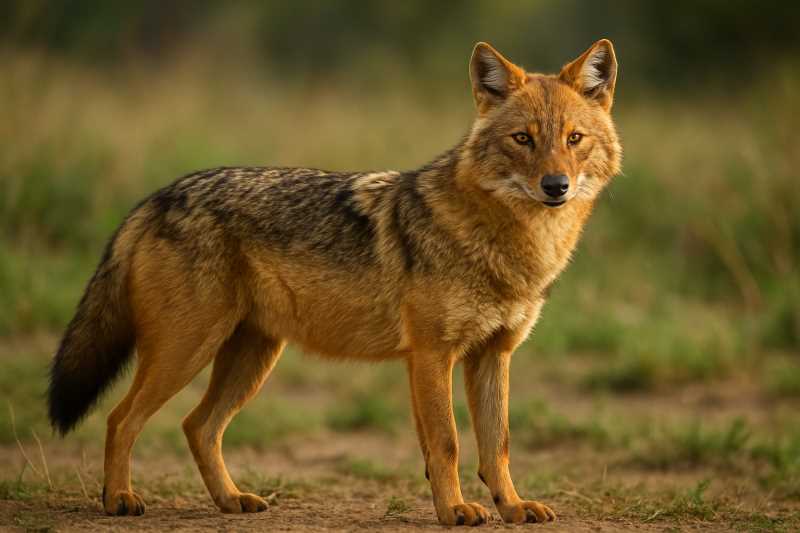
Golden Jackals are medium-sized canids with a sleek build and a distinctive golden hue to their fur, which can vary from pale creamy yellow to a deeper tawny brown depending on the region and season. Adult Golden Jackals typically weigh between 6 to 14 kilograms (13 to 31 pounds) and measure from 70 to 105 centimeters (28 to 41 inches) in length, including the tail. Their coat consists of a mix of yellow, brown, and black hairs, giving them a grizzled appearance that provides excellent camouflage in their natural habitats.
The head of a Golden Jackal is relatively small, with a narrow muzzle and large, erect ears that are well-suited for detecting sounds in their environment. Their eyes are bright and expressive, often exhibiting a keen intelligence. Golden Jackals have a bushy tail that is typically carried low and helps maintain balance during movement.
Range and Habitat
Golden Jackals inhabit a vast range that stretches from North and Northeast Africa through Southeast Europe and across South Asia to Myanmar. They are highly adaptable and can be found in a variety of habitats, including savannas, open plains, grasslands, deserts, and even urban areas. However, they tend to avoid dense forests and high-altitude regions, where they are less suited to compete with other predators.
In Europe, the Golden Jackal has been expanding its range, moving into countries where it was previously absent or rare. This expansion is attributed to changes in land use, climate change, and the decline of larger apex predators, creating new opportunities for the species to thrive.
Behavior and Diet
Golden Jackals are social animals that typically form monogamous pairs with a territory that they defend from other jackals. They are known for their complex vocalizations, which include howls, yips, and barks used for communication within family groups and to deter rivals. These vocalizations are often heard at dusk and dawn, when the jackals are most active.
The diet of the Golden Jackal is highly varied and opportunistic. They are omnivorous, feeding on small mammals, birds, reptiles, and insects, as well as fruits and vegetation. They are also scavengers and will readily consume carrion and human refuse when available. This dietary flexibility allows them to adapt to different environments and food availability, contributing to their success as a species.
Identification Tips
When trying to identify a Golden Jackal in the field, there are several key characteristics to look for:
- Coloration: Look for the distinctive golden-brown or tawny coat with black-tipped guard hairs.
- Size and Shape: Note the medium size, comparable to a small dog, with a slender build and a bushy tail.
- Ears and Face: Identify the large, pointed ears and narrow muzzle that distinguish the Golden Jackal from other canids.
- Movement: Observe their gait, which is typically a trot or lope, and their tendency to carry their tail low.
- Vocalizations: Listen for their characteristic howls and yips, especially in the early morning or evening.
Conservation Status
As of the latest assessments, the Golden Jackal is listed as Least Concern on the IUCN Red List. Despite this status, they face several threats that could impact their populations. Habitat loss due to agricultural expansion, urbanization, and infrastructure development is a significant concern. Additionally, they are sometimes hunted or trapped due to their perceived threat to livestock and poultry.
Legal protections for Golden Jackals vary widely across their range. In some countries, they are protected under national wildlife laws, while in others, they are considered a nuisance species and are subject to control measures. Conservation efforts focus on habitat preservation, public education to reduce human-wildlife conflict, and monitoring populations to ensure their continued survival.
Frequently Asked Questions
What is the difference between a Golden Jackal and a coyote?
Golden Jackals and coyotes are both members of the Canidae family but are found on different continents. Coyotes (Canis latrans) are native to North America, while Golden Jackals are found in Europe, Asia, and Africa. Coyotes are generally larger and have a different coloration, with more gray and less gold in their fur.
How can you tell a Golden Jackal apart from a domestic dog?
Golden Jackals have a more uniform coloration with a grizzled appearance, larger ears, and a narrower face compared to most domestic dogs. They also exhibit different behaviors, such as more vocal communication and a tendency to form monogamous pairs.
Are Golden Jackals dangerous to humans?
Golden Jackals are generally not dangerous to humans. They tend to avoid human interaction and are more focused on scavenging or hunting small prey. However, like any wild animal, they should be respected and observed from a distance.
Can Golden Jackals interbreed with other canids?
Yes, Golden Jackals can interbreed with domestic dogs and other canid species such as wolves, producing hybrid offspring. This interbreeding is relatively rare but can occur where their ranges overlap.
What role do Golden Jackals play in their ecosystem?
Golden Jackals play a crucial role in their ecosystems as both predators and scavengers. They help control populations of small mammals and birds, and their scavenging behavior contributes to the cleanup of carrion and waste.
Related posts