Eastern Long-beaked Echidna: A Unique Monotreme
Introduction
The Eastern Long-beaked Echidna, scientifically known as Zaglossus bartoni, is a remarkable yet obscure mammal native to the highlands of Papua New Guinea. This unique creature, belonging to the family Tachyglossidae, is part of the order Monotremata, which also includes the platypus and other echidna species. Monotremes are a rare group of egg-laying mammals, and the Eastern Long-beaked Echidna stands out for its distinctive characteristics and ecological significance.
Despite its intriguing nature, the Eastern Long-beaked Echidna remains one of the least understood mammals due to its elusive behavior and the challenging terrain of its habitat. This article aims to shed light on various aspects of this extraordinary species, including its physical description, range and habitat, behavior and diet, identification tips, conservation status, and more.
Physical Description
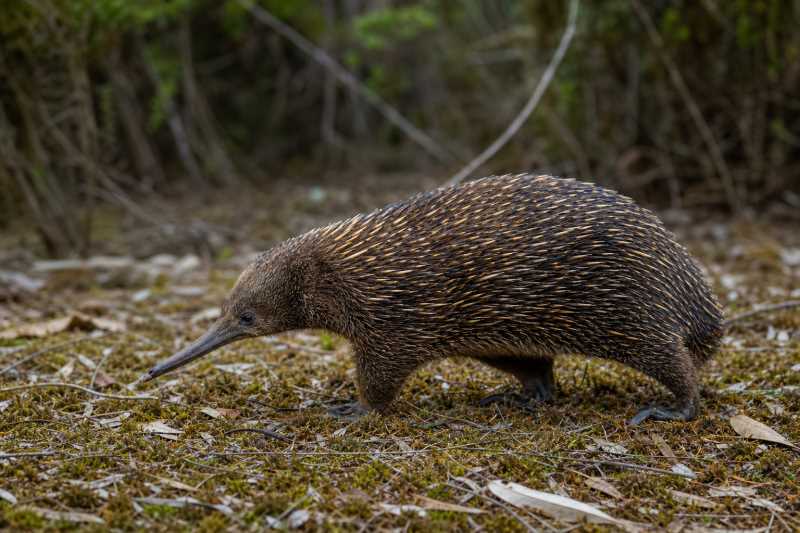
The Eastern Long-beaked Echidna is known for its peculiar appearance, which distinguishes it from other echidna species. It is notably larger than its short-beaked relatives, with an average body length ranging from 60 to 100 centimeters and a weight between 5 to 10 kilograms. One of its most distinctive features is its elongated snout, which can measure up to 18 centimeters. This adaptation is crucial for foraging, allowing the echidna to probe into soil and decaying wood in search of food.
Covered in a coarse coat of fur interspersed with spines, the Eastern Long-beaked Echidna’s coloration varies from dark brown to black, aiding in camouflage within its forested environment. Unlike its short-beaked counterpart, this echidna lacks a visible external ear, giving it a streamlined appearance. Its limbs are powerful and equipped with large claws, perfect for digging and navigating its rugged habitat.
Range and Habitat
The Eastern Long-beaked Echidna is endemic to the montane and subalpine forests of Papua New Guinea, primarily found at elevations ranging from 1,000 to 3,000 meters. Its distribution is concentrated in the central highlands, including the regions surrounding the Owen Stanley Range and the Huon Peninsula.
This echidna thrives in diverse habitats, from dense tropical forests to alpine meadows. It shows a preference for areas with rich, loose soil and abundant decaying wood, which facilitate its foraging behavior. The high-altitude environment provides a cool and stable climate, essential for its survival, considering its limited ability to regulate body temperature.
Behavior and Diet
The Eastern Long-beaked Echidna is a solitary and mostly nocturnal creature, although it may be occasionally active during the day in cooler climates. Its behavior is largely dictated by its search for food. As a specialized feeder, it primarily consumes earthworms and insects, particularly beetle larvae and termites. The echidna uses its long, sticky tongue to capture prey, relying on its keen sense of smell to locate food sources beneath the forest floor.
Reproduction in Eastern Long-beaked Echidnas is a seasonal affair, with mating typically occurring during the cooler months. Females lay a single leathery egg, which they incubate in a temporary pouch. After hatching, the young echidna, known as a "puggle," remains in the pouch for a few weeks before being transferred to a burrow, where it continues to develop.
Identification Tips (Field Recognition Cues)
Identifying the Eastern Long-beaked Echidna in the wild can be challenging due to its elusive nature and preference for dense habitats. However, there are several field recognition cues that can aid in its identification:
- Snout Length: The elongated snout is a key distinguishing feature, significantly longer than that of the short-beaked echidna.
- Spine and Fur Combination: While both echidna species have spines, the Eastern Long-beaked Echidna has a denser fur covering, with spines partially hidden.
- Size: Larger body size compared to other echidna species can be a helpful indicator.
- Tracks and Diggings: Look for distinctive claw marks and small diggings in the soil, indicative of foraging activity.
- Location: Knowing the high-altitude areas where this echidna is found can narrow down potential sightings.
Conservation Status (with Threats and Protections)
The Eastern Long-beaked Echidna is classified as "Vulnerable" on the IUCN Red List of Threatened Species. Its population is under threat from several factors, primarily habitat loss due to logging and agricultural expansion. Additionally, hunting for food and traditional medicine poses a significant threat, particularly in regions where human encroachment is increasing.
Conservation efforts are underway to protect this unique species. Papua New Guinea has established several protected areas aimed at preserving montane forest habitats. International conservation organizations are also working to raise awareness and implement sustainable practices to reduce human impact.
Frequently Asked Questions
What does the Eastern Long-beaked Echidna eat?
The Eastern Long-beaked Echidna primarily feeds on earthworms and insects, using its long snout and sticky tongue to forage for these invertebrates in the soil and decaying wood.
How does the Eastern Long-beaked Echidna reproduce?
Females lay a single egg, which they incubate in a pouch. After hatching, the young echidna, or puggle, is transferred to a burrow, where it continues to grow until it can fend for itself.
Where can I find the Eastern Long-beaked Echidna?
This species is native to the highlands of Papua New Guinea, particularly in the central regions and around the Owen Stanley Range and the Huon Peninsula.
Is the Eastern Long-beaked Echidna endangered?
The Eastern Long-beaked Echidna is classified as "Vulnerable" due to threats from habitat loss and hunting. Conservation efforts are in place to protect its population and habitat.
How can I help in the conservation of the Eastern Long-beaked Echidna?
Supporting conservation organizations, promoting sustainable land-use practices, and raising awareness about the species can contribute to the protection of the Eastern Long-beaked Echidna.
Related posts