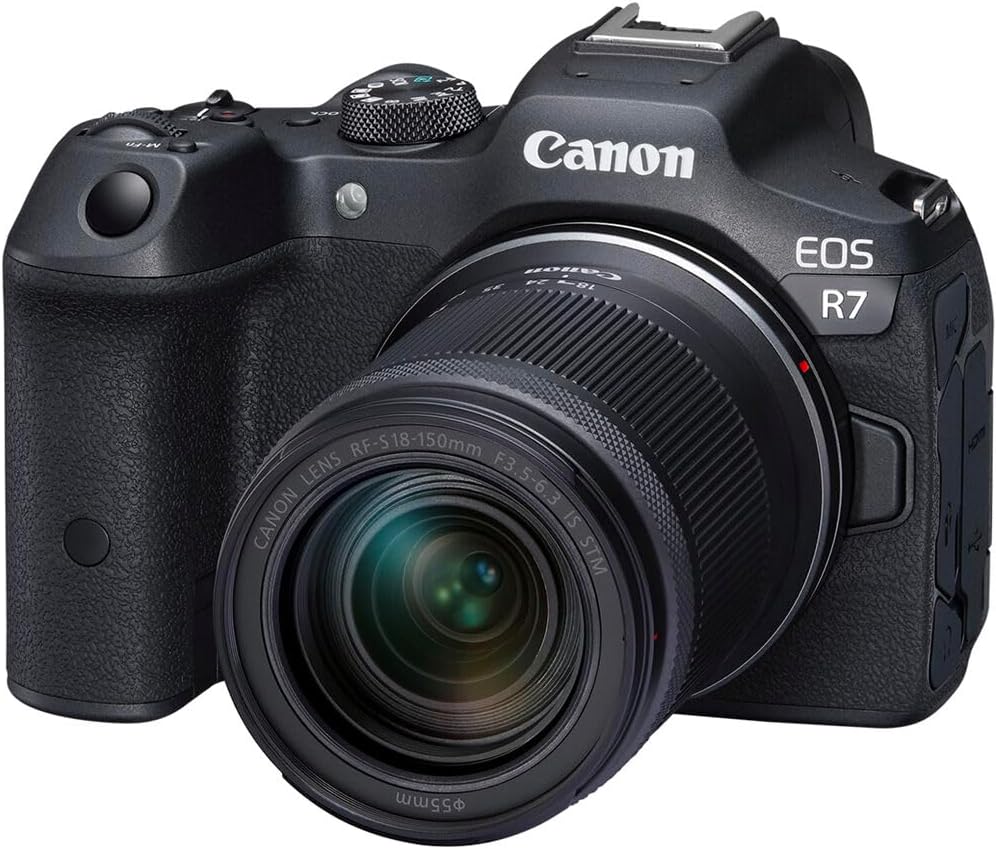
Bird photography is one of the most demanding genres in the field of wildlife photography. It requires a camera that offers blazing-fast autofocus, high-speed continuous shooting, excellent image quality, and good reach—often in challenging light and unpredictable environments. Canon’s EOS R7, launched in 2022, is a mirrorless APS-C camera that has garnered significant attention among amateur and semi-professional bird photographers. With its compact size, powerful autofocus system, and affordability relative to full-frame models, the R7 presents a compelling option.
In this in-depth review, we examine how the Canon EOS R7 performs specifically in the context of bird photography. We’ll discuss its key features, real-world performance, strengths, and limitations to help you determine whether it deserves a place in your birding kit.
Sensor and Image Quality
The Canon EOS R7 is equipped with a 32.5-megapixel APS-C CMOS sensor. This high-resolution sensor is capable of producing richly detailed images, especially important when cropping in on distant or small birds. The APS-C crop factor of 1.6x also provides an effective increase in focal length, which is particularly advantageous for bird photography. For example, a 400mm lens becomes a 640mm equivalent in terms of field of view.
Pros:
- Excellent detail retention and resolution.
- APS-C crop factor enhances effective reach.
- 14-bit RAW files offer great latitude for post-processing.
Cons:
- Dynamic range is good, but not on par with some full-frame competitors.
- Noise performance at high ISO settings (above ISO 3200) can be noticeable, especially in low-light conditions.
While the R7 handles daylight scenes very well, bird photographers working in forest shade, dawn/dusk conditions, or under overcast skies may find themselves pushing ISO limits. However, careful exposure and post-processing can mitigate much of the noise.
Autofocus System
One of the R7’s standout features is its advanced Dual Pixel CMOS AF II system, inherited from Canon’s professional full-frame cameras like the EOS R5 and R3. The autofocus covers virtually the entire frame (100% horizontally and vertically with select lenses), and it features intelligent subject tracking powered by deep learning algorithms.
Pros:
- Remarkably accurate eye detection and tracking for birds.
- Autofocus works well even with erratic flight patterns.
- Focus acquisition is fast and sticky—perfect for birds in motion.
Cons:
- Eye detection can sometimes struggle with birds at great distances or partially obscured by foliage.
- Tracking in backlit scenes or low-contrast environments may cause the AF to briefly hunt.
In practice, the R7 locks onto birds quickly and maintains focus even as they take flight or dart through branches. However, accuracy can vary slightly depending on the lens used and the bird’s position within the frame.
Continuous Shooting and Buffer Performance
Capturing birds in motion—whether in flight, landing, or displaying behavior—requires fast burst rates. The Canon EOS R7 excels in this department, offering up to 15 frames per second (fps) with the mechanical shutter and an astonishing 30 fps with the electronic shutter.
Pros:
- 15 fps (mechanical) and 30 fps (electronic) are class-leading at this price point.
- Generous buffer: up to 126 JPEG or 42 RAW images (mechanical) before slowing down.
- Silent electronic shutter is useful for photographing skittish birds.
Cons:
- Electronic shutter can cause rolling shutter artifacts in certain situations.
- At 30 fps, the camera can generate a huge number of files quickly—requiring fast cards and larger storage.
For birds in flight or action sequences like feeding or preening, the high burst rate is a game-changer. It increases the chances of capturing the perfect moment, especially when combined with reliable autofocus tracking.
Ergonomics and Build Quality
The Canon EOS R7 is impressively compact and lightweight, yet it retains a solid and well-constructed feel. The weather sealing, while not as robust as on Canon’s higher-end bodies, is adequate for most outdoor conditions.
Pros:
- Comfortable grip and intuitive control layout.
- Articulating touchscreen is useful for composing shots from difficult angles.
- Dual UHS-II card slots offer redundancy or extended shooting capacity.
Cons:
- Some buttons are small and may be difficult to use with gloves.
- The rear joystick’s placement beneath the control wheel may require an adjustment period.
Its compact form factor makes the R7 an excellent choice for long days in the field. Combined with lightweight RF-S or compatible EF-S lenses, it offers a manageable setup for hiking or travel-based birding.
Lens Compatibility and Telephoto Options
One of the R7’s strengths is its versatility with lenses. It natively supports Canon’s RF lenses, and with an adapter, it can use EF and EF-S glass with full functionality.
Pros:
- Works flawlessly with EF 100-400mm, EF 500mm, EF 600mm, and popular primes.
- Pairs well with budget options like the RF 100-400mm f/5.6-8 IS USM and RF 800mm f/11.
Cons:
- Limited selection of native RF-S telephoto lenses.
- Some third-party RF lenses are still unavailable or unsupported.
For bird photographers transitioning from DSLR systems, the R7 provides a seamless bridge to mirrorless with the option to keep using proven telephoto glass. However, those looking for lighter native RF lenses will find the current ecosystem still maturing.
Image Stabilization
The R7 features In-Body Image Stabilization (IBIS) rated up to 7 stops with certain lenses. This is a critical advantage for handheld shooting, especially with long focal lengths or in lower light.
Pros:
- Excellent stabilization for both stills and video.
- Enables sharp handheld shots even at slow shutter speeds.
Cons:
- IBIS effectiveness can vary by lens and focal length.
- No in-camera lens profiles for correcting distortion on adapted EF-S lenses.
Whether capturing perched birds at 1/100 sec or panning with birds in flight, the R7’s IBIS delivers a significant boost in stability.
Video Capabilities for Birders
For hybrid shooters who also want to capture video, the EOS R7 doesn’t disappoint. It offers 4K 60p (oversampled from 7K) and 1080p up to 120fps, with no crop and no recording limit.
Pros:
- High-quality, detailed 4K video.
- Reliable continuous AF and tracking during video.
- C-Log 3 support for color grading.
Cons:
- Rolling shutter may be noticeable during quick pans.
- Requires fast UHS-II cards for high bitrate recording.
The R7 is a practical option for wildlife videographers or birders who want to supplement stills with clips of behavior, calls, or flight sequences.
Price and Value Proposition
At the time of writing, the Canon EOS R7 is priced around $1,799 USD for the body only. This positions it well below full-frame competitors while delivering many of the same autofocus and burst shooting benefits.
Pros:
- Excellent performance-to-price ratio.
- More affordable than R5/R6 series with similar AF performance.
Cons:
- Requires investment in fast cards and high-capacity storage due to large file sizes.
- Additional adapter cost for EF lens users.
For hobbyist and semi-pro bird photographers, the R7 offers remarkable value—especially when paired with existing EF lenses or budget RF telephotos.
Final Verdict: Is the Canon EOS R7 Good for Bird Photography?
Absolutely. The Canon EOS R7 hits a sweet spot for bird photographers who demand performance without the price tag of full-frame bodies. Its 32.5MP sensor, 15–30 fps burst rate, impressive autofocus system, and IBIS combine to deliver a high-end experience in a compact form.
However, it’s not perfect. Noise handling in low light, electronic shutter artifacts, and the limited selection of native long RF lenses are points to consider. Still, these are minor trade-offs for what is arguably the best APS-C mirrorless camera for bird photography available today.
Summary
| Feature | Strengths | Weaknesses |
|---|---|---|
| Sensor | High resolution, APS-C crop | Slightly limited dynamic range |
| Autofocus | Fast, sticky, excellent bird tracking | Occasional misses in complex scenes |
| Shooting Speed | 15–30 fps burst, great buffer | Rolling shutter at 30 fps |
| Build & Ergonomics | Lightweight, weather-sealed | Joystick position not ideal |
| Lens Support | Excellent with EF/EF-S via adapter | RF-S telephoto selection still growing |
| Stabilization | Up to 7 stops IBIS | Less effective on some lenses |
| Video | High-quality 4K, bird-friendly AF | Rolling shutter in fast pans |
| Value | Best-in-class features for price | Requires extras (adapter, fast cards) |
For birders ready to upgrade from DSLRs or enter the mirrorless world, the Canon EOS R7 is an exceptional tool that meets the fast-paced demands of avian photography without breaking the bank.
Related posts