Introduction
The Yellow-wattled Lapwing (Vanellus malabaricus) is a remarkable bird species that belongs to the Charadriidae family, predominantly found in the Indian subcontinent. Recognized for its distinctive appearance and intriguing behaviors, the Yellow-wattled Lapwing plays an essential role in the ecosystems it inhabits. This article delves into the various aspects of this fascinating bird, including its physical characteristics, habitat, behavior, breeding patterns, and conservation status.
Physical Characteristics
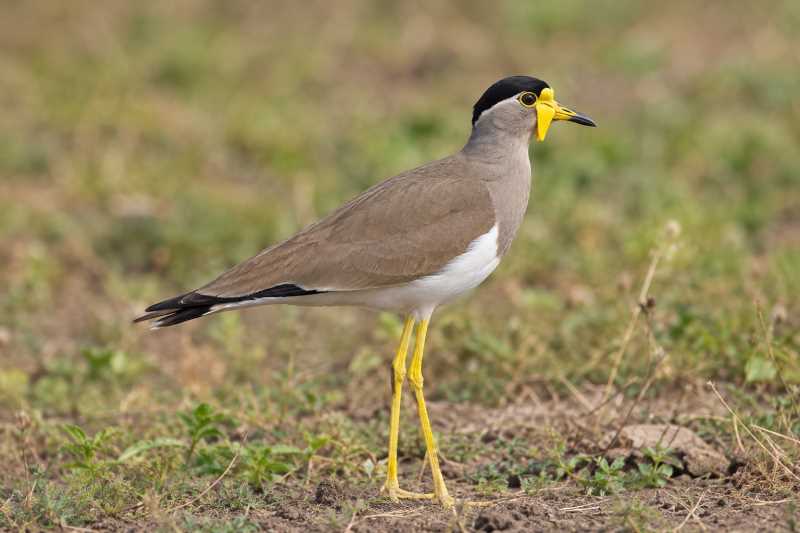
The Yellow-wattled Lapwing is a medium-sized bird, measuring approximately 25-28 centimeters in length. It is easily identifiable by its striking yellow wattles located on either side of its face, which give the species its name. The lapwing has a contrasting brown upper body and a white underside, with a sharp demarcation between the two. Its legs are long and yellow, which aids in wading through wetland environments. The beak is black, short, and pointed, optimized for foraging insects and small invertebrates.
The bird’s wings are broad and rounded, and in flight, a white wingbar is visible against the darker wing feathers. The eyes are dark, providing a stark contrast to the bright wattles and legs. Both males and females display similar plumage, making it challenging to distinguish between the sexes based on appearance alone.
Habitat and Distribution
The Yellow-wattled Lapwing is primarily found in open grasslands, scrublands, and cultivated fields. Its preference for dry habitats distinguishes it from its close relative, the Red-wattled Lapwing, which favors wetter environments. The species is distributed across the Indian subcontinent, including India, Nepal, Pakistan, Sri Lanka, and occasionally in Bangladesh.
These birds are highly adaptable and can thrive in agricultural landscapes, often seen in plowed fields and pastures. They are ground-dwelling birds and rely on their camouflage for protection against predators. The lapwing’s range extends from sea level to altitudes of about 1,200 meters, but they are most commonly observed in lowland areas.
Behavior and Diet
Yellow-wattled Lapwings are diurnal, meaning they are active during the day. They are often seen in small flocks, foraging for food on the ground. Their diet primarily consists of insects, such as ants, beetles, and grasshoppers, and they may also consume small invertebrates like mollusks and crustaceans.
These lapwings exhibit a unique behavior known as ‘foot-trembling,’ where they rapidly shake one foot on the ground to disturb and expose hidden prey. This behavior is thought to mimic raindrops, encouraging worms and insects to surface. The birds are also known for their loud and distinctive calls, often described as a ‘did-he-do-it’ or ‘peewit’ sound, which they use to communicate with one another and alert others to potential threats.
Breeding and Nesting
The breeding season for the Yellow-wattled Lapwing typically occurs between March and June, although this can vary based on regional climatic conditions. During courtship, males perform elaborate flight displays, calling loudly to attract females.
Nests are simple scrapes on the ground, often lined with small pebbles or grass. These nests are strategically placed to blend into the surrounding environment, providing some protection against predators. The female usually lays 3-4 eggs, which are camouflaged to resemble the ground. Both parents share the responsibility of incubating the eggs, which hatch after about 28-30 days.
Chicks are precocial, meaning they are relatively mature and mobile shortly after hatching. They leave the nest quickly, following their parents and learning to forage. Despite their independence, the chicks remain vulnerable to predation, and the parents are highly protective, often performing distraction displays to lead predators away from their young.
Conservation Status
Currently, the Yellow-wattled Lapwing is classified as a species of Least Concern by the International Union for Conservation of Nature (IUCN). This status is due to its wide distribution and stable population trend. However, the species faces threats from habitat loss and degradation, primarily due to agricultural expansion and urbanization.
Conservation efforts for the Yellow-wattled Lapwing involve habitat preservation and monitoring population trends. Protecting grasslands and open fields, promoting sustainable agricultural practices, and raising awareness about the importance of these habitats are crucial for ensuring the bird’s continued survival.
Conclusion
The Yellow-wattled Lapwing is a captivating bird species, notable for its striking appearance and unique behaviors. Its presence in diverse habitats across the Indian subcontinent highlights its adaptability and ecological significance. While currently not at significant risk, ongoing conservation efforts are essential to mitigate potential threats and preserve the natural environments that support this and many other species. Understanding and appreciating the role of the Yellow-wattled Lapwing in its ecosystem can inspire further conservation actions and foster a deeper connection to the natural world.
Related posts