The White-eyed River Martin: A Mysterious Avian Enigma
The White-eyed River Martin, scientifically known as *Pseudochelidon sirintarae*, is an enigmatic bird species that has captured the attention of ornithologists and bird enthusiasts alike. With its unique appearance and elusive nature, this bird is not only a subject of fascination but also a symbol of conservation challenges. Discovered in the 1960s, the White-eyed River Martin’s existence continues to perplex scientists, as its status in the wild remains uncertain. This article delves into the intriguing world of the White-eyed River Martin, exploring its discovery, characteristics, and the conservation efforts surrounding this mysterious avian species.
Discovery and Classification
The White-eyed River Martin was first discovered in Thailand in 1968 by the ornithologist Kitti Thonglongya, who collected specimens at the Bung Boraphet wetland in central Thailand. This discovery was significant as it added a new species to the hitherto monotypic family, Pseudochelidonidae, which previously included only the African River Martin (*Pseudochelidon eurystomina*). The bird was named after Princess Sirindhorn of Thailand, reflecting its national significance.
The classification of the White-eyed River Martin places it within the family Hirundinidae, which includes swallows and martins. However, its distinct characteristics—such as its white eyes, a feature not common among swallows, and its unique plumage—set it apart from other members of this family.
Physical Characteristics
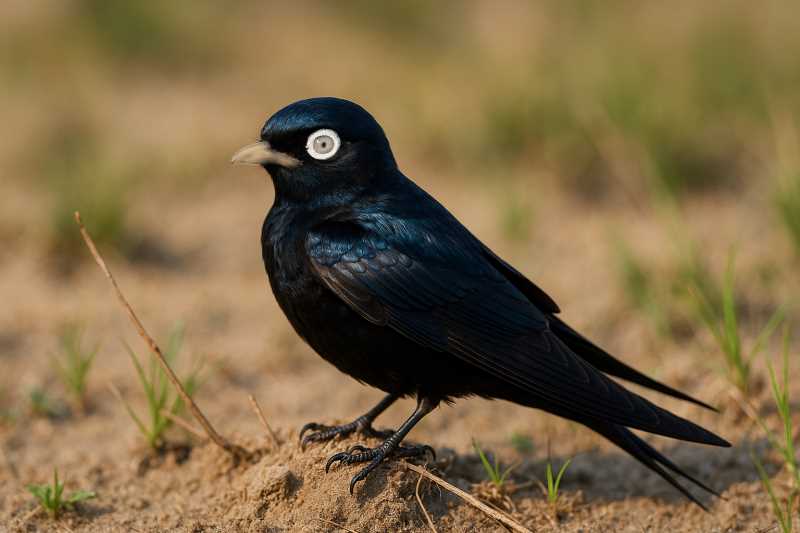
The White-eyed River Martin is a medium-sized bird, measuring approximately 15-16 centimeters in length. Its plumage is striking, with a glossy black body contrasted by a white eye ring, which gives the bird its common name. The presence of the white eye ring is a unique characteristic, distinguishing it from other similar species. Additionally, it has a forked tail and a strong, pointed bill, traits typical of swallows and martins. Its wings are long and pointed, designed for agile flight, which is essential for its presumed aerial feeding habits.
Habitat and Behavior
The natural habitat of the White-eyed River Martin is largely unknown, but it is believed to be associated with large freshwater bodies like rivers and lakes, given its discovery at Bung Boraphet. Its presumed feeding behavior involves catching insects in flight, similar to related species. However, due to the lack of extensive field studies, much of its behavior remains speculative.
The bird is thought to be a migratory species, possibly moving seasonally to exploit different environments. However, the specifics of its migratory patterns are still a mystery, as no comprehensive studies have been conducted since its initial discovery.
Conservation Status
The White-eyed River Martin is currently listed as Critically Endangered on the IUCN Red List. Despite extensive searches, there have been no confirmed sightings of this bird in the wild since the 1980s. The primary threats to its survival are believed to be habitat degradation and human disturbance, particularly in the wetland areas of Thailand where it was initially discovered.
Conservation efforts have been hampered by the bird’s elusive nature. The lack of sightings and understanding of its natural history makes formulating effective conservation strategies challenging. In response, conservationists have focused on protecting potential habitats and raising awareness about the species’ plight in hopes of encouraging further sightings and studies.
The Significance of the White-eyed River Martin
The White-eyed River Martin serves as an important symbol in the broader context of biodiversity conservation. Its story highlights the critical need for preserving natural habitats and the challenges inherent in protecting species that are not well understood. The mystery surrounding this bird underscores the gaps in our knowledge of global biodiversity and the urgency with which we must address conservation issues.
In addition to its ecological significance, the bird holds cultural value in Thailand. Its discovery was a point of national pride, and it continues to be featured in Thai stamps and folklore, further emphasizing the importance of its conservation.
Conclusion
The White-eyed River Martin remains one of the most enigmatic birds in the world. With its striking appearance and mysterious absence from the wild, it poses a unique challenge to ornithologists and conservationists. While its future remains uncertain, the ongoing interest and efforts to uncover its secrets are a testament to the enduring human fascination with the natural world. Conservationists hope that with continued focus and research, this avian enigma may one day be better understood, ensuring its place in the rich tapestry of Earth’s biodiversity.
Related posts