The Tundra Bean-Goose: A Comprehensive Overview
The Tundra Bean-Goose (Anser serrirostris) is an intriguing species that captivates ornithologists and bird enthusiasts alike. This medium to large-sized waterfowl is a member of the Anatidae family, which includes ducks, swans, and other geese. The Tundra Bean-Goose is primarily found in the northern parts of Europe and Asia, particularly in tundra and taiga regions where it breeds during the warmer months.
Identification and Physical Characteristics
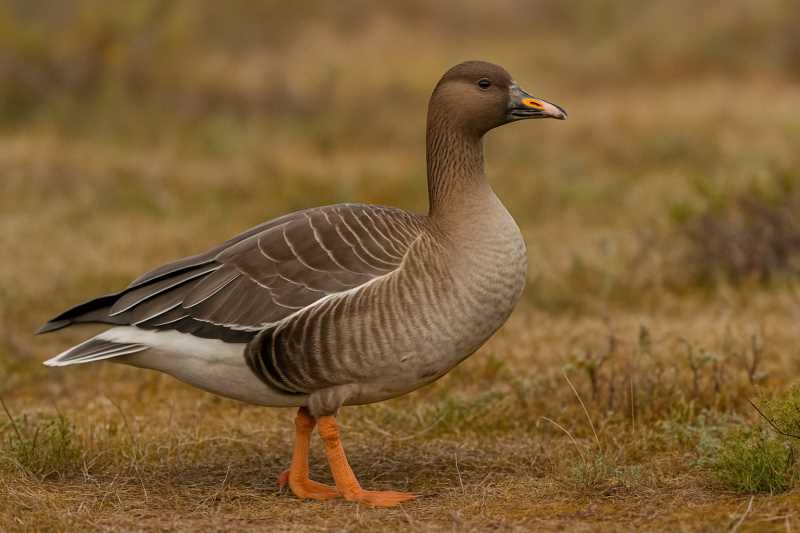
The Tundra Bean-Goose exhibits a robust physique, with a body length ranging from 68 to 90 cm and a wingspan of approximately 140 to 174 cm. It weighs between 2.8 to 4 kg. Its plumage is predominantly grey-brown, with subtle differences in shading along the body. The head and neck are darker, creating a distinct contrast with the paler underparts. A notable feature is the orange-yellow band across its bill, which distinguishes it from other geese. The legs are also orange, providing a stark contrast against the tundra landscape during its breeding season.
Habitat and Distribution
The Tundra Bean-Goose breeds in the Arctic tundra and taiga zones, particularly in northern Siberia. During the winter, it migrates south to milder climates, reaching as far as the lowlands of Central and Eastern Europe, China, and Korea. It prefers open landscapes near water bodies, such as lakes, rivers, and wetlands, which provide abundant food resources and safety from predators.
Feeding Habits
As primarily herbivorous birds, Tundra Bean-Geese feed on a variety of plant materials. Their diet consists largely of grasses, roots, seeds, and agricultural crops such as wheat and barley. During migration, they are often observed feeding in stubble fields and pastures, where they can find leftover grains and shoots. Their foraging behavior is typically communal, often seen in flocks that can number in the hundreds.
Breeding and Behavior
The breeding season for the Tundra Bean-Goose begins in late spring, with pairs forming monogamous bonds that often last for life. Nesting occurs on the ground, with the female constructing a simple nest lined with down and feathers. She typically lays between 3 to 7 eggs, which she incubates for about 25 to 30 days. During this period, the male stands guard, protecting the nest from potential threats. Once hatched, the goslings are precocial and can feed themselves almost immediately, although they remain under the protection and guidance of their parents.
Conservation Status and Challenges
The Tundra Bean-Goose is currently classified as ‘Least Concern’ by the International Union for Conservation of Nature (IUCN). However, its populations are subject to various threats, including habitat loss due to agricultural expansion, climate change impacting its breeding grounds, and hunting pressure. Conservation efforts are underway in several countries to monitor populations and ensure sustainable management of habitats crucial to their survival.
Ecological and Cultural Significance
Tundra Bean-Geese play a vital role in their ecosystems. As grazers, they help maintain the health of grasslands and wetlands, which benefits other wildlife. Moreover, these geese serve as important indicators of environmental change, with shifts in their migration patterns often reflecting broader ecological trends. Culturally, they are revered in many northern communities where they are part of traditional hunting practices and folklore.
Conclusion
The Tundra Bean-Goose is a remarkable species that embodies the resilience and adaptability of wildlife in harsh climates. Its migratory patterns and communal lifestyle offer fascinating insights into the natural world, underscoring the importance of conservation efforts to protect these magnificent birds for future generations. As global environmental conditions continue to evolve, ongoing research and conservation initiatives will be critical to ensuring the survival of the Tundra Bean-Goose and the preservation of its natural habitats.
Related posts