The Tooth-billed Bowerbird is one of the more enigmatic and lesser-known members of the bowerbird family, found only in the rainforests of northeastern Queensland, Australia. Renowned not for elaborate bower constructions but for a unique stage-like court, this species exemplifies both avian ingenuity and ecological specialization. As a key species within its habitat, it plays an important role in seed dispersal and forest dynamics. Understanding this fascinating bird provides insight into the complex relationships between behavior, environment, and evolutionary strategy.
Identification
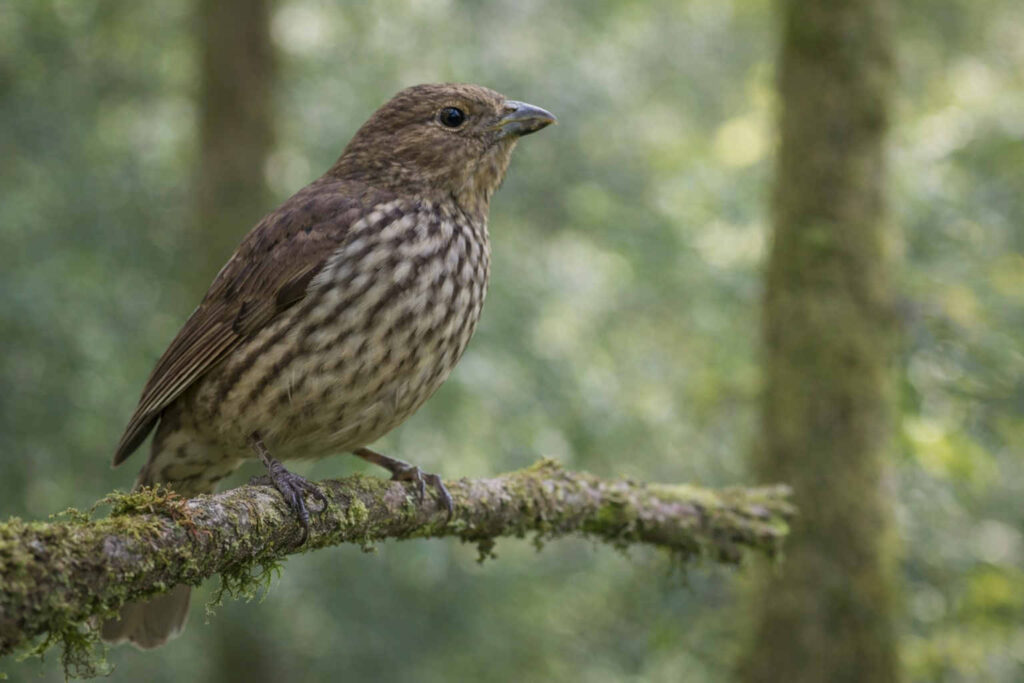
The Tooth-billed Bowerbird is a medium-sized, stocky bird measuring about 27 to 29 centimeters in length. Both males and females share a similar plumage—mottled olive-brown with a buff-colored underside, providing excellent camouflage within the forest understory. The bird’s namesake feature is its distinctive bill, which has small tooth-like serrations along the edge of the upper mandible—an adaptation for its fruit-heavy diet.
Unlike many of its more flamboyant relatives, the Tooth-billed Bowerbird is visually modest. However, its vocal prowess and display behavior more than compensate. Males are notable mimics, incorporating the calls of other bird species into their vocal repertoire, which they use during courtship.
Habitat and Distribution
This species is endemic to the Wet Tropics of Queensland, particularly in upland and montane rainforests above 500 meters. Its range extends from the Paluma Range near Townsville northward to Cooktown. These forests provide a stable, humid microclimate and a consistent supply of the fleshy fruits that dominate the bird’s diet.
Due to its specialized habitat requirements, the Tooth-billed Bowerbird is particularly sensitive to environmental changes. Its range is naturally limited and fragmented, making habitat conservation in these tropical uplands vital for the species’ survival.
Behavior
Unlike other bowerbirds that construct elaborate bowers made of sticks and decorations, the Tooth-billed Bowerbird creates a display area known as a “stage.” These are cleared patches of forest floor meticulously maintained by the male. He gathers and neatly arranges fresh green leaves—always with the underside facing up—on the stage. These leaves are sourced daily, with great care, as their freshness seems to influence female choice.
Males call from perches near their stages and use mimicry, clicks, and a wide range of mechanical and melodious notes to attract females. The display combines vocalizations with a ritualized movement around the stage, showcasing the male’s fitness and leaf arrangement skills.
Diet
The Tooth-billed Bowerbird is primarily frugivorous, feeding on a wide variety of rainforest fruits. Its serrated bill allows it to manipulate and tear open tough-skinned fruits more easily than other frugivores. The bird plays an essential role in the ecosystem by dispersing the seeds of native trees, contributing to the regeneration and diversity of the rainforest.
It occasionally supplements its diet with insects and other invertebrates, particularly during the breeding season when nutritional demands are higher.
Breeding
Breeding occurs during the austral spring and summer (typically from September to January). Males are polygynous and do not assist in rearing the young. After mating, the female constructs a cup-shaped nest in a fork of a tree or dense shrub, typically well concealed. She incubates the single egg and raises the chick alone.
Despite the lack of paternal care, males invest heavily in courtship effort, often maintaining their display stages over several months. This reproductive strategy, common among bowerbirds, is a classic example of sexual selection driving elaborate courtship behavior.
Conservation Status
The Tooth-billed Bowerbird is currently listed as Least Concern by the IUCN, largely due to its presence in several protected areas within the Wet Tropics World Heritage Area. However, its restricted range and reliance on intact rainforest make it vulnerable to habitat degradation, particularly from climate change, logging, and increased bushfire risk.
Monitoring populations and maintaining connectivity between forest patches is critical to ensuring the long-term survival of the species. Conservation efforts must prioritize preserving mature rainforest ecosystems and mitigating the impacts of global warming on high-altitude habitats.
Conclusion
The Tooth-billed Bowerbird exemplifies the extraordinary behaviors that can evolve in specialized environments. With its unique leaf-stage courtship, vocal mimicry, and reliance on pristine rainforest habitat, it serves as both a biological marvel and a reminder of the importance of conserving Australia’s tropical uplands. Protecting this species not only preserves a fascinating avian lineage but also safeguards the broader ecological functions of its forest home.
Related posts