Sulawesi Masked Owl: An Enigmatic Avian Inhabitant of Indonesia
The Sulawesi Masked Owl (Tyto rosenbergii) is a captivating and elusive species that inhabits the diverse and biodiverse ecosystems of Sulawesi, an island in Indonesia. With its distinctive appearance and unique behaviors, this owl has piqued the interest of ornithologists and bird enthusiasts alike. As a member of the Tytonidae family, which includes barn owls and their relatives, the Sulawesi Masked Owl embodies a rich tapestry of evolutionary history and ecological significance.
Taxonomy and Physical Characteristics
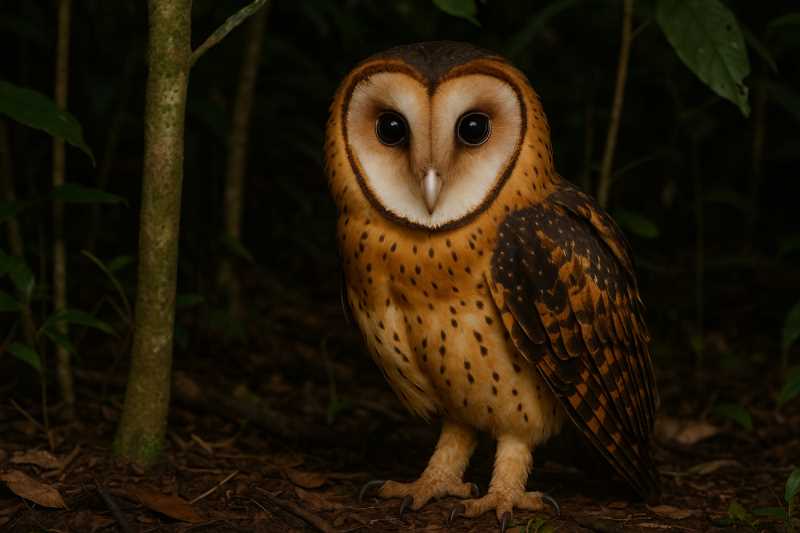
The Sulawesi Masked Owl is classified under the genus Tyto, which encompasses a variety of barn owls. Its scientific name, Tyto rosenbergii, pays homage to the German naturalist Hermann von Rosenberg, who contributed significantly to the early understanding of the region’s fauna. This owl is distinguished by its striking facial disc, a common trait among Tyto species, which aids in directing sound to their ears, an adaptation crucial for nocturnal hunting.
Measuring approximately 33-43 centimeters in length, the Sulawesi Masked Owl showcases a beautiful blend of cream, brown, and grey plumage, with a heart-shaped face that is bordered by a darker, contrasting rim. Its large, soulful eyes are adapted for low-light vision, allowing it to hunt effectively at night. The owl’s talons are sharp and robust, making it an adept predator capable of capturing a variety of prey.
Habitat and Distribution
Endemic to Sulawesi, this masked owl is primarily found in the lowland and montane forests of the island. Sulawesi’s unique geological history and isolation have led to a high degree of endemism, making it a hotspot for biodiversity. The Sulawesi Masked Owl has adapted to a range of habitats, from dense rainforests to open woodlands, showcasing its ecological versatility.
Despite its adaptability, the owl faces threats from habitat loss due to deforestation, agricultural expansion, and urban development. These pressures underscore the importance of conservation efforts aimed at preserving Sulawesi’s unique ecosystems and the myriad species that inhabit them.
Behavior and Diet
The behavior of the Sulawesi Masked Owl is typical of many nocturnal raptors. It is primarily solitary, coming together with others of its kind only during the breeding season. These owls are known for their haunting calls, which resonate through the night, earning them a mysterious and somewhat eerie reputation.
As an apex predator in its environment, the Sulawesi Masked Owl plays a crucial role in controlling the populations of its prey, which includes small mammals, birds, and insects. Its hunting strategy involves silent flight, facilitated by the specialized structure of its feathers, allowing it to approach prey undetected.
Reproduction and Lifespan
Breeding habits of the Sulawesi Masked Owl are not extensively documented, but it is believed to follow patterns similar to other Tyto species. Breeding pairs are monogamous and establish nests in tree cavities or abandoned buildings. The female typically lays a clutch of two to four eggs, which she incubates while the male provides food.
Chicks are altricial, hatching blind and helpless, requiring extensive parental care until they fledge. The lifespan of the Sulawesi Masked Owl in the wild is not well-documented, but it is estimated to be similar to other barn owl species, ranging from 10 to 15 years.
Conservation Status and Efforts
The International Union for Conservation of Nature (IUCN) currently lists the Sulawesi Masked Owl as Near Threatened. This designation highlights the species’ vulnerability due to ongoing habitat degradation and loss. Conservation initiatives on Sulawesi are crucial for protecting not only this owl but also the broader ecological community.
Efforts to conserve the Sulawesi Masked Owl involve habitat protection and restoration, as well as community engagement and education. Promoting sustainable land use practices and raising awareness about the owl’s ecological role can help mitigate human impact on its environment.
Conclusion
The Sulawesi Masked Owl is a remarkable avian species that embodies the ecological richness of Sulawesi. Its unique adaptations and ecological role make it an important subject for conservation efforts. Protecting this owl and its habitat is vital for maintaining the biodiversity and ecological balance of Sulawesi, ensuring that future generations can continue to marvel at its presence in the wild.
As we deepen our understanding of Tyto rosenbergii, we gain insight into the delicate interplay of life on Sulawesi, a testament to the island’s natural heritage. The Sulawesi Masked Owl serves as a symbol of the urgent need for conservation and a reminder of the beauty that lies within the world’s most biodiverse regions.
Related posts