The Sulawesi Dwarf Kingfisher: A Jewel of Indonesia’s Avian Biodiversity
The Sulawesi Dwarf Kingfisher (Ceyx fallax) is a captivating bird species, endemic to the lush forests of the Indonesian island of Sulawesi. Renowned for its vibrant plumage and elusive nature, this small kingfisher is a testament to the rich biodiversity found on the island. As one of the numerous unique species inhabiting Sulawesi, the dwarf kingfisher plays a vital role in the local ecosystem, while also highlighting the pressing need for conservation efforts in the region.
Physical Characteristics and Behavior
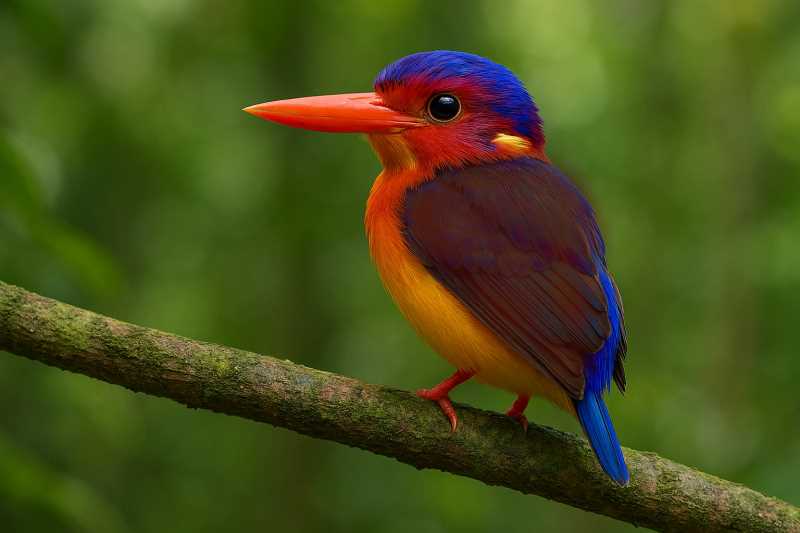
The Sulawesi Dwarf Kingfisher is a diminutive bird, measuring approximately 14 cm in length. Despite its small size, it boasts a striking appearance. Its plumage is a dazzling combination of bright blues, oranges, and whites, with a distinctive black band across its eyes, resembling a mask. The vibrant blue wings and back contrast with the orange underparts, making it a vivid presence in its natural habitat.
These kingfishers are primarily insectivorous, feeding on a diet of insects and small invertebrates. They employ a sit-and-wait hunting strategy, perching quietly before swooping down to capture prey with their sharp, pointed beaks. This hunting technique requires both patience and precision, attributes that the Sulawesi Dwarf Kingfisher possesses in abundance.
Habitat and Distribution
Endemic to Sulawesi, this kingfisher inhabits the island’s lowland forests, often near streams and other water bodies. The dense, humid forests provide ample cover and an abundance of prey, making them ideal habitats for these birds. However, the Sulawesi Dwarf Kingfisher is notoriously elusive, often hiding amongst the dense foliage, which makes sightings relatively rare.
Sulawesi itself is part of the Wallacea region, a biodiversity hotspot characterized by a unique blend of Asian and Australasian species. The island’s complex geological history and varied topography have given rise to a high level of endemism, with the Sulawesi Dwarf Kingfisher being a prime example of this evolutionary uniqueness.
Conservation Status and Threats
The International Union for Conservation of Nature (IUCN) currently classifies the Sulawesi Dwarf Kingfisher as Near Threatened. This designation reflects the growing concerns over habitat loss and degradation, primarily due to deforestation and land conversion for agriculture and infrastructure development. These activities have led to significant fragmentation of the kingfisher’s habitat, posing a serious threat to its survival.
Illegal logging and inadequate land management practices further exacerbate the situation, reducing the availability of suitable habitats and leading to increased competition for resources. As a result, the Sulawesi Dwarf Kingfisher faces an uncertain future unless concerted conservation efforts are implemented.
Conservation Efforts and Future Prospects
Efforts to conserve the Sulawesi Dwarf Kingfisher and its habitat are underway, driven by both local and international conservation organizations. Initiatives focus on habitat protection and restoration, as well as raising awareness about the importance of preserving Sulawesi’s unique biodiversity.
One of the key strategies is the establishment of protected areas, which offer a refuge for the kingfisher and other endemic species. These areas not only safeguard habitats but also provide opportunities for ecological research and monitoring, essential for understanding the needs of the Sulawesi Dwarf Kingfisher and implementing effective conservation strategies.
Community involvement is another crucial aspect of conservation efforts. Engaging local communities in sustainable land management practices and eco-tourism initiatives can help promote the long-term preservation of the island’s natural resources. By fostering a sense of stewardship and providing economic incentives, these initiatives can contribute to reducing the pressures on the kingfisher’s habitat.
Conclusion
The Sulawesi Dwarf Kingfisher stands as a symbol of the incredible biodiversity found on the island of Sulawesi. Its vibrant colors and elusive nature capture the imagination of bird enthusiasts and conservationists alike. However, its future hangs in the balance, threatened by habitat loss and environmental pressures.
Preserving this species requires a multi-faceted approach, combining habitat protection, community engagement, and scientific research. By addressing the challenges facing the Sulawesi Dwarf Kingfisher and its habitat, we can ensure that this jewel of Indonesia’s avian biodiversity continues to thrive for generations to come.
Related posts