The Enigmatic Silver-throated Bushtit (Aegithalos glaucogularis): A Detailed Exploration
The avian world is abundant with intriguing species, each with its unique charm and ecological significance. Among these, the Silver-throated Bushtit (Aegithalos glaucogularis) stands out as a fascinating subject of study, renowned for its distinctive appearance and behaviors. This article delves into the various aspects of the Silver-throated Bushtit, providing an in-depth look at its taxonomy, physical characteristics, habitat, behavior, and conservation status.
Taxonomy and Classification
The Silver-throated Bushtit belongs to the family Aegithalidae, which is commonly known as the long-tailed tits. This family encompasses a small group of passerine birds that are primarily distributed across Europe and Asia. The genus Aegithalos, to which the Silver-throated Bushtit belongs, is characterized by small, agile birds with long tails and soft, fluffy plumage.
Classified scientifically as Aegithalos glaucogularis, the Silver-throated Bushtit was once considered a subspecies of the Long-tailed Tit (Aegithalos caudatus). However, recent genetic studies and morphological assessments have elevated it to full species status, highlighting its distinctiveness from its relatives.
Physical Characteristics
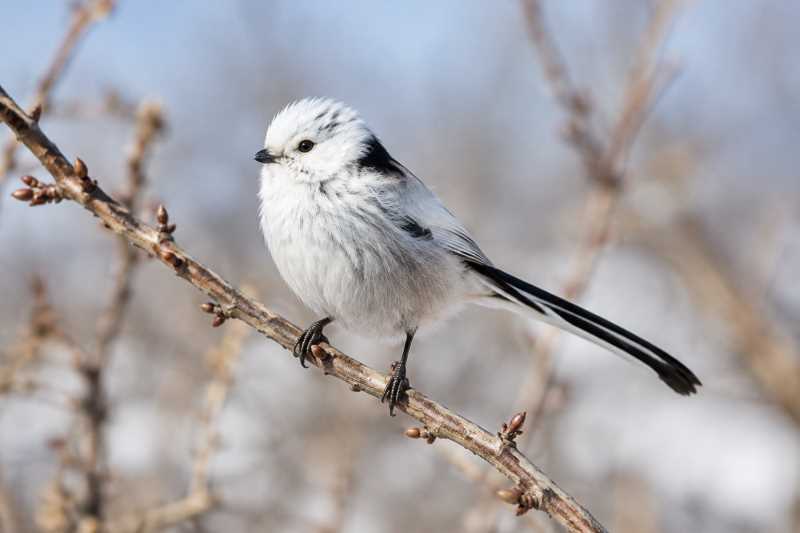
As its name suggests, the Silver-throated Bushtit is distinguished by its striking silver-gray throat, which contrasts vividly with its mostly white face and head. The bird’s upperparts are a subtle blend of pale gray and white, while its wings exhibit a more pronounced grayish hue. One of the most notable features of this species is its exceptionally long tail, which often exceeds the length of its body, a characteristic trait of the Aegithalidae family.
The bird’s diminutive size, measuring approximately 10 to 12 cm in length, makes it one of the smaller members of the passerine order. Its petite frame is complemented by a delicate, conical beak, perfectly adapted for its insectivorous diet.
Habitat and Distribution
The Silver-throated Bushtit is predominantly found across central and eastern China, inhabiting a range of environments from lowland forests to mountainous regions. It favors deciduous and mixed woodland habitats, where it can often be seen flitting among the branches in search of food.
This species is highly adaptable, capable of thriving in both natural and semi-natural habitats. Its presence in urban parks and gardens highlights its ability to coexist with human-altered landscapes, provided suitable vegetation is available for foraging and nesting.
Behavior and Diet
The Silver-throated Bushtit is a highly social bird, typically observed in small, cohesive flocks. These flocks are often family groups, and the birds engage in cooperative breeding, where non-breeding individuals assist in raising the young. This social structure is thought to enhance the survival prospects of the offspring, ensuring a higher degree of care and protection.
In terms of diet, the Silver-throated Bushtit is primarily insectivorous, feeding on a variety of small invertebrates, including caterpillars, aphids, and spiders. During the winter months, when invertebrate prey is less abundant, the bird supplements its diet with seeds and other plant materials.
Breeding and Nesting
Breeding typically occurs between April and June. Silver-throated Bushtits are known for their intricate nest-building skills, constructing elaborate, dome-shaped nests from moss, lichen, and spider silk. These nests are carefully camouflaged among the foliage, providing protection from predators.
The female lays a clutch of six to ten eggs, which are incubated for approximately two weeks. Both parents, along with additional helpers, participate in feeding the chicks, which fledge after about two to three weeks. This communal approach to rearing young is a hallmark of the species’ social behavior.
Conservation Status and Threats
Currently, the Silver-throated Bushtit is not considered at risk, and it is categorized as a species of Least Concern by the International Union for Conservation of Nature (IUCN). However, ongoing habitat destruction and fragmentation pose potential threats to its populations, particularly in areas experiencing significant urban expansion and deforestation.
Conservation efforts aimed at preserving natural habitats and promoting biodiversity-friendly urban planning are essential for ensuring the long-term survival of this species. Public awareness and engagement in bird conservation initiatives can also play a pivotal role in safeguarding the Silver-throated Bushtit’s future.
Conclusion
The Silver-throated Bushtit is a captivating example of avian biodiversity, showcasing a blend of unique physical traits and intricate social behaviors. As a species, it serves as a reminder of the rich diversity within the bird world and the importance of preserving natural habitats for future generations to enjoy. By understanding and appreciating such species, we can foster a greater commitment to conservation and the protection of our planet’s avian heritage.
Related posts