The Russet-Throated Puffbird: A Jewel of the Neotropical Forests
The Russet-throated Puffbird (Hypnelus ruficollis) is a captivating avian species that has intrigued ornithologists and birdwatchers alike. This bird is a member of the Bucconidae family, an assemblage known for their stout bodies, large heads, and striking plumage. Found predominantly in the neotropical regions of northern South America, particularly in countries like Colombia and Venezuela, the Russet-throated Puffbird is an integral part of the ecological tapestry.
Taxonomy and Classification
The taxonomic journey of the Russet-throated Puffbird is as fascinating as its behavioral patterns. It belongs to the order Piciformes, a diverse group that includes woodpeckers and toucans. The genus Hypnelus is characterized by birds that are relatively sedentary, preferring to sit quietly and watch their surroundings. The species name, ruficollis, derives from Latin, meaning ‘red-necked,’ aptly describing the bird’s distinctive russet-colored throat.
Physical Characteristics
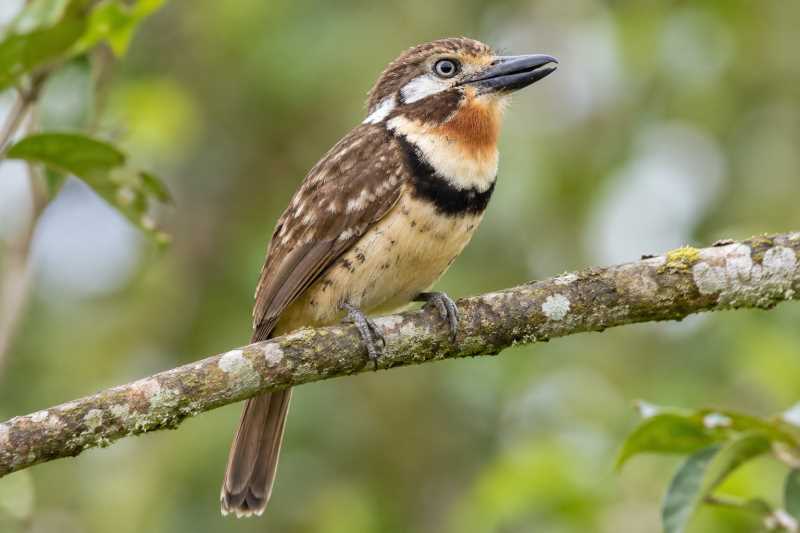
The Russet-throated Puffbird measures approximately 19 to 21 centimeters in length, making it a medium-sized bird within its family. Its plumage is a harmonious blend of colors, with a predominantly white chest and belly contrasted by a deep russet throat and neck. The upper parts are mottled with shades of brown and black, providing effective camouflage against the forest backdrop. The bird’s stout bill, a signature feature of puffbirds, is adapted for catching and consuming its prey.
Habitat and Distribution
Hypnelus ruficollis thrives in lowland tropical forests, mangroves, and occasionally, in semi-open areas with scattered trees. Its range spans across northern Colombia and Venezuela, with isolated populations reported in areas of Panama. This bird prefers habitats that offer a mix of dense foliage for cover and open areas for hunting.
Behavioral Patterns
Russet-throated Puffbirds are known for their sedentary and solitary nature. They are often seen perching quietly on branches, surveying their surroundings for potential prey. Unlike many other bird species, puffbirds do not engage in elaborate vocal displays; instead, they communicate through a series of low, repetitive calls.
Their hunting strategy is a testament to their patience and precision. The puffbird remains motionless, blending into its surroundings until an unsuspecting insect or small vertebrate comes within reach. With a swift motion, it captures its prey using its strong bill.
Diet
The diet of the Russet-throated Puffbird primarily consists of insects and small vertebrates such as lizards and frogs. Their foraging technique involves sallying from a perch to snatch prey from foliage or the forest floor. This opportunistic feeding behavior allows them to exploit a variety of food sources within their habitat.
Reproduction and Lifespan
Breeding habits of the Russet-throated Puffbird remain somewhat understudied, but it is known that they nest in burrows. These burrows are typically excavated in arboreal termite nests or rotten wood, providing a secure environment for raising their young. The clutch size usually consists of two to three eggs, with both parents sharing responsibilities for incubation and feeding the chicks.
The lifespan of puffbirds in the wild is not well-documented, but they are believed to live for several years, assuming they can avoid predation and habitat destruction.
Conservation Status
The Russet-throated Puffbird is currently classified as ‘Least Concern’ by the International Union for Conservation of Nature (IUCN). However, like many forest-dependent species, it faces threats from habitat loss due to deforestation and human encroachment. Conservation efforts aimed at preserving neotropical forests are vital to ensuring the survival of this species and the myriad other organisms that share its habitat.
Ecological Role
As insectivores, Russet-throated Puffbirds play a crucial role in maintaining the ecological balance within their habitats. By controlling insect populations, they help protect plant life and contribute to the overall health of the ecosystem. Their presence also indicates the health of the environment, as they rely on intact forest systems for survival.
Conclusion
The Russet-throated Puffbird is a remarkable bird that embodies the beauty and complexity of neotropical ecosystems. Its unique characteristics, coupled with its role in the ecosystem, make it an important subject of study for ornithologists and conservationists. As we continue to explore and understand the natural world, the Russet-throated Puffbird serves as a reminder of the intricate interconnections that define our planet’s biodiversity.
Preserving the habitats of such species is not only vital for their survival but also for the health of the broader ecological communities they support. By championing conservation efforts, we can ensure that future generations will have the opportunity to witness the splendor of the Russet-throated Puffbird and the vibrant world it inhabits.
Related posts