The Enigmatic Rufous-winged Philentoma: A Comprehensive Overview
The Rufous-winged Philentoma (Philentoma pyrhoptera) is an avian marvel that captures the attention of ornithologists and bird enthusiasts alike. With its striking appearance and elusive nature, this bird inhabits the lush forests of Southeast Asia, where it contributes to the region’s rich biodiversity. This article delves into the various aspects of the Rufous-winged Philentoma, from its taxonomy and habitat to its behavior and conservation status.
Taxonomy and Classification
The Rufous-winged Philentoma belongs to the family Vangidae, a diverse group of birds known for their varied size and appearance. Within this family, the Philentoma genus is relatively small, comprising only a few species.
First described by the renowned British ornithologist Edward Blyth in 1842, the Rufous-winged Philentoma has since intrigued biologists. Its scientific name, Philentoma pyrhoptera, originates from the Greek words ‘pyrrhos’ meaning flame-colored and ‘pteron’ meaning wing, aptly describing the bird’s distinct rufous wings.
Physical Characteristics
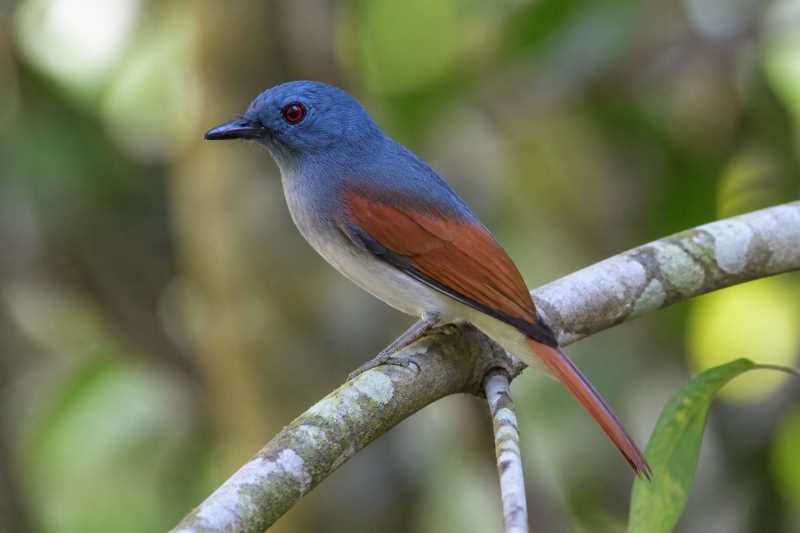
The Rufous-winged Philentoma is a medium-sized bird, measuring approximately 17-19 cm in length. Its plumage is primarily a subtle blend of greys and browns, which provides effective camouflage amidst the forest foliage. The standout feature, as its name suggests, is the rufous or reddish-brown coloration on its wings, which is particularly prominent during flight.
Both males and females exhibit similar plumage, though males tend to have slightly brighter hues. The bird’s eyes are dark, contrasting with its lighter throat and belly, and its bill is stout and slightly hooked, adapted for its insectivorous diet.
Habitat and Distribution
The Rufous-winged Philentoma is predominantly found in lowland and hill forests across Southeast Asia. Its range extends through the Malay Peninsula, Sumatra, and Borneo, where it thrives in moist, dense forest environments. This bird prefers primary forests, although it can sometimes be found in well-established secondary growth and edge habitats.
The species is generally non-migratory, staying within its established territories year-round. However, some local movements may occur in response to food availability and breeding requirements.
Behavior and Diet
Typically observed alone or in pairs, the Rufous-winged Philentoma is a quiet and unobtrusive bird. It forages methodically through the mid-canopy and understory, displaying a preference for areas with ample leaf litter and understory vegetation.
Its diet primarily consists of insects and other small invertebrates. The bird employs a combination of gleaning and sallying techniques, where it plucks prey from leaves or branches and occasionally makes short flights to catch insects in mid-air.
During the breeding season, which varies depending on geographic location, the Rufous-winged Philentoma becomes more vocal. Its calls are soft and melodious, often heard during the early morning or late afternoon.
Reproduction and Lifespan
The Rufous-winged Philentoma is monogamous, forming long-lasting pair bonds. Nesting typically occurs in dense foliage, with both parents participating in nest-building and incubation duties.
The nest is a small cup made of twigs, leaves, and moss, usually positioned in a fork of a tree. Clutch size ranges from two to three eggs, with an incubation period of approximately 14-17 days. After hatching, both parents are involved in feeding and caring for the chicks until they fledge.
The average lifespan of the Rufous-winged Philentoma in the wild is not well-documented, but similar species in the Vangidae family can live up to 8-10 years.
Conservation Status and Threats
Currently, the Rufous-winged Philentoma is classified as Least Concern on the IUCN Red List. However, like many forest-dwelling species, it faces threats from habitat destruction and fragmentation, primarily due to logging, agriculture, and human encroachment.
Conservation efforts aimed at preserving Southeast Asia’s forest ecosystems are crucial for the long-term survival of the Rufous-winged Philentoma. Protecting large tracts of continuous forest and implementing sustainable land-use practices can mitigate the impacts of habitat loss.
Conclusion
The Rufous-winged Philentoma is a testament to the intricate beauty and complexity of Southeast Asia’s avifauna. While currently not endangered, proactive measures are essential to ensure that this enigmatic bird continues to thrive in its natural habitat. By increasing awareness and supporting conservation initiatives, we can help safeguard the future of the Rufous-winged Philentoma and the rich biodiversity it represents.
Related posts