Exploring the Enigmatic Rufous Piha: A Hidden Gem of the Neotropics
In the lush, verdant canopy of the Central and South American forests, a somewhat elusive bird makes its home—the Rufous Piha (Lipaugus unirufus). Known for its understated beauty and enigmatic presence, this bird is a captivating subject for ornithologists and birdwatchers alike. This article delves into the life and habitat of the Rufous Piha, shedding light on its unique characteristics and the role it plays in its ecosystem.
Introduction to the Rufous Piha
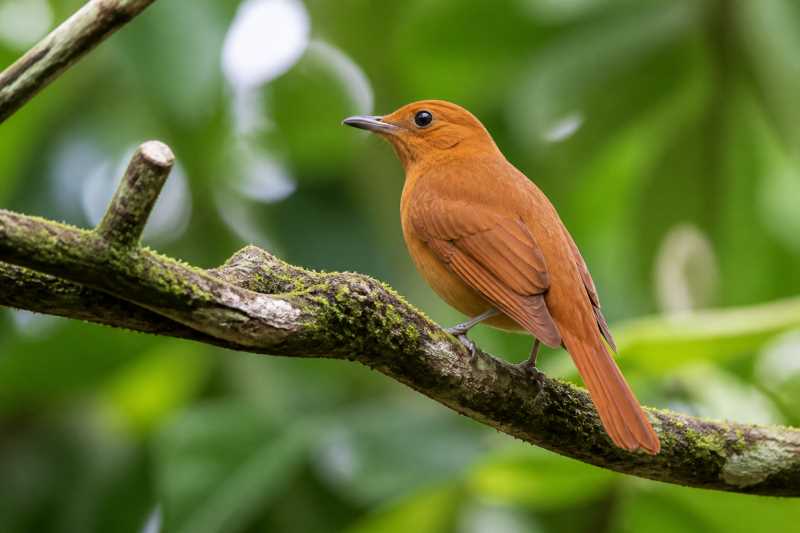
The Rufous Piha is a medium-sized bird belonging to the Cotingidae family, a group that includes some of the most colorful and charismatic birds of the Neotropics. However, unlike its more flamboyant relatives, the Rufous Piha is modestly adorned in shades of rufous brown, allowing it to blend seamlessly into its forest surroundings.
This bird is typically found in the dense lowland and foothill forests of Central America, from southern Mexico through to western Panama, and extending into the forests of Colombia, Ecuador, and northern Peru. Its preference for dense, moist forests makes it a challenging species to observe, often heard rather than seen.
Physical Characteristics
Measuring approximately 23-26 cm in length, the Rufous Piha has a robust build and a relatively large head, with a short, slightly curved bill. Its plumage is primarily a uniform rufous brown, which offers excellent camouflage among the forest’s foliage and shadows. The eyes are dark, adding to its mysterious aura.
One of the most distinctive features of the Rufous Piha is its vocalization. The bird’s call is a loud, resonant "pee-hah," which can be heard echoing through the forest, often giving away its presence long before it is seen. This unique call is not only a tool for communication but also plays a critical role during the breeding season.
Diet and Feeding Behavior
The Rufous Piha is primarily frugivorous, feeding on a variety of fruits found within its forest habitat. It plays a pivotal role in seed dispersal, contributing to the health and regeneration of its ecosystem. In addition to fruits, it occasionally consumes insects and small invertebrates, which supplement its diet and provide necessary proteins.
The bird typically forages in the mid to upper levels of the forest canopy, often seen making short flights between branches in search of food. Its feeding habits are generally solitary, although it may occasionally join mixed-species flocks, especially in areas where food is abundant.
Reproductive Behavior
The breeding behavior of the Rufous Piha is not extensively documented, largely due to its secretive nature and the challenging environment in which it resides. However, it is known that the species breeds during the wet season when food is plentiful.
Courtship involves the male performing display flights and vocalizations to attract a mate. Once paired, the female typically builds a cup-shaped nest, often situated high in the trees and well-concealed among the foliage. The nest is constructed from twigs, leaves, and other plant materials, providing a safe haven for the eggs and subsequent chicks.
Conservation Status and Threats
Currently, the Rufous Piha is listed as Least Concern by the International Union for Conservation of Nature (IUCN). However, like many forest-dependent species, it faces threats from habitat loss and degradation. Deforestation for agriculture, logging, and urban development are the primary challenges affecting its habitat.
Conservation efforts aimed at preserving tropical forests are crucial for the survival of the Rufous Piha and countless other species that rely on these ecosystems. Protected areas and sustainable land management practices play a vital role in mitigating the impact of human activities.
Conclusion
The Rufous Piha is a testament to the subtle beauty and complexity of the Neotropical forests. While it may not have the dazzling plumage of some of its relatives, its role as a seed disperser and its unique vocalizations make it an integral part of its ecosystem. Continued research and conservation efforts are essential to ensure that this enigmatic bird continues to thrive in its natural habitat.
For bird enthusiasts and researchers, the Rufous Piha offers a rewarding challenge—a chance to observe and understand one of nature’s more enigmatic avian residents. As we deepen our appreciation for such species, we also strengthen our commitment to preserving the rich biodiversity of our planet.
Related posts