The Red-legged Cormorant: A Coastal Jewel of South America
The Red-legged Cormorant (Poikilocarbo gaimardi) is a striking seabird native to the rocky shores and coastal waters of South America. Known for its vibrant red legs and feet, this bird is a fascinating subject for ornithologists and bird enthusiasts alike. This article delves into the unique characteristics, habitat, behavior, and conservation status of this remarkable species.
Physical Characteristics
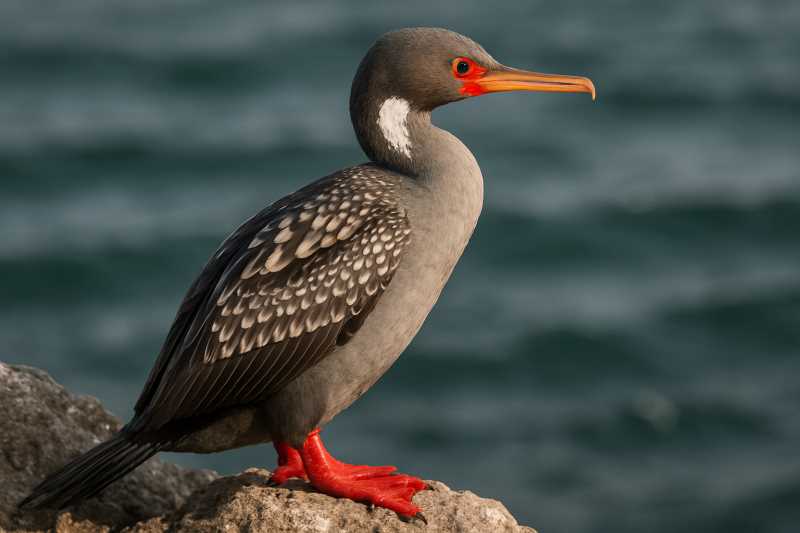
The Red-legged Cormorant is a medium-sized bird, measuring approximately 71-76 cm in length, with a wingspan that stretches between 91-101 cm. Its plumage is predominantly a slate-gray color, marked with subtle white spots on its neck and wing coverts. One of the most distinctive features of this species is its vivid red legs and feet, which stand out against the rocky coastlines it inhabits.
The bird’s facial skin is a bright orange-red, contrasting sharply with its greenish eyes and pale gray bill. This striking appearance not only aids in species identification but also plays a role in mating displays and territorial behavior.
Habitat and Distribution
Red-legged Cormorants are typically found along the coastal regions of Chile, Peru, and Argentina. They prefer rocky shores and cliffs, where they can nest and roost safely away from predators. These birds are also found on offshore islands, where human disturbance is minimal.
Their preference for marine environments is due to their diet, which primarily consists of fish and crustaceans. They are adept divers, capable of plunging to depths of up to 30 meters to capture their prey. The availability of food resources plays a significant role in their distribution, with colonies often found near nutrient-rich upwelling zones.
Behavior and Breeding
Red-legged Cormorants are known for their solitary and territorial nature. Unlike many other cormorant species that form large colonies, this species often nests in smaller, more dispersed groups. They exhibit strong site fidelity, often returning to the same nesting areas each year.
The breeding season varies slightly depending on the region but typically occurs between September and February. During this time, males engage in elaborate courtship displays, showcasing their bright red legs and performing a series of bowing and wing-flapping rituals to attract a mate.
Nests are constructed from seaweed, feathers, and guano, and are strategically placed on ledges or in crevices to protect against predators and harsh weather. Females lay two to three eggs per clutch, which are incubated by both parents for approximately 30 days. Chicks are born altricial, meaning they are relatively undeveloped and require significant parental care.
Conservation Status
The Red-legged Cormorant is currently listed as Near Threatened on the IUCN Red List. This status is primarily due to habitat loss and degradation, particularly from human activities such as coastal development, pollution, and fishing. Disturbance from tourism and the illegal harvest of eggs and chicks also pose significant threats.
Conservation efforts are focused on habitat protection and the establishment of marine protected areas to safeguard critical breeding and feeding sites. Additionally, education and awareness programs aim to reduce human disturbance and promote sustainable fishing practices.
Conclusion
The Red-legged Cormorant is a unique and captivating species that plays a vital role in the marine ecosystems of South America. Its striking appearance and fascinating behaviors make it a treasured subject of study and conservation. By understanding and addressing the threats facing this species, we can ensure that future generations continue to witness the vibrant beauty of the Red-legged Cormorant along the rocky shores of its coastal habitat.
In conclusion, the Red-legged Cormorant is not just another bird in the avian world; it is a symbol of the delicate balance that exists in our natural ecosystems. Protecting this species is not only crucial for maintaining biodiversity but also for preserving the rich tapestry of life that thrives along the coastal landscapes of South America.
Related posts