Red-bellied Macaw: A Vibrant Jewel of the Amazon Rainforest
The Amazon Rainforest is a vibrant tapestry of life, home to a plethora of unique and colorful species. Among these, the Red-bellied Macaw (Orthopsittaca manilatus) stands out with its striking appearance and intriguing behaviors. This medium-sized parrot, native to the lowland tropical forests of South America, is a fascinating subject for ornithologists and bird enthusiasts alike.
Physical Description
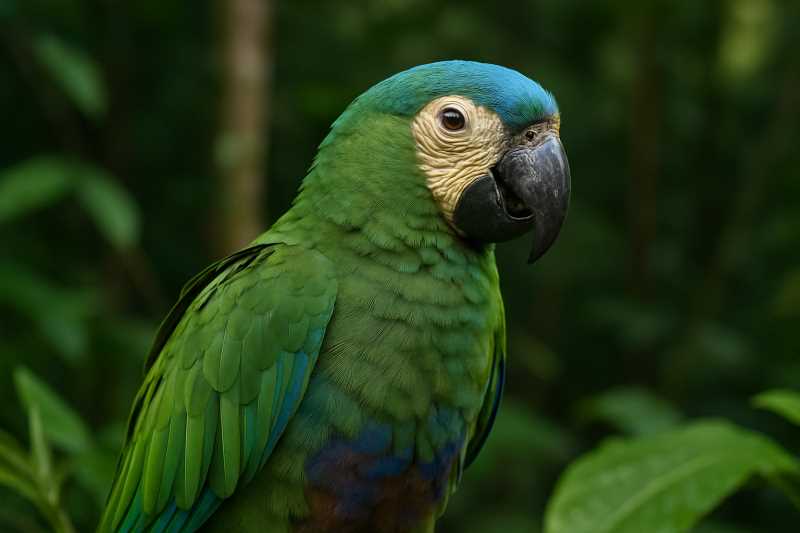
The Red-bellied Macaw is easily recognizable by its distinctive plumage. It measures approximately 46 cm (18 inches) in length, with a wingspan that enhances its graceful flight. True to its name, the bird sports a vibrant red patch on its belly, which contrasts beautifully with its predominantly green feathers. The wings and tail exhibit shades of blue, creating a stunning visual display in flight. The macaw’s face is marked with a bare yellow patch around its eyes, adding to its charismatic appearance.
Habitat and Distribution
Orthopsittaca manilatus is predominantly found in the Amazon Basin, especially in regions spanning Brazil, Venezuela, Colombia, Ecuador, Peru, and the Guianas. Its preferred habitat includes swampy areas, palm-savannahs, and seasonally flooded forests. These environments provide abundant Mauritia palm trees, which are crucial for the macaw’s survival as they rely heavily on the fruits of these palms.
Diet and Feeding Habits
The dietary preferences of the Red-bellied Macaw are closely tied to the Mauritia palm, from which it derives most of its nutrition. The bird’s strong beak is perfectly adapted to crack open the hard shells of palm nuts, which form the core of its diet. In addition to these nuts, the macaw occasionally supplements its intake with fruits, seeds, and other plant materials. Its feeding habits play a significant role in seed dispersal, contributing to the health and regeneration of its ecosystem.
Social Behavior and Reproduction
Red-bellied Macaws are highly social creatures, often seen in flocks that can number up to several dozen individuals. This social structure is vital for their communication and survival, as group living provides protection against predators. The macaws are known for their loud, raucous calls, which can be heard echoing through the forest canopy.
Breeding season for the Red-bellied Macaw typically occurs during the dry months. The birds form monogamous pairs, and both parents are involved in nest preparation and chick-rearing. They usually nest in cavities high in palm trees, where the female lays two to three eggs. The incubation period lasts about 26 days, and the chicks fledge after approximately 12 weeks under the attentive care of their parents.
Conservation Status
Despite their adaptability to various forested environments, Red-bellied Macaws face several threats that impact their populations. Habitat destruction due to deforestation and agricultural expansion poses a significant risk. Additionally, the illegal pet trade has contributed to population declines, as these birds are captured for their attractive appearance and social demeanor.
Fortunately, the Red-bellied Macaw is currently listed as “Least Concern” by the IUCN Red List, thanks to its extensive range and large population size. However, continued conservation efforts are necessary to ensure that these colorful parrots remain a thriving part of their ecosystem. Conservation initiatives focus on habitat protection, anti-poaching measures, and raising public awareness about the importance of preserving biodiversity.
The Role in Indigenous Cultures
Throughout history, the Red-bellied Macaw has held a special place in the cultures of indigenous peoples of the Amazon. The birds are often featured in traditional art and folklore, symbolizing freedom and the vibrant life of the rainforest. Their feathers are sometimes used in ceremonial attire, reflecting the deep connection between these communities and their natural environment.
Conclusion
The Red-bellied Macaw is a testament to the rich biodiversity of the Amazon Rainforest. Its striking appearance, complex social dynamics, and ecological significance make it a cherished subject for study and admiration. As we strive to protect our planet’s natural wonders, the Red-bellied Macaw serves as a reminder of the intricate web of life that sustains us all.
By understanding and preserving the habitats of these magnificent creatures, we ensure that future generations can continue to marvel at the beauty and diversity of our world’s ecosystems.
Related posts