The Purple Sandpiper: A Hardy Coastal Wanderer
The Purple Sandpiper (Calidris maritima) is a remarkable shorebird known for its resilience and adaptability to harsh environments. Found primarily in the northern Atlantic, this species thrives in rocky coastal areas where few others dare to tread. The Purple Sandpiper’s unique behavior, habitat preferences, and physiological adaptations make it a fascinating subject for ornithologists and bird enthusiasts alike.
Habitat and Distribution
The Purple Sandpiper primarily inhabits the rocky shores of the North Atlantic. During the breeding season, which occurs in the Arctic regions of Greenland, Iceland, and parts of northern Canada, these birds seek out tundra landscapes. In winter, they migrate to more temperate regions along the coasts of Europe and North America, from the British Isles and Scandinavia to the eastern seaboard of the United States.
This species is uniquely adapted to its rugged habitat. Unlike many shorebirds that prefer sandy beaches, the Purple Sandpiper thrives amidst rocky outcrops and tidal pools. This preference is partly due to its feeding habits, as these locations offer abundant food sources such as mollusks, crustaceans, and marine worms.
Physical Characteristics
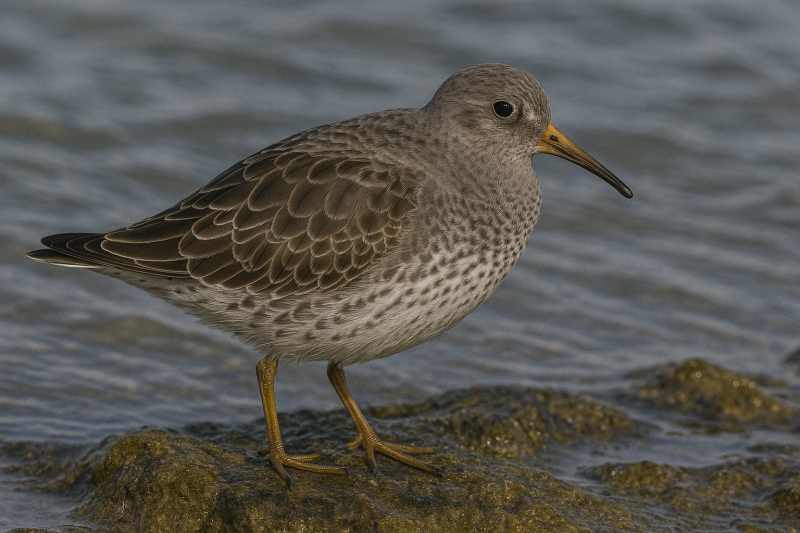
The Purple Sandpiper is a medium-sized shorebird, measuring approximately 20-22 cm in length, with a wingspan of about 42-46 cm. Its plumage is predominantly dark gray with a subtle purplish sheen—hence its name—most noticeable in good lighting conditions. This coloration provides excellent camouflage against the rocky backgrounds of its preferred habitats.
The bird’s legs and bill are short and stout, adaptations that help it navigate and forage among slippery rocks and crevices. The bill is slightly curved and robust, ideal for probing into crevices for prey.
Behavior and Ecology
A social bird, the Purple Sandpiper often forms small flocks, especially during the non-breeding season. These flocks can be seen foraging in the intertidal zones, deftly maneuvering between rocks to extract food. Their diet primarily consists of small invertebrates, which they locate using their acute sense of touch and sight.
During the breeding season, the species becomes territorial. Males engage in aerial displays, characterized by melodious calls and acrobatics, to attract females and establish dominance. Once paired, both parents participate in incubating the eggs and rearing the young, a practice that enhances the survival rate in their challenging environment.
Conservation Status
Currently, the Purple Sandpiper is classified as Least Concern by the International Union for Conservation of Nature (IUCN). Despite its relatively stable population, the bird faces challenges from climate change, which affects its Arctic breeding grounds, and human disturbances in coastal areas.
Conservation efforts focus on monitoring populations and protecting critical habitats from development and pollution. Awareness campaigns aim to educate the public and policymakers about the significance of preserving these unique coastal ecosystems.
Conclusion
The Purple Sandpiper is a testament to nature’s adaptability, thriving in conditions that deter many other species. Its presence along the rocky coasts of the North Atlantic is a reminder of the intricate balance within marine ecosystems. As we continue to study and protect these remarkable birds, the Purple Sandpiper offers valuable insights into the resilience of life in the face of environmental challenges.
For bird watchers and nature lovers, observing the Purple Sandpiper in its natural habitat is an unparalleled experience, offering a glimpse into the complex interactions between species and their environments.
With continued conservation efforts, we can ensure that future generations will also have the opportunity to marvel at this hardy coastal wanderer.
Related posts