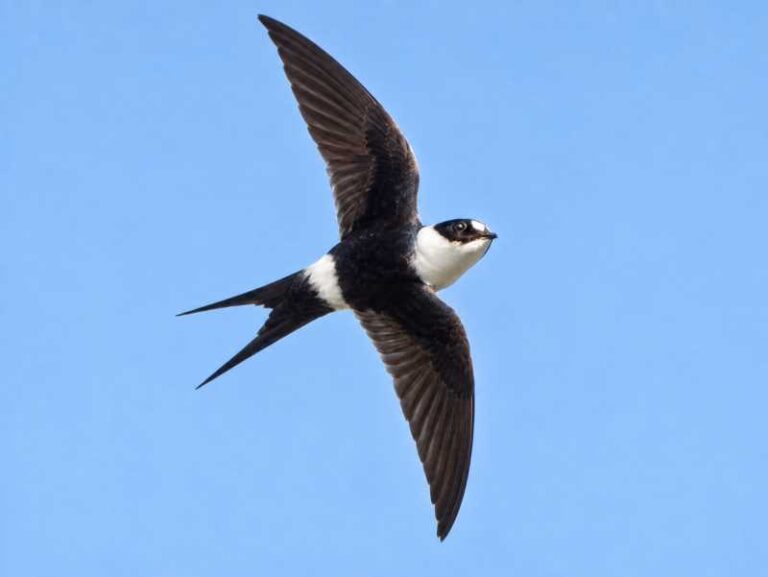
The Pacific Swift: An Avian Marvel of the Skies
The Pacific Swift (Apus pacificus) is a remarkable bird species that graces the skies of Asia and Australasia. Known for its incredible endurance and distinctive forked tail, this bird is a member of the swift family, Apodidae, which is renowned for its aerial prowess. The Pacific Swift, like its relatives, spends most of its life in flight, exhibiting extraordinary adaptability and physical capabilities that are subjects of admiration and scientific interest.
Physical Characteristics
The Pacific Swift is medium-sized, measuring about 16 to 18 centimeters in length, with a wingspan ranging from 40 to 45 centimeters. Its plumage is predominantly dark, with a glossy blackish-brown appearance that can sometimes show a bluish sheen under certain lighting conditions. The bird’s underparts are generally lighter, and it features a distinctive white rump, which becomes a key identification mark when observing it in flight. Its wings are long and narrow, adapted for sustained flight, and its tail is deeply forked, which assists in agile maneuvering.
Behavior and Flight
Most fascinating about the Pacific Swift is its lifestyle, which is highly adapted to life on the wing. These birds are almost perpetually airborne, landing only to breed. They feed, mate, and even sleep while in flight, exhibiting a phenomenon known as unihemispheric slow-wave sleep, where one half of the brain remains alert while the other rests. This allows them to stay aloft for long durations without succumbing to exhaustion.
Pacific Swifts are insectivorous, catching their prey mid-flight with remarkable precision and speed. Their diet consists mainly of flying insects, which are abundant in their aerial habitats. This feeding behavior not only sustains their high-energy lifestyle but also plays a crucial role in controlling insect populations.
Migration Patterns
The Pacific Swift undertakes one of the most extensive migratory journeys of any bird species. Breeding in the northern regions of Asia, such as Siberia and Japan, these swifts migrate southward to spend the winter in Southeast Asia, Australia, and even as far as New Zealand. Their migratory routes span thousands of kilometers over open ocean and varied landscapes, showcasing their resilience and navigational skills.
During migration, Pacific Swifts often travel in loose flocks, taking advantage of favorable winds and weather conditions. Their ability to cover long distances with minimal rest is a testament to their evolutionary adaptations for sustained flight.
Breeding and Nesting
Pacific Swifts are colonial breeders, often nesting in large groups on cliffs, in caves, or on man-made structures. They construct their nests using saliva to bind materials like feathers, plant fibers, and small twigs. This unique adhesive property of their saliva hardens to form a secure structure, which is essential for nesting in precarious locations.
The breeding season varies depending on the region but generally occurs during the warmer months. Females typically lay two to three eggs, which both parents incubate. The young swifts fledge within six to eight weeks, rapidly developing the skills needed for their aerial lifestyle.
Conservation Status
Currently, the Pacific Swift is classified as Least Concern by the International Union for Conservation of Nature (IUCN), indicating that the species is relatively stable. However, like many migratory birds, they face threats from habitat destruction, climate change, and human activities. Conservation efforts focused on preserving their migratory routes and breeding sites are essential to ensuring the ongoing survival of this avian marvel.
In conclusion, the Pacific Swift is an extraordinary species that exemplifies the wonders of avian adaptation and endurance. Its nearly continuous life in flight, coupled with its extensive migratory patterns, make it a fascinating subject for ornithologists and bird enthusiasts alike. As we continue to study these birds, they offer valuable insights into the complexities of migration, adaptation, and the interconnectedness of ecosystems across continents.
Conclusion
The Pacific Swift remains a symbol of nature’s resilience and adaptability. By understanding and protecting these remarkable birds, we contribute to the preservation of biodiversity and the natural wonders that grace our world.
Related posts