The Ochre-breasted Pipit: A Grassland Gem of South America
The Ochre-breasted Pipit (Anthus nattereri) is a captivating bird species native to the grasslands of South America. Known for its distinctive ochre hue and melodic song, the Ochre-breasted Pipit is a subject of interest among ornithologists and bird enthusiasts alike. This article delves into the ecology, behavior, conservation status, and cultural significance of this remarkable bird.
Taxonomy and Description
The Ochre-breasted Pipit belongs to the family Motacillidae, which includes pipits and wagtails. It was first described by the renowned naturalist Johann Natterer in the 19th century. The species name, ‘nattereri’, honors Natterer’s contributions to ornithology.
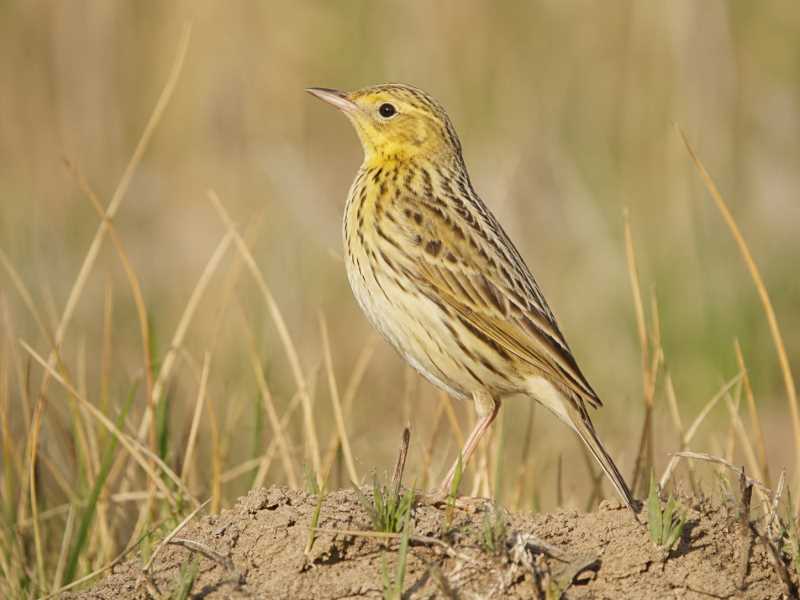
This pipit is a medium-sized bird, measuring approximately 15 to 17 centimeters in length. Its plumage is predominantly ochre-brown, with subtle streaks of darker brown across its back and wings. The underparts are paler, often displaying a buffy or creamy hue. A distinguishing characteristic is its ochre-colored breast, which gives the bird its name. Its slender body, long legs, and pointed bill are typical of ground-dwelling insectivores.
Habitat and Distribution
The Ochre-breasted Pipit is primarily found in the grasslands of Brazil, Paraguay, and Argentina. It favors subtropical or tropical dry lowland grassland habitats, often at elevations ranging from 200 to 1,200 meters. These grasslands are characterized by tall, dense grasses that provide both shelter and ample foraging opportunities.
Historically, the bird’s range was more extensive, but habitat loss and fragmentation have restricted its distribution. Today, its presence is primarily confined to protected areas and private lands that have remained undeveloped.
Behavior and Ecology
The Ochre-breasted Pipit is a ground-dwelling bird, spending much of its time foraging for insects and other small invertebrates. Its diet primarily consists of beetles, grasshoppers, ants, and spiders. The bird uses its long legs to navigate through dense grasses, often pausing to capture prey with its slender bill.
One of the most captivating aspects of the Ochre-breasted Pipit is its song. Males are known for their melodic and varied trills, which they use to establish territories and attract mates. During the breeding season, males perform elaborate flight displays, often rising several meters into the air before gliding down with outstretched wings while singing.
Breeding occurs during the wet season when food resources are abundant. The female constructs a cup-shaped nest on the ground, concealed by surrounding vegetation. Clutch size typically ranges from two to four eggs, which the female incubates alone. Both parents participate in feeding the chicks once they hatch.
Conservation Status
The Ochre-breasted Pipit is currently classified as Vulnerable by the International Union for Conservation of Nature (IUCN). The primary threat to its survival is habitat loss due to agricultural expansion, urbanization, and land conversion for livestock grazing. Fragmentation of grassland habitats not only reduces available territory but also increases the bird’s vulnerability to predators and environmental changes.
Conservation efforts are underway to protect the remaining grassland habitats and promote sustainable land-use practices. In Brazil, several national parks and reserves provide sanctuary for the Ochre-breasted Pipit, ensuring that critical habitats are preserved. Environmental organizations are also working with local communities to raise awareness about the importance of grassland conservation.
Cultural Significance and Future Prospects
The Ochre-breasted Pipit holds cultural significance in the regions it inhabits, often featured in folklore and local stories. Its song is celebrated for its beauty, and the bird is affectionately known as a ‘messenger of the rain’ due to its association with the wet season.
Looking ahead, the future of the Ochre-breasted Pipit depends on continued conservation efforts and adaptive management strategies. Protecting grassland ecosystems is crucial not only for the pipit but also for the myriad of species that share its habitat. Collaborative efforts between governments, non-governmental organizations, and local communities will be key to ensuring the survival of this grassland gem.
In conclusion, the Ochre-breasted Pipit is a remarkable species that embodies the beauty and complexity of South American grasslands. Its presence is a testament to the rich biodiversity of these ecosystems, and its conservation is a shared responsibility. By understanding and appreciating the Ochre-breasted Pipit, we contribute to the broader goal of preserving our planet’s natural heritage.
Related posts