Understanding the Nuthatch Vanga: A Fascinating Bird of Madagascar
The Nuthatch Vanga (Hypositta corallirostris) is a unique bird species that belongs to the family Vangidae, endemic to the lush and diverse ecosystems of Madagascar. Known for its distinctive features and intriguing behavior, this bird has captured the interest of ornithologists and bird enthusiasts alike. In this article, we will delve deep into the various aspects of the Nuthatch Vanga, exploring its habitat, physical characteristics, behavior, conservation status, and the ecological significance it holds within its native environment.
Habitat and Distribution
The Nuthatch Vanga is exclusively found in the island nation of Madagascar. Its habitat primarily consists of the subtropical or tropical moist lowland forests, where it thrives in the dense foliage and high canopies. Madagascar, often referred to as the "eighth continent," boasts a rich biodiversity that provides a unique environment for the Nuthatch Vanga. The bird’s range is relatively restricted, making its habitat preferences and distribution crucial for its survival.
The forests of Madagascar are characterized by their high humidity and relatively stable temperatures, which provide an ideal setting for the Nuthatch Vanga. These forests are teeming with life, offering an abundance of food resources and nesting sites for the bird. However, the ongoing deforestation and habitat fragmentation pose significant threats to these ecosystems, and consequently, to the Nuthatch Vanga itself.
Physical Characteristics
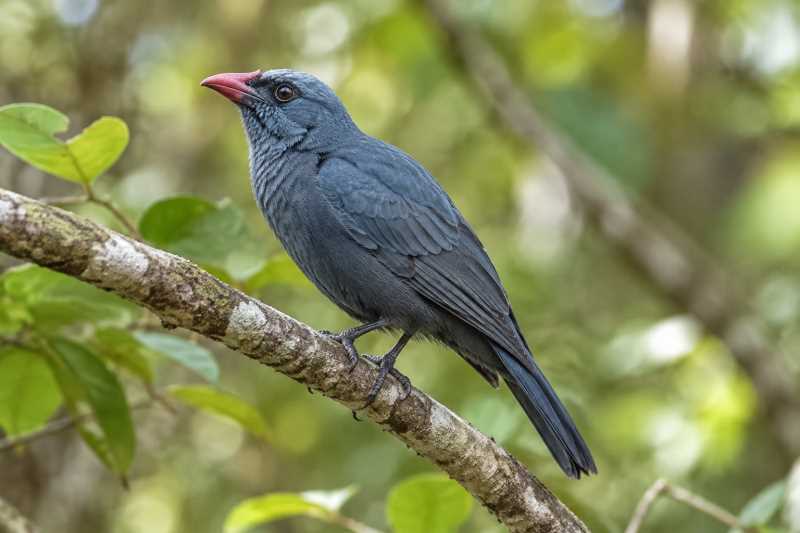
The Nuthatch Vanga is a medium-sized bird, measuring approximately 14 to 16 centimeters in length. It has a robust body, a characteristic feature of many vangas. The most striking feature of the Nuthatch Vanga is its coral-red bill, from which its scientific name, Hypositta corallirostris, is derived. This vibrant bill is not only a key identifying feature but also serves functional purposes in foraging and feeding.
The bird’s plumage is predominantly blue-gray, with a paler underside that provides camouflage among the forest canopy. Its wings are relatively short and rounded, an adaptation that facilitates agile movement through the dense foliage. The Nuthatch Vanga’s tail is also short, aiding in balance and maneuverability as it navigates its complex habitat.
Behavior and Diet
The Nuthatch Vanga exhibits fascinating behavioral traits that distinguish it from other members of the Vangidae family. It is an arboreal species, spending much of its time foraging in the upper forest layers. Its feeding strategy involves gleaning insects from the bark of trees, similar to the behavior of nuthatches, which is reflected in its common name.
In terms of diet, the Nuthatch Vanga primarily feeds on insects and small arthropods, including beetles, ants, and caterpillars. Its specialized bill is adept at probing into crevices and lifting bark to access hidden prey. This foraging technique not only highlights the bird’s adaptability but also its role in controlling insect populations within its ecosystem.
The Nuthatch Vanga is often observed in small family groups, exhibiting social behavior that includes cooperative foraging and communication through vocalizations. These vocalizations, although not extensively studied, are believed to play a role in group cohesion and territory defense.
Conservation Status
The conservation status of the Nuthatch Vanga is a matter of concern for conservationists and researchers. As of the latest assessments, it is classified as Near Threatened on the IUCN Red List. The primary threat to its survival is habitat loss due to deforestation, driven by agricultural expansion, logging, and infrastructure development.
Efforts to conserve the Nuthatch Vanga and its habitat are underway, with initiatives focusing on habitat protection, reforestation, and community engagement. Madagascar’s unique biodiversity is a global treasure, and the conservation of species like the Nuthatch Vanga is essential for maintaining the ecological balance of the island’s forests.
In addition to habitat protection, there is a need for further research to gain a comprehensive understanding of the Nuthatch Vanga’s ecology, population dynamics, and threats. Such knowledge will be instrumental in devising effective conservation strategies and ensuring the long-term survival of this enigmatic bird.
Ecological Significance
The Nuthatch Vanga plays a vital role in the ecosystems of Madagascar. As an insectivorous bird, it contributes to the regulation of insect populations, thus maintaining the health of the forest environment. Its foraging activities also aid in the aeration of tree bark, potentially benefiting the trees by reducing the accumulation of harmful insects and pathogens.
Moreover, the Nuthatch Vanga is part of the intricate web of life in Madagascar’s forests, interacting with other species and contributing to the overall biodiversity of the region. Its presence is an indicator of the health of its habitat, making it a valuable species for ecological monitoring and conservation planning.
Conclusion
The Nuthatch Vanga is a remarkable bird that embodies the unique biodiversity of Madagascar. Its distinct physical features, intriguing behavior, and ecological significance make it a subject of interest for both scientific research and conservation efforts. As we continue to explore and understand the complexities of Madagascar’s ecosystems, the Nuthatch Vanga serves as a reminder of the delicate balance that exists in nature and the importance of preserving it for future generations.
Conservation initiatives, coupled with ongoing research, hold the key to securing a future for the Nuthatch Vanga. By protecting its habitat and addressing the threats it faces, we can ensure that this fascinating bird continues to thrive in the forests of Madagascar, enriching the island’s biodiversity and inspiring future generations to value and protect the natural world.
Related posts