The Enigmatic New Ireland Dwarf Kingfisher: A Jewel of the Avian World
In the lush, verdant landscapes of New Ireland, an island nestled within Papua New Guinea, resides a bird of striking beauty and ecological significance — the New Ireland Dwarf Kingfisher, scientifically known as *Ceyx mulcatus*. This elusive species, with its vivid plumage and diminutive size, has become a subject of fascination for ornithologists and bird enthusiasts alike.
Description and Characteristics
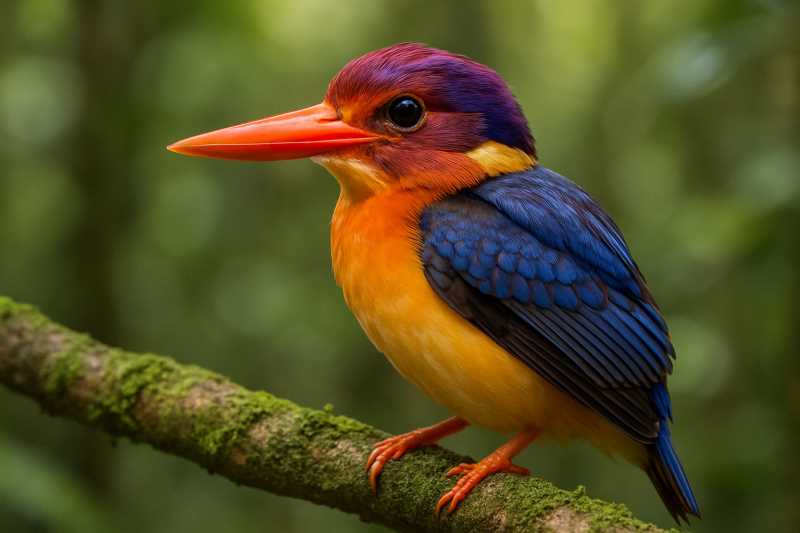
The New Ireland Dwarf Kingfisher is a member of the kingfisher family, Alcedinidae, known for their distinctive body shapes and vibrant colors. This species is particularly notable for its small stature, measuring approximately 12 to 13 centimeters in length. Its plumage is an exquisite blend of bright blues and oranges, with a shimmering, iridescent quality that seems to capture the essence of the tropical habitats it inhabits.
One of the most striking features of the New Ireland Dwarf Kingfisher is its stout bill, which is perfectly adapted for its diet primarily consisting of insects and small invertebrates. This feature is complemented by their sharp, keen eyesight, enabling them to hunt with precision in the dense forest undergrowth.
Habitat and Distribution
Endemic to New Ireland, this kingfisher is a forest-dependent species, thriving in lowland and montane forests up to altitudes of 1,200 meters. The richness of the island’s ecosystems provides a perfect backdrop for the bird’s survival, offering ample food resources and nesting sites.
However, the species’ restricted range makes it vulnerable to environmental changes and habitat destruction. The forests of New Ireland are increasingly threatened by logging and agricultural expansion, which poses significant risks to the kingfisher’s habitat.
Behavior and Ecology
The New Ireland Dwarf Kingfisher is a solitary creature, typically seen alone or in pairs, fiercely defending its territory from intruders. Its flight is a rapid, darting motion, often accompanied by a series of sharp calls. These vocalizations are crucial for communication, particularly during breeding season when establishing territory and attracting mates.
Breeding typically occurs during the dry season, from May to September. The birds excavate burrows in riverbanks or rotten tree stumps where they lay a clutch of two to three eggs. Both parents are involved in the incubation and rearing of the chicks, showcasing a strong bond and cooperation.
Conservation Status
Currently, the New Ireland Dwarf Kingfisher is classified as Near Threatened by the International Union for Conservation of Nature (IUCN). The primary threat to its existence is habitat loss due to deforestation and human encroachment. Conservation efforts are imperative to ensure the survival of this species, focusing on habitat protection and sustainable land-use practices.
Organizations and researchers are working with local communities to promote awareness and develop strategies that balance ecological preservation with economic needs. Protecting the forests of New Ireland not only aids in conserving the kingfisher but also preserves the biodiversity that is crucial for the ecological health of the region.
The Role of Research and Citizen Science
Research plays a vital role in understanding the ecology and behavior of the New Ireland Dwarf Kingfisher. Continued studies on its population size, distribution, and breeding habits are essential for informing conservation strategies. Furthermore, citizen science initiatives can significantly contribute to data collection, engaging local communities and birdwatchers in conservation efforts.
By utilizing technology such as GPS tracking and remote sensing, researchers can monitor changes in the kingfisher’s habitat and adapt conservation actions accordingly. These efforts are critical in mitigating the impacts of climate change and deforestation.
Conclusion
The New Ireland Dwarf Kingfisher embodies the delicate balance of beauty and vulnerability found in nature. As a symbol of the unique biodiversity of New Ireland, it underscores the importance of preserving the island’s natural heritage. By fostering conservation efforts and promoting sustainable practices, we can ensure that future generations will continue to marvel at the vibrant plumage and agile flight of this remarkable bird.
Protecting the New Ireland Dwarf Kingfisher is not just about saving a single species; it is about preserving an entire ecosystem that supports myriad forms of life. As stewards of the planet, it is our responsibility to protect these natural wonders and maintain the intricate tapestry of life they represent.
Related posts