The Micronesian Imperial Pigeon: An Avian Jewel of the Pacific
The Micronesian Imperial Pigeon (Ducula oceanica) is a captivating bird species that graces the tropical forests of the Pacific, specifically the enchanting Micronesian islands. Known for its striking plumage and the vital ecological role it plays, this pigeon is a symbol of the unique biodiversity found in this part of the world. In this article, we explore the characteristics, habitat, and conservation status of the Micronesian Imperial Pigeon, providing insights into its significance and the challenges it faces.
Characteristics and Appearance
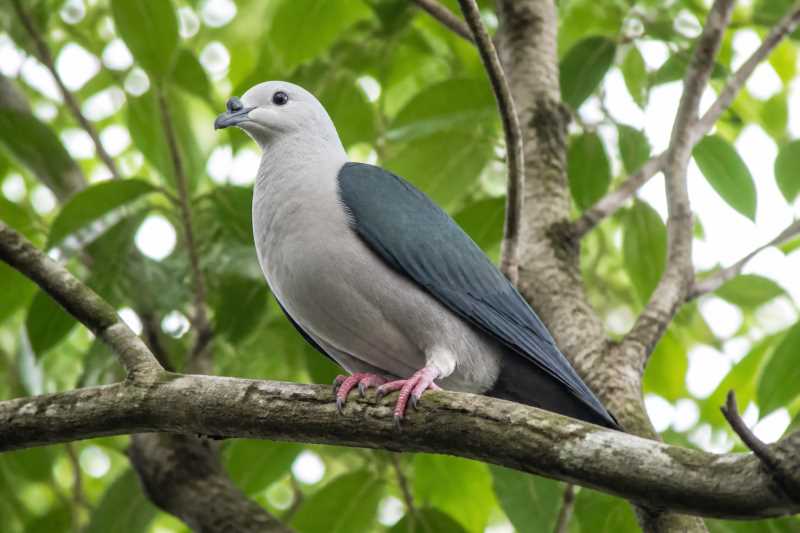
The Micronesian Imperial Pigeon is a large, robust bird, measuring between 38 to 44 centimeters in length and weighing around 450 to 570 grams. Its most distinguishing feature is its elegant plumage. The bird’s head and neck are typically a soft gray, which contrasts beautifully with its deep green back and wings. The belly and underparts are often a lighter gray or buff, while the tail feathers exhibit a striking pattern of dark and light bands. These colors not only contribute to the bird’s majestic appearance but also provide effective camouflage in the dappled light of the forest canopy.
The species’ large bill and strong legs are adapted to its frugivorous diet, allowing it to forage efficiently for fruits and seeds. The Micronesian Imperial Pigeon plays a crucial role in seed dispersal, aiding in the regeneration of forest ecosystems. Its call, a series of low, resonant coos, can often be heard echoing through the forest, adding to the bird’s mystique.
Habitat and Range
The Micronesian Imperial Pigeon inhabits the tropical and subtropical forests of the Micronesian islands, which include the Federated States of Micronesia, Palau, the Marshall Islands, and parts of the Northern Mariana Islands. These islands are characterized by their lush, dense forests that provide an abundance of fruiting trees essential for the pigeon’s diet.
The bird is predominantly found in lowland and montane forests but can also adapt to secondary growth and altered habitats, provided there is sufficient food availability. The Micronesian Imperial Pigeon’s range is limited to these islands, making its conservation status particularly important due to its restricted distribution.
Ecological Importance
As a frugivore, the Micronesian Imperial Pigeon plays a pivotal role in its ecosystem. By consuming a variety of fruits and dispersing seeds through its droppings, the pigeon contributes to maintaining the diversity and health of its forest habitat. This seed dispersal is critical for the regeneration of trees, some of which may rely solely on birds like the Micronesian Imperial Pigeon for propagation.
In addition to their role in seed dispersal, these pigeons are also part of the food web, serving as prey for native raptors and other predators. Their presence indicates a healthy, functioning ecosystem, where each species plays its part in maintaining ecological balance.
Conservation Status and Challenges
Despite its ecological importance, the Micronesian Imperial Pigeon faces several threats that have raised concerns about its conservation status. Habitat loss due to deforestation, agricultural expansion, and urban development is one of the most significant challenges. As forests are cleared or degraded, the pigeons lose their primary food sources and nesting sites.
Invasive species also pose a threat to the Micronesian Imperial Pigeon. Predators such as rats, cats, and snakes, introduced to the islands by humans, have led to increased predation on eggs and young birds. Additionally, competition for food with other bird species and the impact of climate change, which can alter habitat conditions and food availability, further exacerbate the situation.
Conservation efforts are underway to protect the Micronesian Imperial Pigeon. These include habitat restoration projects, controlling invasive species, and raising awareness about the importance of preserving these unique ecosystems. Local and international conservation organizations are working together to implement strategies that ensure the survival of this species for future generations.
Conclusion
The Micronesian Imperial Pigeon is more than just a bird; it is a vital component of the Pacific’s ecological tapestry. Its striking appearance and ecological role underscore the importance of preserving the delicate balance of Micronesia’s island ecosystems. By understanding and addressing the challenges it faces, we can work towards a future where the Micronesian Imperial Pigeon continues to thrive, embodying the rich natural heritage of the Pacific islands.
Conserving the Micronesian Imperial Pigeon is a shared responsibility that requires the commitment of governments, conservationists, and local communities. Through collaborative efforts, we can ensure that this avian jewel remains an integral part of Micronesia’s biodiversity.
References
- BirdLife International. (2021). Ducula oceanica. The IUCN Red List of Threatened Species 2021.
- Pratt, H. D., & Beehler, B. M. (2016). Birds of New Guinea: Distribution, Taxonomy, and Systematics.
- Wiles, G. J., & Johnson, N. C. (2004). Conservation of Native Forest Birds in the Mariana Islands.
Related posts