The Hook-billed Kingfisher: An Enigmatic Avian Marvel
The Hook-billed Kingfisher (Melidora macrorrhina) stands as a fascinating emblem of the biodiversity found in the forests of New Guinea and the surrounding islands. Distinguished by its uniquely hooked bill, this bird inhabits some of the most remote and untouched areas of the globe. This article delves into the distinctive characteristics, habitat preferences, and conservation concerns surrounding this remarkable species.
Distinctive Features
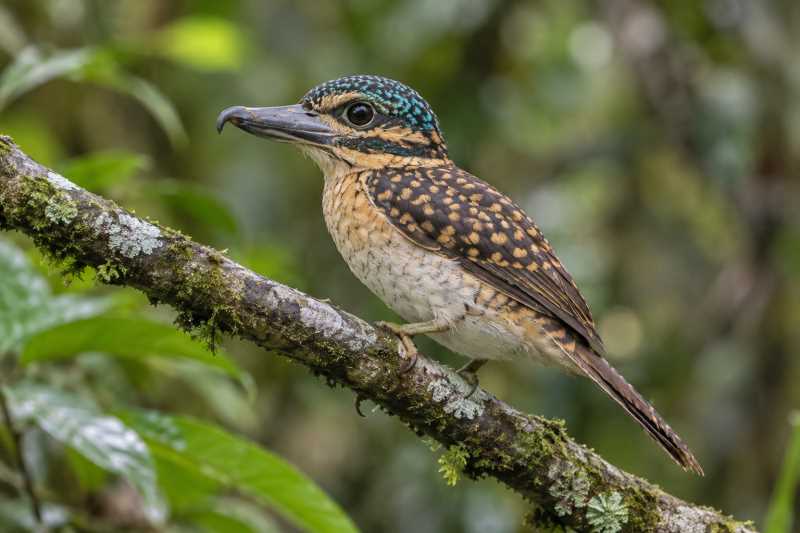
The Hook-billed Kingfisher is a medium-sized bird, measuring approximately 28 to 32 centimeters in length. Its plumage is predominantly earthy brown, providing excellent camouflage against the dense forest foliage. The bird’s most striking feature is its robust, downward-curving bill, which is a departure from the typical straight bills seen in most kingfisher species. This adaptation is believed to aid in the bird’s feeding habits, allowing it to effectively capture and manipulate its prey.
The species exhibits sexual dimorphism, with males and females showing subtle differences in plumage coloration. Males generally display brighter and more contrasting colors than females, which assist in mating displays and territorial defense. The Hook-billed Kingfisher’s call is another distinguishing feature, consisting of a series of harsh, repetitive notes that resonate through the forest canopy.
Habitat and Distribution
The Hook-billed Kingfisher is endemic to the lowland rainforests of New Guinea and surrounding islands, including the Aru Islands and the Bismarck Archipelago. These dense, humid forests offer an abundance of food resources and nesting sites, making them ideal habitats for the species.
Unlike many other kingfishers that dwell near water bodies, the Hook-billed Kingfisher is primarily a forest-dweller. It prefers the shaded understory and mid-canopy levels of the forest, where it actively hunts for insects, small vertebrates, and occasionally fruits. The species’ preference for dense forest environments makes it an elusive subject of study, often heard rather than seen by ornithologists and bird enthusiasts.
Feeding and Behavior
The Hook-billed Kingfisher employs a sit-and-wait hunting strategy, perching quietly on a branch until suitable prey comes within reach. The bird’s diet consists largely of insects like beetles and grasshoppers, though it is also known to consume small reptiles and amphibians. The distinctive hooked bill is an evolutionary adaptation that aids in grasping and subduing prey, ensuring a firm hold during feeding.
In terms of social behavior, the Hook-billed Kingfisher is primarily solitary, coming together only during the breeding season. Males establish and defend territories through vocal displays and sometimes physical confrontations, ensuring exclusive access to resources and potential mates.
Breeding and Nesting
The breeding season for the Hook-billed Kingfisher typically occurs during the wet season when food resources are abundant. Males engage in elaborate courtship displays, showcasing their plumage and vocal abilities to attract females.
Nesting occurs in tree cavities, which provide protection from predators and environmental elements. The female lays a clutch of two to three eggs, which she incubates with occasional assistance from the male. Both parents participate in feeding and caring for the chicks until they are ready to fledge, which usually occurs after four to five weeks.
Conservation Status and Threats
Currently, the Hook-billed Kingfisher is classified as Least Concern by the International Union for Conservation of Nature (IUCN). However, the species faces potential threats from habitat destruction and fragmentation, primarily due to logging and agricultural expansion. The preservation of New Guinea’s rainforest habitats is crucial to ensuring the long-term survival of this and many other endemic species.
Conservation efforts must focus on sustainable land-use practices and the establishment of protected areas to safeguard the rich biodiversity of the region. Additionally, further research is needed to better understand the ecological role and population dynamics of the Hook-billed Kingfisher, enabling more informed conservation strategies.
Conclusion
The Hook-billed Kingfisher remains one of the lesser-known avian species, its enigmatic presence adding to the allure of New Guinea’s rainforests. As we continue to explore and learn about this remarkable bird, it becomes increasingly clear that conservation efforts are vital to preserving the intricate web of life that it represents. By protecting the habitats of the Hook-billed Kingfisher, we also safeguard the myriad of species that share its environment, ensuring the perpetuation of New Guinea’s unparalleled natural heritage.
Related posts