The Enigmatic Hyacinth Visorbearer: A Jewel of the Brazilian Highlands
The Hyacinth Visorbearer (Augastes scutatus) is an iridescent marvel of nature that has captured the fascination of ornithologists and bird enthusiasts alike. This remarkable hummingbird, endemic to Brazil, is a testament to the rich biodiversity found in the country’s highland ecosystems. With its vibrant plumage and unique ecological role, the Hyacinth Visorbearer stands as a symbol of the intricate beauty and complexity of tropical avian life.
Habitat and Distribution
The Hyacinth Visorbearer is primarily found in the campos rupestres, a type of montane savanna in Brazil’s southeastern region. These high-altitude, rocky grasslands provide the perfect habitat for this species. The campos rupestres are known for their harsh conditions, with nutrient-poor soils, strong winds, and significant temperature fluctuations. Despite these challenges, the Hyacinth Visorbearer thrives, showcasing its adaptability and resilience.
These birds are mostly distributed in the states of Minas Gerais and Bahia, with the Espinhaço Mountain Range serving as a critical area for their survival. The range of the Hyacinth Visorbearer is quite limited, making its conservation status a concern for environmentalists and researchers.
Physical Characteristics
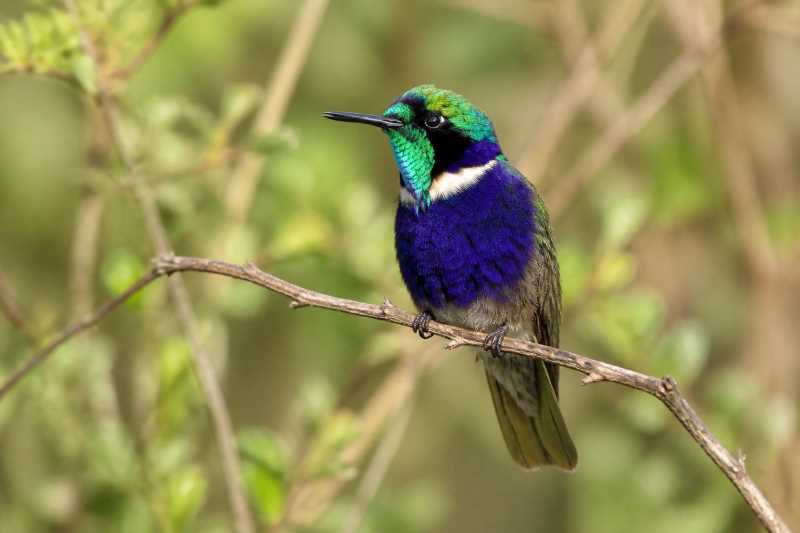
The Hyacinth Visorbearer is distinguished by its striking appearance. It possesses a shimmering green body, with a dazzling hyacinth-colored patch on its throat and upper chest, which gives the bird its name. This vibrant coloration is a result of microscopic structures in the feathers that refract light, a phenomenon common among hummingbirds.
Males and females of the species look relatively similar, though males tend to be slightly larger and more brightly colored. The average length of an adult Hyacinth Visorbearer is about 11 to 12 centimeters, with a wingspan that allows for agile flight patterns suited to its mountainous habitat.
Behavior and Ecology
As with other hummingbirds, the Hyacinth Visorbearer is an adept flyer, capable of hovering in place and exhibiting rapid, darting movements. This agility is essential for feeding, as it primarily feeds on nectar from a variety of flowering plants native to its habitat. The bird plays a crucial role in pollination, contributing to the maintenance of the ecological balance within its environment.
In addition to nectar, the Hyacinth Visorbearer also consumes small insects and spiders, which provide necessary protein for its diet. This mixed diet helps sustain the bird during periods when flowers may be less abundant.
The breeding season for the Hyacinth Visorbearer occurs during the rainy months, when food resources are plentiful. The female is responsible for building the nest, which is often constructed in sheltered locations to protect against the elements and predators. Typically, two eggs are laid, with the female solely responsible for incubation and care of the young.
Conservation Status
The Hyacinth Visorbearer is currently classified as Near Threatened on the IUCN Red List, primarily due to its limited range and the ongoing threats to its habitat. The campos rupestres are under pressure from human activities such as agriculture, mining, and urbanization, which lead to habitat fragmentation and degradation.
Efforts are underway to protect these critical ecosystems. Conservation organizations are working to establish protected areas and promote sustainable land-use practices that benefit both the local human communities and the wildlife that depends on this unique habitat.
The Importance of Conservation
Conserving the Hyacinth Visorbearer is not only about preserving a single species; it represents a broader commitment to safeguarding the intricate web of life that characterizes the Brazilian highlands. The biodiversity of these regions is immense, with many species yet to be studied and understood. Protecting the Hyacinth Visorbearer and its habitat can lead to greater ecological insights and foster a deeper appreciation for the natural world.
Public awareness and education are also crucial components of conservation efforts. By engaging local communities and fostering a sense of stewardship, there is hope that future generations will continue to cherish and protect these natural treasures.
Conclusion
The Hyacinth Visorbearer stands as a brilliant example of nature’s artistry and ecological significance. Its vibrant presence in the Brazilian highlands highlights the need for continued conservation efforts and a commitment to understanding and preserving our planet’s rich biodiversity. As we work to secure a future for this dazzling hummingbird, we are reminded of the interconnectedness of all life and our responsibility to maintain the health and beauty of our natural world.
Related posts