The Humboldt Penguin: A Remarkable Seabird of the Pacific Coast
The Humboldt Penguin (Spheniscus humboldti), a captivating avian species, finds its home along the coastal regions of Peru and Chile. Named after the cold Humboldt Current that flows through its habitat, this penguin species is uniquely adapted to its environment, showcasing fascinating behaviors and characteristics. As climate change and human activities continue to alter the natural world, understanding the Humboldt Penguin becomes crucial for its conservation and the maintenance of biodiversity.
Physical Characteristics
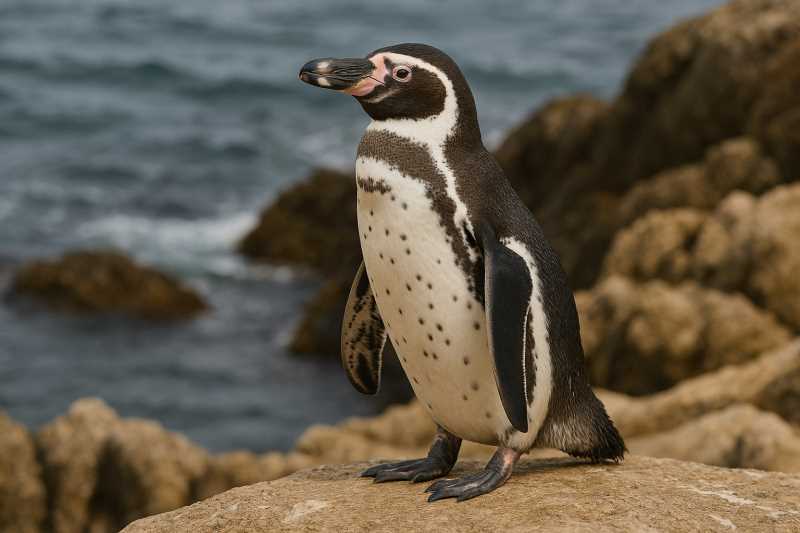
The Humboldt Penguin is a medium-sized penguin, with adults reaching heights of 65 to 70 centimeters and weighing between 4 to 5 kilograms. It possesses a distinctive black and white coloration, with a black band across its chest and a white belly. A unique feature is the presence of a fleshy pink area around its eyes and at the base of its beak, which becomes more prominent as the penguin ages.
Their streamlined bodies and strong flippers make Humboldt Penguins excellent swimmers, capable of diving to depths of 50 meters in search of food. Their diet primarily consists of small fish such as anchovies and sardines, as well as crustaceans and squid.
Habitat and Distribution
The Humboldt Penguin inhabits the rocky coastlines and offshore islands of the western coast of South America, predominantly within the territorial waters of Peru and Chile. The cold Humboldt Current, rich in nutrients, supports a diverse marine ecosystem, providing abundant food resources for the penguins.
Nesting sites are typically found in caves, crevices, or burrows, offering protection from predators and harsh weather conditions. The penguins are known for their monogamous breeding behavior, often returning to the same mate and nesting site year after year.
Behavioral Traits
Humboldt Penguins are social birds, often seen in large colonies during the breeding season. They exhibit a range of vocalizations used for communication between mates and group members, including braying, growling, and trumpeting sounds.
During mating season, elaborate courtship rituals are performed by the males, who present stones or pebbles to their potential mates. These stones are not only symbolic but also serve a practical purpose in nest-building.
Conservation Status
The Humboldt Penguin is classified as ‘Vulnerable’ by the International Union for Conservation of Nature (IUCN). Its population faces numerous threats, primarily due to human activity. Overfishing in the region has reduced the availability of their primary food sources, while habitat destruction from coastal development further impacts their breeding sites.
Climate change poses additional challenges, as rising sea temperatures and changing currents can affect the abundance and distribution of marine life. Oil spills and pollution also pose significant risks to their habitat and food sources.
Conservation efforts are underway to protect the Humboldt Penguin, including the establishment of marine protected areas, restrictions on fishing practices, and habitat restoration projects. Public awareness and education programs are also vital in fostering community involvement in penguin conservation.
The Role of Zoos and Aquariums
Zoos and aquariums play a critical role in the conservation of Humboldt Penguins. Through captive breeding programs, they help maintain genetic diversity and establish backup populations that can be used to bolster wild populations if necessary. These institutions also serve as platforms for educating the public about the importance of conserving penguins and their habitats.
Conclusion
The Humboldt Penguin is a remarkable species that embodies the intricate balance of marine ecosystems. Its survival is intricately linked to the health of the Humboldt Current and the broader environmental conditions of the Pacific coast. Conservation efforts must continue to focus on mitigating human impacts, protecting habitats, and ensuring sustainable fishery practices.
By understanding and appreciating the unique qualities of the Humboldt Penguin, we can contribute to the preservation of not only this species but also the rich biodiversity of their marine environment. As stewards of the planet, it is our responsibility to ensure that future generations can witness the beauty and wonder of these extraordinary birds.
This is one of the species covered in our book Penguins Of The World which is part of our Kings Birds of the world series, and one of the Kings Guides.

Related posts