The Hawaiian Hawk: An Endemic Raptor of the Aloha State
Hawaii, renowned for its lush landscapes and rich biodiversity, is home to a unique avian species, the Hawaiian Hawk, or ‘Io in the native Hawaiian language. This majestic bird of prey is not only an emblem of the islands’ natural beauty but also a symbol of cultural significance and ecological importance. In this article, we delve into the fascinating world of the Hawaiian Hawk, exploring its characteristics, habitat, and conservation status.
Characteristics of the Hawaiian Hawk
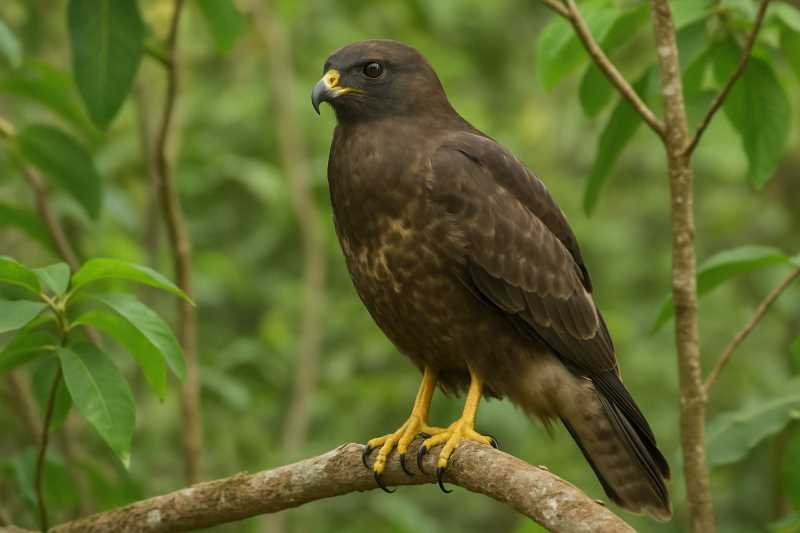
The Hawaiian Hawk (Buteo solitarius) is the only hawk species native to Hawaii and is found exclusively on the Big Island. With a wingspan ranging from 32 to 38 inches, this medium-sized raptor is recognizable by its broad wings and short tail. The ‘Io is polymorphic, exhibiting two main color morphs: a dark morph and a light morph. The dark morph is predominantly chocolate brown, while the light morph features a contrasting white underbelly. Both morphs possess sharp talons and a hooked beak, essential tools for hunting.
The Hawaiian Hawk’s keen eyesight and agile flight make it an adept predator. It primarily feeds on a diet of rodents, insects, and small birds, playing a crucial role in controlling the populations of these species. Its hunting prowess is complemented by its solitary nature, as suggested by its scientific name, Buteo solitarius.
Habitat and Range
The Hawaiian Hawk’s habitat is largely confined to the forests and shrublands of the Big Island, from sea level to elevations of over 6,000 feet. It thrives in a range of environments, from wet forests to dry, open areas. Despite its adaptability, the ‘Io is most commonly associated with native forests, where it finds ample nesting sites and prey.
Nesting typically occurs in tall trees, where the hawks build large nests from twigs and leaves. The breeding season runs from March to September, during which the female lays one to two eggs. Both parents are involved in rearing the young, exhibiting a strong bond and commitment to their offspring.
Cultural Significance
In Hawaiian culture, the ‘Io holds a revered status. It is considered an ‘aumakua, or ancestral spirit, believed to protect and guide families. The Hawaiian Hawk’s presence is often seen as a good omen, a sign of strength and power. Its significance extends beyond mythology, serving as a reminder of the islands’ deep connection to the natural world.
Conservation Status
The Hawaiian Hawk is currently listed as a Near Threatened species by the International Union for Conservation of Nature (IUCN). While its population is relatively stable compared to other Hawaiian birds, it faces several threats that could impact its future. Habitat loss due to urban development and agriculture is a primary concern, reducing the availability of nesting sites and hunting grounds.
Additionally, the introduction of invasive species poses a significant threat. Predators such as rats and mongooses can prey on hawk eggs and chicks, while non-native plants can alter the native forests crucial for the hawk’s survival. Climate change also looms as a potential challenge, altering the ecosystems that the Hawaiian Hawk relies upon.
Conservation efforts are underway to protect the ‘Io and its habitat. These include habitat restoration projects and legal protections to prevent further habitat destruction. Public education and community involvement are also vital components, fostering a sense of stewardship and appreciation for this iconic bird.
Conclusion
The Hawaiian Hawk stands as a testament to the unique biodiversity of the Hawaiian Islands. Its presence is a reminder of the delicate balance of ecosystems and the importance of conservation. By protecting the ‘Io and its habitat, Hawaii preserves not only a species but a cultural heritage and a symbol of natural beauty. Efforts to conserve this remarkable raptor must continue to ensure that future generations can witness the grace and majesty of the Hawaiian Hawk soaring over the islands.
In conclusion, the Hawaiian Hawk embodies the spirit of Hawaii, intertwining natural wonder with cultural legacy. It is a call for us to cherish and protect the treasures of our planet, ensuring that the ‘Io remains a thriving part of Hawaii’s skies.
Related posts