The Splendor of the Grey-headed Kingfisher: A Jewel of Avian Diversity
The avian world is rich with diversity, color, and unique adaptations, exemplified by the magnificent Grey-headed Kingfisher (Halcyon leucocephala). This remarkable bird, with its striking appearance and fascinating behaviors, offers a glimpse into the intricate ecosystems of Africa, where it predominantly resides.
Distribution and Habitat
The Grey-headed Kingfisher is a widespread resident of sub-Saharan Africa, inhabiting a range that stretches from Senegal and Gambia in the west to Ethiopia and Somalia in the east, and southwards to South Africa. Unlike many of its aquatic counterparts, the Grey-headed Kingfisher often prefers dry, wooded savannas, scrublands, and even arid areas, demonstrating its adaptability to various environments.
Despite its preference for drier habitats, this kingfisher is not entirely independent of water. It is often found near rivers, streams, and other water bodies, especially during the breeding season, when such resources become crucial for its diet and nesting.
Physical Description
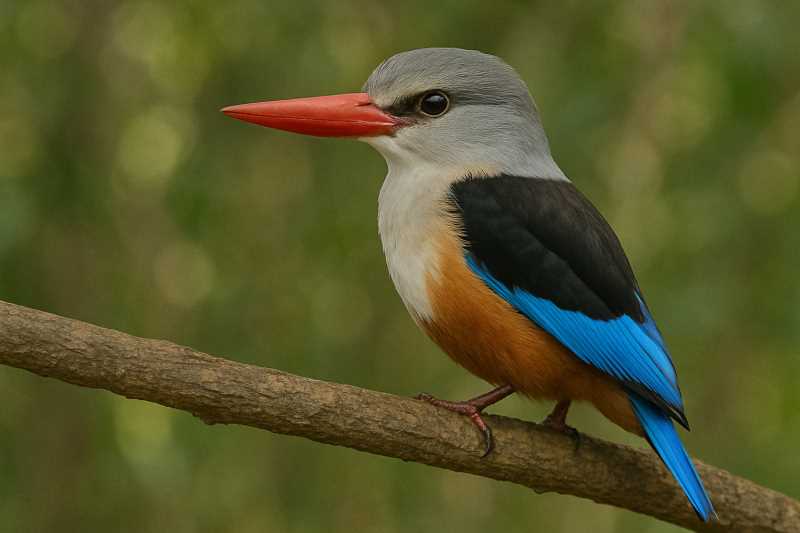
The Grey-headed Kingfisher is a medium-sized bird, measuring approximately 21–25 cm in length. Its most distinguishing feature is its striking plumage. The bird boasts a beautiful gray head and neck, which contrast sharply with its vibrant azure blue wings and back. The underparts are predominantly white, providing a clean and crisp appearance. Its bill, long and robust, is a vivid red, adding a splash of color to its already stunning palette.
The bird’s plumage serves not only as a visual delight for birdwatchers but also as an adaptive feature for communication and mating displays within its species. The combination of these colors is not just for show; it plays a role in camouflage and signaling during various behavioral interactions.
Behavior and Diet
Known for its perching behavior, the Grey-headed Kingfisher often sits quietly on exposed branches or wires, scanning the ground for prey. Unlike the typical image of a kingfisher diving into water for fish, this species primarily hunts on land. It feeds on a diverse diet that includes insects, small reptiles, and occasionally, small mammals. Its diet shifts with the seasons, reflecting the availability of prey in its habitat.
The hunting method of the Grey-headed Kingfisher is a testament to its adaptability. It often employs a sit-and-wait tactic, launching itself from its perch with incredible speed to capture unsuspecting prey with its strong bill.
Breeding and Reproduction
Breeding season for the Grey-headed Kingfisher varies according to region, generally aligning with the local wet season when food is abundant. During this time, males engage in elaborate courtship displays to attract females, showcasing their vibrant plumage and performing aerial acrobatics.
Nesting typically occurs in burrows excavated in sandy banks, termite mounds, or sometimes in tree cavities. The female lays a clutch of approximately 3 to 6 eggs, which both parents incubate. Parental care is a shared responsibility, with both the male and female feeding the chicks and keeping them safe from predators.
The choice of nesting sites highlights the bird’s adaptability, as it utilizes available resources to maximize reproductive success. This flexibility is particularly important in regions where environmental conditions can change rapidly.
Conservation Status and Threats
Currently, the Grey-headed Kingfisher is listed as a species of Least Concern by the International Union for Conservation of Nature (IUCN). Its wide distribution and stable population trends contribute to this classification. However, like many other wildlife species, it faces potential threats from habitat destruction, climate change, and human interference.
Deforestation and land conversion for agriculture remain significant challenges, as these practices reduce suitable habitats and increase competition for resources. Conservation efforts focusing on habitat preservation and sustainable land-use practices are essential to ensure the continued survival of this vibrant species.
Conclusion
The Grey-headed Kingfisher is a remarkable bird that showcases the beauty and adaptability of avian life in Africa. Its vibrant plumage, diverse diet, and unique behaviors make it a fascinating subject for ornithologists and bird enthusiasts alike. As we continue to study and admire this species, it serves as a reminder of the intricate connections within ecosystems and the importance of conserving the natural world for future generations.
By understanding and appreciating the Grey-headed Kingfisher, we can foster greater awareness and commitment to preserving the diverse habitats that support such incredible biodiversity.
Related posts