The Graceful Grey-headed Fruit Dove: Jewel of the Indonesian Archipelago
In the verdant heart of Indonesia, where the lush canopies of the Sulawesi region meet the azure skies, a vibrant avian species flutters through the trees — the Grey-headed Fruit Dove (Ptilinopus hyogastrus). This stunning bird, with its striking plumage and graceful demeanor, is a testament to the rich biodiversity found in this part of the world. As an integral part of the ecosystem, the Grey-headed Fruit Dove plays a crucial role in seed dispersal, maintaining the health and vitality of its forest habitat.
A Distinctive Appearance
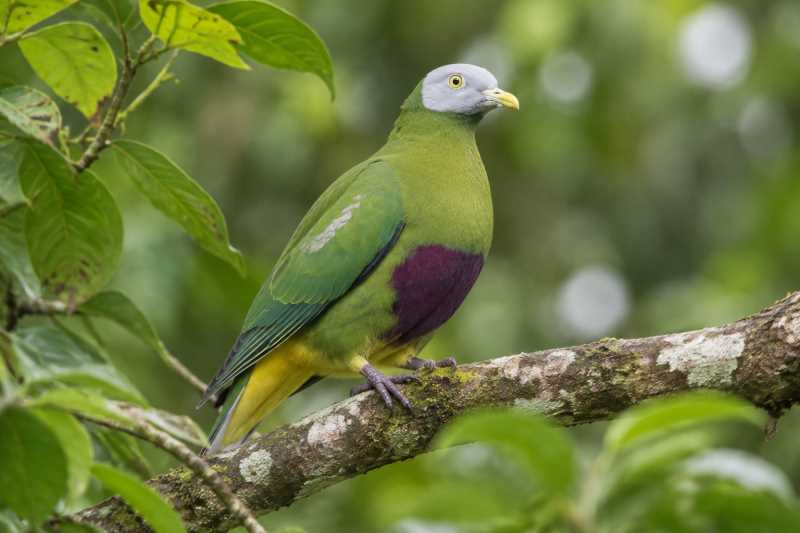
The Grey-headed Fruit Dove is an exquisite example of nature’s artistry. As its name suggests, the bird is characterized by its soft, grey head, which contrasts beautifully with its vibrant green body. The dove’s underbelly is a delicate shade of lilac, and its wings are adorned with a subtle mix of yellow and green hues. This striking coloration not only makes the Grey-headed Fruit Dove a visual delight but also serves as effective camouflage amidst the foliage, protecting it from predators.
Measuring approximately 24 centimeters in length, the Grey-headed Fruit Dove is a medium-sized bird. Its compact body is built for life in the trees, with short, rounded wings that allow for agile maneuvering through dense vegetation. The dove’s short tail and strong legs are adapted for perching and climbing, enabling it to access a variety of fruiting trees.
Habitat and Distribution
Endemic to the Indonesian islands, the Grey-headed Fruit Dove is primarily found in the lowland and montane forests of Sulawesi and its surrounding islands. This region, part of the Wallacea biodiversity hotspot, is known for its unique flora and fauna, boasting high levels of endemism. The dove’s habitat ranges from sea level to elevations of up to 1,500 meters, where it inhabits both primary and secondary forests.
The doves are often seen in small groups or pairs, foraging for fruit in the forest canopy. They play a significant ecological role by dispersing seeds across the forest floor, facilitating plant regeneration and contributing to the overall health of the forest ecosystem.
Behavior and Diet
The Grey-headed Fruit Dove is predominantly frugivorous, with a diet that consists mainly of figs and other fruits. This dietary preference is typical of the Ptilinopus genus, which includes some of the most fruit-dependent bird species. The dove’s feeding habits are essential for seed dispersal, as they consume the fruit and excrete the seeds at different locations, promoting plant diversity and forest regeneration.
These doves are known for their calm and peaceful demeanor. They are relatively sedentary, often spending long periods perched quietly in the trees. Their soft cooing calls echo through the forest, a gentle reminder of their presence in the canopy. During the breeding season, which typically occurs during the wet months, these birds exhibit courtship behaviors such as bowing and cooing to attract mates.
Conservation Status and Threats
The Grey-headed Fruit Dove is currently classified as Near Threatened on the IUCN Red List. The primary threat facing this species is habitat loss due to deforestation, driven by logging, agriculture, and infrastructure development. The fragmentation of their forest habitat poses a significant risk to their populations, as it limits their ability to find food and nesting sites.
In addition to habitat loss, these doves are also at risk from hunting and trapping for the pet trade. Although less common than some other species, the capture of these birds for sale as pets can have detrimental effects on their wild populations.
Conservation efforts are crucial to ensure the survival of the Grey-headed Fruit Dove. Protecting their habitat through the establishment of protected areas and promoting sustainable land-use practices are vital steps in preserving these birds. Additionally, raising awareness about the importance of these doves and their role in the ecosystem can help garner support for conservation initiatives.
Conclusion
The Grey-headed Fruit Dove stands as a symbol of the natural beauty and ecological importance of Indonesia’s forests. As a key player in seed dispersal, this dove contributes significantly to the health and sustainability of its habitat. Protecting these birds and their environment is not only essential for their survival but also for the preservation of the rich biodiversity of the Indonesian archipelago.
Efforts to conserve the Grey-headed Fruit Dove will require a collaborative approach, combining scientific research, community engagement, and policy development. By working together, we can ensure that future generations will continue to experience the grace and splendor of these remarkable birds in the wild.
Related posts