The Enigmatic Greater Yellow Finch: A Comprehensive Overview
The Greater Yellow Finch (Sicalis auriventris) is a captivating bird species that enchants ornithologists and bird enthusiasts alike. Known for its vivid coloration and distinct vocalizations, this small passerine bird is a striking representative of the Thraupidae family. Despite its charm, the Greater Yellow Finch remains relatively understudied, providing ample opportunities for further research and discovery.
Taxonomy and Classification
The Greater Yellow Finch belongs to the genus Sicalis, which encompasses several species of finches known for their vibrant plumage. The species name ‘auriventris’ is derived from Latin, with ‘auri’ referring to gold and ‘ventris’ meaning belly, aptly describing the bird’s golden-yellow underparts. This species was first described scientifically in the mid-19th century, highlighting its long-standing recognition within the scientific community.
Physical Description
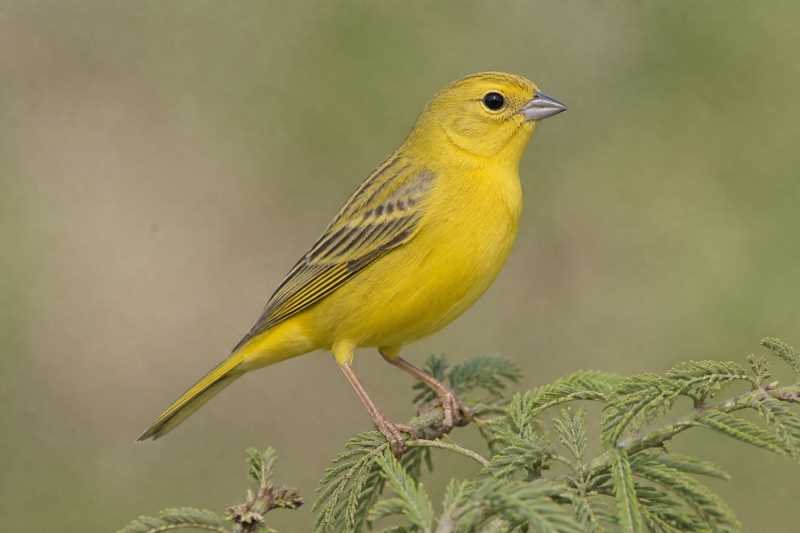
Measuring approximately 13 to 15 centimeters in length, the Greater Yellow Finch is a small bird with a stout body and a short, conical beak ideally adapted for seed consumption. The males are particularly striking, with a bright yellow plumage that covers their head, breast, and underparts. This vibrant coloration serves as a visual cue during mating displays and territorial disputes. Females, while less colorful, exhibit a more subdued yellowish-brown plumage, aiding them in camouflage during nesting.
The bird’s wings and tail are a contrasting darker olive-brown, providing a sharp distinction from its yellow body. Its eyes are dark, and the legs and feet are typically a pale brown or pinkish hue. The Greater Yellow Finch’s plumage not only serves aesthetic purposes but also plays a crucial role in thermoregulation and camouflage.
Habitat and Distribution
Endemic to the mountainous regions of South America, the Greater Yellow Finch is predominantly found in the Andes, ranging from northern Chile and Argentina to southern Peru. It thrives in high-altitude environments, often inhabiting areas between 2,000 and 4,500 meters above sea level. These regions are characterized by open grasslands, shrublands, and sometimes rocky outcrops, which provide ample foraging opportunities and nesting sites.
The species is highly adaptable and can be found in both natural and modified landscapes, including agricultural fields and urban gardens. This adaptability has aided in its survival despite the encroachment of human activities into its natural habitat.
Behavior and Ecology
The Greater Yellow Finch is a social bird, often seen in small flocks outside the breeding season. These flocks can include other finch species, showcasing the bird’s tolerance and adaptability to mixed-species groupings. During the breeding season, however, they become more territorial and can be observed engaging in courtship displays and vocalizations to attract mates and deter rivals.
Their diet primarily consists of seeds, which they skillfully extract using their robust beaks. They are also known to consume small insects and other invertebrates, particularly during the breeding season when protein demand is higher. Foraging typically occurs on the ground, where they can be seen hopping energetically in search of food.
Reproduction and Lifespan
Breeding generally occurs during the austral spring and summer, from September to February. The female is primarily responsible for nest building, constructing a cup-shaped nest using grasses, twigs, and feathers. Nests are often situated in shrubs or small trees, providing protection from predators and harsh weather conditions.
A typical clutch consists of 3 to 5 eggs, which the female incubates for about two weeks. During this period, the male plays a supportive role by providing food and guarding the territory. Once hatched, both parents partake in feeding the chicks, which fledge approximately three weeks after hatching.
The lifespan of the Greater Yellow Finch in the wild is not well-documented, but it is estimated to be around 5 to 10 years, similar to other small passerine birds.
Conservation Status and Threats
Currently, the Greater Yellow Finch is classified as Least Concern by the International Union for Conservation of Nature (IUCN). Despite its stable population, the species faces potential threats from habitat loss due to agricultural expansion, mining activities, and climate change. In addition, the introduction of invasive species and domestic pets can pose significant risks to their populations.
Conservation efforts aimed at preserving high-altitude habitats and promoting sustainable agricultural practices are essential to ensure the long-term survival of this vibrant species. Birdwatchers and local communities play a crucial role in monitoring populations and reporting any changes in their distribution or behavior.
Conclusion
The Greater Yellow Finch stands as a testament to the rich biodiversity of the Andean region. Its vibrant colors and social behavior make it a fascinating subject of study and admiration. While currently not at immediate risk, ongoing conservation efforts and further research will be vital in preserving this enchanting species for future generations.
By understanding and appreciating the ecological role and unique charm of the Greater Yellow Finch, we contribute to a broader awareness of the need to protect our planet’s avian diversity.
—
Related posts