Introduction
The Great Tinamou (Tinamus major) is a large, ground-dwelling tinamou in the family Tinamidae. It inhabits humid forests from southern Mexico through Central America and into northern and western South America. Although capable of rapid, powerful flight over short distances, it is usually detected by its deep, repeated whistles rather than seen. Its cryptic plumage, secretive behaviour and preference for dense forest undergrowth make it one of the less conspicuous birds of the Neotropics.
Physical Description
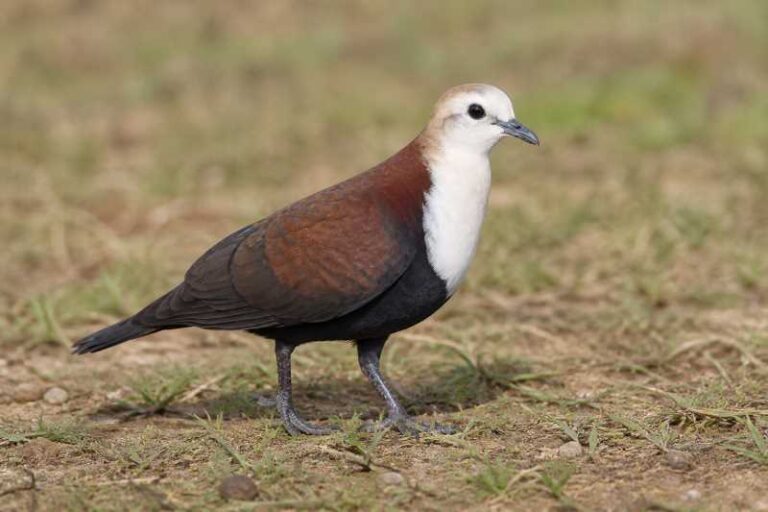
The Great Tinamou is a plump, long-bodied bird measuring approximately 40–46 centimetres in length. Adults have mainly brown plumage, with finely barred or wavy blackish markings on the back and wings. The head and neck are generally rufous-brown with fine dusky speckling, while the underparts are more evenly brown. The thighs and vent may show darker barring.
Its rounded wings are relatively short for its body, and the tail is small. The legs are strong and suited to walking and running through leaf litter and dense undergrowth. Published body-mass values vary geographically and between individuals, but adults may weigh roughly 0.7–1.5 kilograms.
Males and females are broadly similar in plumage, so sex is not usually distinguishable by appearance alone in the field. Regional plumage variation occurs across the species’ extensive range. Young birds are less brightly marked and generally have softer, less contrasting plumage than adults.
Range and Habitat
The Great Tinamou is a resident, non-migratory species of tropical and subtropical America. Its range extends from south-eastern Mexico through Belize, Guatemala, Honduras, Nicaragua, Costa Rica and Panama, and southwards through parts of Colombia, Venezuela, Ecuador, Peru, Bolivia, Brazil and the Guianas.
It is associated mainly with humid lowland and foothill forests, including evergreen rainforest, seasonally flooded forest, river-edge forest and other habitats with dense understorey and substantial leaf litter. It can occur from near sea level into the foothills, with records reaching approximately 1,500 metres in some parts of its range, although it is most characteristic of lowland forest.
The species often uses areas around tree buttresses, fallen fruit and quiet forest trails. It may persist in some secondary forest and fragmented landscapes, particularly where suitable cover remains and hunting pressure is limited, but intact and well-connected forest provides its most secure habitat.
Behaviour and Diet
Great Tinamous are usually solitary and spend much of their time walking slowly through the shaded understorey. When alarmed, they may remain motionless or slip into dense vegetation. If closely approached, they can erupt into a short, noisy flight before dropping back into cover. Their flight is powerful but not sustained, and most daily movement is on foot.
The species is often located by its vocalisations. Its call is a series of low, resonant whistles that can carry a considerable distance through forest. Calling activity may be especially noticeable during the breeding season, although birds can vocalise at other times as well.
The diet is varied and includes fallen fruit, seeds and other plant material, as well as insects, spiders and occasionally small vertebrates such as frogs and lizards. Food is usually taken from the forest floor, where the bird searches among leaves, soil and low vegetation. By eating fruit and later passing seeds elsewhere, Great Tinamous may contribute to seed dispersal and forest regeneration.
Breeding is characterised by a reversal of the usual division of parental care in birds. Great Tinamous have a polygynandrous mating system, with females mating with more than one male and leaving the males to incubate the eggs. A female may lay several glossy, brightly coloured eggs in different males’ nests during a breeding season.
The nest is usually no more than a shallow scrape on the ground, often positioned among leaf litter or between the buttresses of a tree. Clutches may contain several eggs, sometimes laid by more than one female. In a study at La Selva Biological Station in Costa Rica, incubation lasted about 17 days and all genetically identified incubating birds were males. Chicks are precocial and leave the nest soon after hatching, remaining under the male’s care during their early development.
Identification Tips
- Look for a large, rounded, brown forest bird walking quietly on the ground rather than flying through the canopy.
- Note the finely wavy or barred blackish patterning on the back and wings, the rufous-brown head and neck, and the relatively plain brown underparts.
- The small tail, rounded wings, robust body and strong legs are useful structural features.
- The bird is more often heard than seen. Listen for a sequence of deep, carrying whistles from dense lowland forest.
- The Great Tinamou may be confused with other large forest tinamous, especially where their ranges overlap. The Grey Tinamou (Tinamus tao) is generally greyer and more dusky, while the Great Tinamou is typically warmer brown and more finely marked. Careful attention to plumage tone, range and voice is advisable.
Conservation Status
The Great Tinamou is currently treated as Near Threatened by sources following the IUCN Red List assessment framework. The principal concerns are ongoing loss and fragmentation of humid forest, together with hunting in areas where forest access has increased. Because the species is a large, ground-dwelling bird, it may be particularly vulnerable to sustained hunting pressure even where forest cover remains.
Important conservation measures include protecting large areas of mature forest, maintaining habitat corridors, reducing illegal or unsustainable hunting, and managing roads and other developments that increase access to remote forest. Monitoring is also valuable because the species’ secretive behaviour makes population changes difficult to detect through casual observation alone.
Frequently Asked Questions
Where does the Great Tinamou live?
It lives in humid tropical and subtropical forests from southern Mexico through Central America and into northern and western South America, including parts of the Amazon Basin.
Is the Great Tinamou migratory?
No. It is generally regarded as a resident species that remains within its forest range rather than undertaking regular long-distance migration.
What does the Great Tinamou eat?
Its diet includes fallen fruit, seeds, insects, spiders and occasional small vertebrates such as frogs and lizards. Most feeding takes place on the forest floor.
Can the Great Tinamou fly?
Yes. It can make a rapid, noisy flight when alarmed, but it does not normally fly for long distances and spends most of its time walking through the understorey.
Which parent incubates the eggs?
The male incubates the eggs and cares for the chicks. Females may mate with several males and leave eggs in different nests during the breeding season.
What colour are Great Tinamou eggs?
The eggs are large, smooth and glossy, and are commonly described as turquoise, blue-green or greenish-blue, although colour may vary with condition and lighting.
References
- BirdLife International. 2021. Tinamus major. BirdLife International species information and global conservation assessment material. Accessed 8 September 2026.
- Brennan, P. L. R. 2009. Incubation in Great Tinamou (Tinamus major). The Wilson Journal of Ornithology, 121(3), 506. https://doi.org/10.1676/08-073.1
- Cornell Lab of Ornithology. n.d. Great Tinamou, Tinamus major. eBird Status and Trends. Accessed 8 September 2026. https://science.ebird.org/en/status-and-trends/species/gretin1/downloads
- Gill, F., Donsker, D. and Rasmussen, P. (eds.). 2026. IOC World Bird List, version 15.2. International Ornithologists’ Union. Accessed 8 September 2026. https://www.worldbirdnames.org/
- Musher, L. J., et al. 2022. A new phylogeny and classification of the tinamous, volant palaeognathous birds from the Neotropics. Zoological Journal of the Linnean Society, 195(1), 106–124. https://doi.org/10.1093/zoolinnean/zlab080
- Schaefer, H. M., et al. 2018. Secondary forest is utilized by Great Curassows (Crax rubra) and Great Tinamous (Tinamus major) in the absence of hunting. Ornithological Applications, 120(4), 852–864. https://doi.org/10.1642/AUK-18-28.1
- Animal Diversity Web. n.d. Tinamiformes, tinamous. University of Michigan Museum of Zoology. Accessed 8 September 2026. https://animaldiversity.org/accounts/Tinamiformes/
- World Bird Names. n.d. Great Tinamou, Tinamus major. Taxonomic and nomenclatural database. Accessed 8 September 2026. https://www.worldbirdnames.com/bird/great-tinamou/33.html
Related posts